Kings and Generals reframes the American Civil War's turning point not as a single battle, but as a complex interplay of diplomatic maneuvering, logistical incompetence, and the strategic necessity of redefining the war's purpose. While popular history often fixates on the clash of armies, this analysis argues that the Union's ultimate victory hinged on a political gamble: making the conflict about slavery to neutralize European intervention.
The Diplomatic Gambit
The coverage begins by establishing the precarious position of the Confederacy following the Battle of Chancellorsville. Kings and Generals writes, "The only hope for southern victory lay in European recognition and intervention, an increasingly remote possibility." This sets the stage for a nuanced look at why Britain and France, despite needing southern cotton, ultimately stayed on the sidelines. The authors argue that the war's character had to change to prevent foreign powers from stepping in.
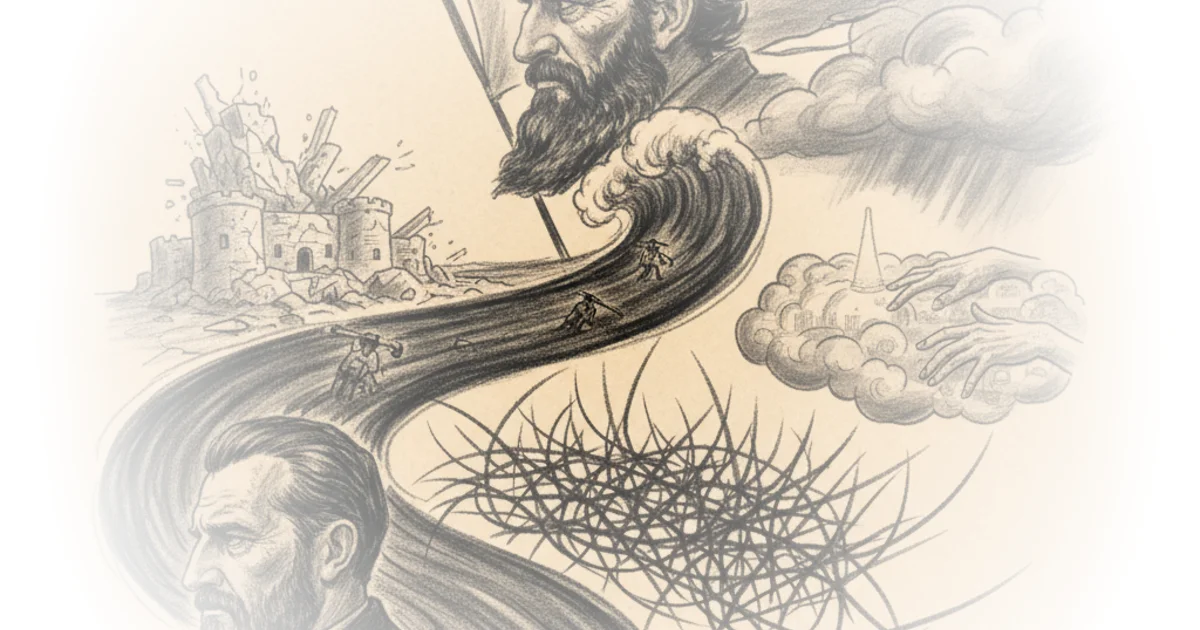
As Kings and Generals puts it, "Defeating Palmerston required making the war about slavery." The piece details how British workers, driven by moral opposition to slavery, refused to process southern cotton even at the cost of their own livelihoods. This internal pressure was a critical, often overlooked factor that constrained the British government's ability to support the South. The analysis suggests that without this shift in public sentiment, the diplomatic landscape could have looked very different.
"So long as the war was just to preserve the Union, Palmer could continuously float support for the South for diplomatic leverage without suffering internal backlash."
The authors correctly identify that Lincoln's Emancipation Proclamation was as much a diplomatic weapon as a moral one. By declaring that all slaves in rebelling territory would be free, the administration transformed the conflict. Kings and Generals notes, "The South correctly read it as an ultimatum to surrender or lose its slaves, which it rejected." This move effectively closed the door on British recognition, as supporting the Confederacy would now mean supporting slavery directly, a political impossibility for the British Prime Minister.
The Leadership Crisis
The narrative then pivots to the Union's internal struggles, specifically the toxic relationship between President Lincoln and General George McClellan. The authors highlight the political difficulty Lincoln faced in removing a popular commander. "Mlelen made clear that he wouldn't accept a transfer away from his army and that he wanted to be general in chief again," Kings and Generals writes, illustrating the deadlock that paralyzed Union strategy for months.
The piece argues that Lincoln's decision to appoint Ambrose Burnside was a reluctant compromise born of necessity. Burnside, who had previously refused the command, was chosen because other options were politically or militarily untenable. The authors describe the situation bluntly: "Sacrificing the successful west for the struggling east was equally unattractive." This framing underscores the scarcity of competent leadership in the East and the high stakes of every command decision.
Critics might note that the narrative slightly downplays the structural issues within the Union high command, focusing heavily on individual personalities rather than the systemic failures of the War Department. However, the focus on the human element of command decisions remains a compelling angle for understanding the war's early stagnation.
The Failure of Speed
The final section dissects the disastrous Battle of Fredericksburg, attributing the Union defeat largely to a catastrophic breakdown in logistics and communication. The authors point out that Burnside's plan relied entirely on speed, a factor that was undermined before the first shot was fired. "Burnside hadn't been told the critical last part," Kings and Generals writes regarding the delay in pontoon bridges, noting that while the bridges were built, there were no horses to transport them.
This logistical failure allowed General Robert E. Lee to fortify his positions on Mary's Heights, turning a potential Union victory into a slaughter. The authors describe the scene vividly: "He feared that forcing his entire army across a single choke point would lead to a slaughter." Despite the clear dangers, political pressure forced Burnside to attack, leading to a futile assault against entrenched Confederate forces.
"The November 14th message actually said that the pontoons were built, but there were no horses to transport them."
The commentary effectively illustrates how a single administrative oversight—failing to secure transport for the bridges—could alter the course of a campaign. The authors argue that Burnside's hesitation and the vague orders given to his subordinates, such as Major General William Franklin, compounded the initial logistical error. "The vague and weakly worded order caused Franklin to proceed cautiously," Kings and Generals observes, highlighting how command indecision can be just as deadly as enemy fire.
Bottom Line
Kings and Generals delivers a compelling argument that the Union's path to victory was paved as much by diplomatic shifts and administrative failures as by battlefield tactics. The strongest part of this analysis is its emphasis on the Emancipation Proclamation as a strategic masterstroke that neutralized European intervention. However, the piece's biggest vulnerability lies in its heavy reliance on the personalities of the commanders, occasionally overshadowing the broader institutional dynamics that shaped the war's outcome. Readers should watch for how these early failures in command and logistics influenced the Union's later, more successful campaigns under Grant.