Andrew Henry doesn't just decode an obscure Islamic figure—he reveals how the Dajjāl myth became a living lens for Muslim communities navigating betrayal, power, and hope across 1,400 years. His deepest insight? This "lying messiah" was never static theology but a mirror reflecting real-world crises, from Umayyad dynastic wars to modern political fractures. In an age where apocalyptic rhetoric fuels extremism, understanding this evolution isn’t academic—it’s urgent.
The Mirage of Miracles
Henry cuts through sensationalism by grounding the Dajjāl in tangible hadith sources. He highlights a pivotal confrontation outside Medina where the Dajjāl appears to resurrect a man: "Adajal will kill that man and bring him back to life. That man will say, 'Now I know your reality better than before.'" Henry stresses this isn’t supernatural power but divine permission—"he’s only able to kill and resurrect that man because God allowed it." This reframes the Dajjāl’s "miracles" as divine tests, not invincibility. It’s a crucial nuance: God permits deception to reveal true faith. Yet Henry could push further—why did 9th-century compilers emphasize this after the Treaty of al-Hudaybiya (628 CE), when early Muslims grappled with broken treaties and false prophets?
The resurrected man’s defiance—"Now I know your reality better than before"—isn’t about survival. It’s the moment deception collapses before unwavering conviction.
The Blind Eye and the Burning Word
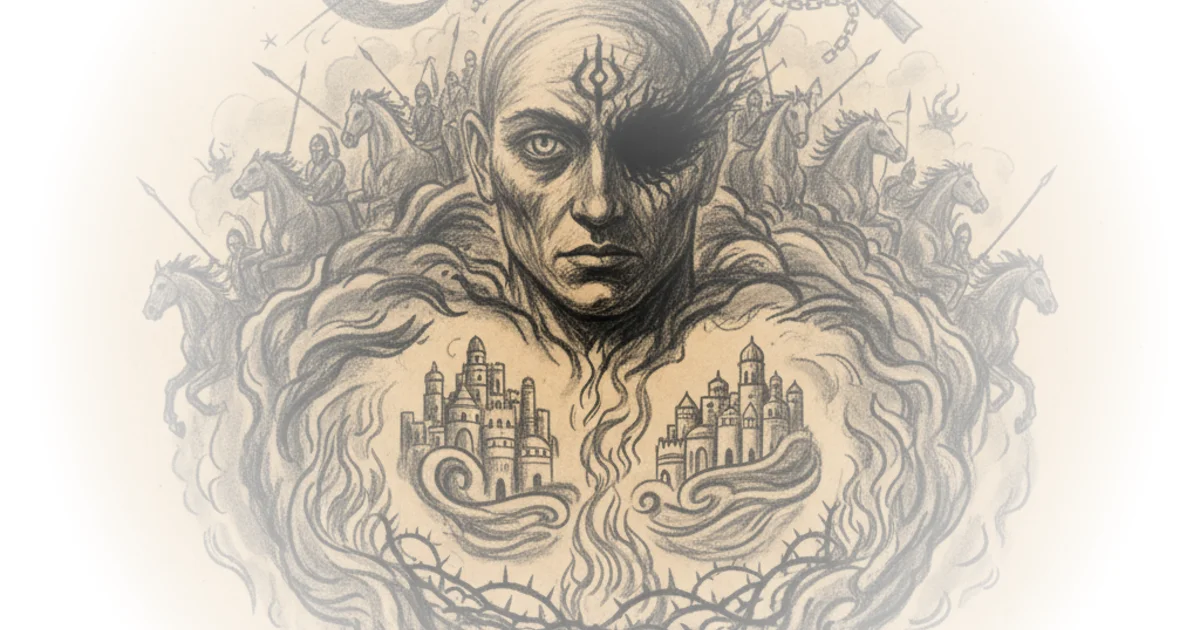
Henry masterfully dissects the Dajjāl’s physical markers as theological metaphors. He notes the hadith declaring "Allah is not one-eyed and behold that Adajal is blind of the right eye," then observes how scholars read this impaired vision as "a deeper spiritual defect. He can’t really perceive the truth." Even sharper is his treatment of the forehead inscription: "kafir" (disbeliever) visible only to believers. As Henry puts it, "His followers won’t be able to see it, but believers, literate or illiterate, will recognize him." This isn’t just identification—it’s a litmus test for spiritual clarity. Critics might argue this downplays how political movements exploit such imagery (e.g., labeling rivals "Dajjāl"), but Henry’s focus on early sources keeps the analysis anchored.
Shadows and Swords: Jesus, the Mahdi, and Defeat
Here, Henry’s cross-traditional analysis shines. He contrasts Sunni and Shi narratives: while Sunnis expect Jesus to slay the Dajjāl at Lod (near Jerusalem), "in many Shi communities... the Mahdi occupies the central end times role" as the one who "eliminates the Dajjāl." This divergence makes sense when Henry connects it to the Occultation—the belief that the 12th Imam is hidden until the end times. The Dajjāl thus becomes the ultimate foil for the Mahdi’s justice. Henry also exposes Christian-Jewish parallels without reductionism: "The Arabic term dajāl is a cognate of the Syriac daggāl," yet he resists claiming direct borrowing, noting how Muslim communities adapted shared apocalyptic motifs amid lived coexistence with Jews and Christians. Still, he underplays how modern Salafi movements weaponize these traditions—something future deep dives should tackle.
Bottom Line
Henry’s greatest strength is tracing how isnad-cum-matn analysis (scrutinizing narrator chains and content) reveals the Dajjāl myth evolving alongside Muslim political trauma—from Umayyad-era power struggles to Mongol invasions. His vulnerability? Not confronting how today’s actors hijack these narratives for violence. Watch for whether scholars can reclaim this figure from extremists by returning to Henry’s core insight: the Dajjāl’s power always depends on believers seeing the "kafir" on his forehead—and refusing to look away.