In an era where skepticism is often dismissed as pathology, this piece offers a startling correction: the very phrase we use to stigmatize dissent was once a neutral tool of forensic investigation. Reason reports that the term "conspiracy theory" did not begin as an insult but as a legal description for cases involving multiple perpetrators, only later mutating into a weapon to silence political inquiry.
The Linguistic Shift
The article argues that our current understanding is a historical accident rather than an inevitable evolution of language. "In the 19th century," Reason notes, "the words 'conspiracy theory' were typically deployed in a forensic context." It was a straightforward description: if a detective suspected more than one person committed a crime, they proposed a conspiracy theory. The piece highlights how this neutrality persisted even into major political tragedies, citing the St. Louis Daily Globe-Democrat using the term to discuss speculations around President James Garfield's assassination without any pejorative intent.
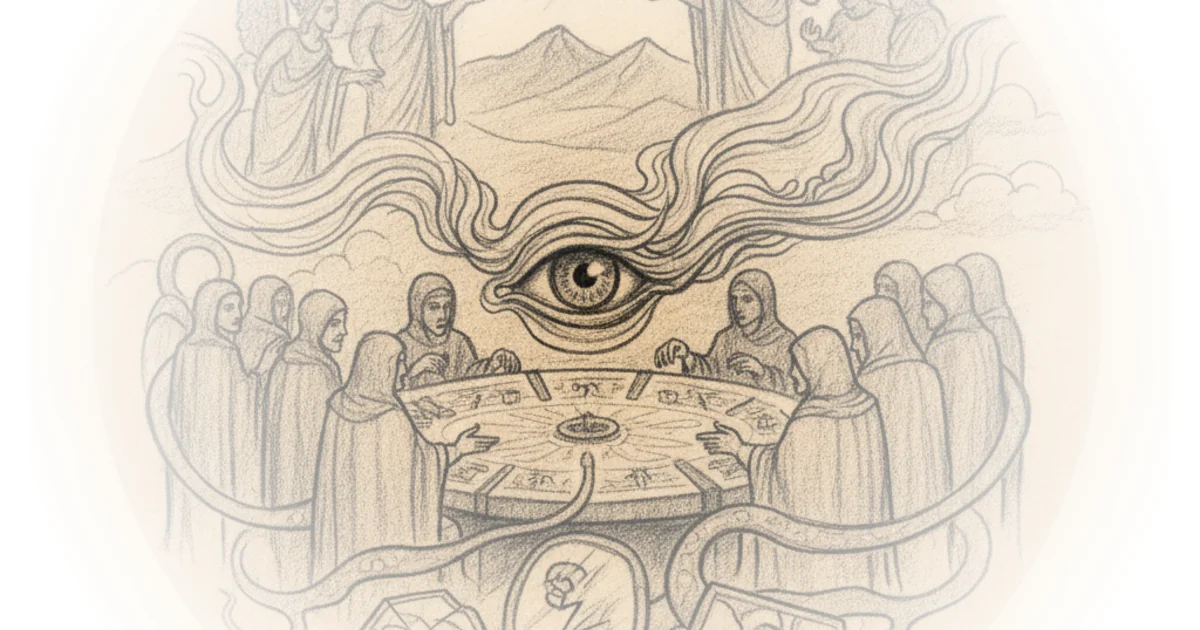
This reframing is crucial because it exposes how language can be weaponized over time. The article traces how mid-20th-century thinkers like Karl Popper and Franz Neumann expanded the phrase into a "conspiracy theory of society," yet even then, it lacked the modern sting. It was only when the phrase was shortened to stand alone as a genre—"conspiracy theories"—that it became a label for a type of person rather than a description of an event.
The phrase 'conspiracy theory,' in the sense that people use it today, became popular in the wake of commentaries like Popper's and Neumann's.
Critics might argue that focusing on etymology distracts from the very real danger of baseless claims undermining democratic institutions. However, the piece suggests that by pathologizing all suspicion, we risk ignoring actual corruption.
From Detective to Prophet
The commentary delves into how the term split into two distinct modes: the "analytic" (a detective working a case) and the "apocalyptic" (a prophet revealing a cosmic struggle). Reason observes that these modes often bleed into one another, creating a space where genuine questions about events like the murder of Malcolm X can spiral into searches for a hidden hand pulling all strings.
The piece dismantles the popular myth that the Central Intelligence Agency invented the term to discredit dissidents. Instead, it traces a gradual cultural drift where "people dropped the last two words of 'conspiracy theory of history' or 'conspiracy theory of society.'" This shift allowed for the creation of the "conspiracy theorist" archetype—a figure ranging from the basement-dwelling nerd to the militia terrorist.
A conspiracy theory can spark a real conspiracy: convinced that the secret society was still active, Grolman decided to form a secret 'counter-association' against that 'devilish union.'
This reciprocal relationship is the article's most provocative insight. It suggests that the fear of conspiracies can actually manufacture them, as seen in the 1790s when Ludwig Adolf Christian von Grolman formed a real counter-society because he believed the Illuminati were still active. This mirrors historical dynamics where paranoia fuels action, much like how the Cambridge Five espionage ring operated within the very institutions designed to expose such threats.
The Irony of Intelligence
The piece concludes with intellectual biographies that reveal the stunning irony of those who studied conspiracy theories. Franz Neumann, a legal scholar who critiqued the "conspiracy theory of history," was himself revealed by post-Cold War archives to have spied for Moscow during World War II. While not on the scale of the Cambridge Five, his espionage confirms that sometimes the accusations are true.
Reason notes that McCarthy's sloppy charges against Neumann turned out to be correct in this specific instance: "the conspiracy theory turned out to be correct." This complicates the narrative that all conspiracy theorists are merely paranoid fringe elements. The article also examines Richard Hofstadter, whose famous essay on the "paranoid style" is respected but critiqued for suggesting conspiracism is limited to a "modest minority," a claim later scholars like David Brion Davis refuted by showing how widespread such anxieties were during the Civil War era.
There is no way, reading a book like The Slave Power Conspiracy, that you could ever mistake its subjects for an easily pathologized movement of a social fringe.
Finally, the piece explores Carl Oglesby, a New Left leader who viewed the JFK assassination and Watergate as battles between rival factions of the ruling class. The commentary notes Oglesby's unique position: "He was more Sherlock Holmes than Marx." This distinction matters because it frames the conspiracy theorist not as a lunatic, but as an investigator trying to solve a puzzle that official narratives refuse to acknowledge.
Bottom Line
The strongest part of this argument is its demonstration that skepticism is often a rational response to opaque power structures, not just a symptom of mental instability. Its biggest vulnerability lies in the difficulty of distinguishing between legitimate investigative journalism and genuine disinformation without falling back on the very stigmatizing labels the article critiques. Readers should watch for how institutions continue to use linguistic shifts to delegitimize scrutiny rather than addressing the underlying grievances that fuel it.