Sarah Kendzior's latest Q&A does not offer platitudes for a fractured nation; instead, it presents a chilling diagnosis of a system where the machinery of state has been repurposed for organized crime and technofascism. The piece stands out for its refusal to treat current events as a temporary aberration, framing the erosion of democracy not as a political cycle but as a structural shift toward a "mafia state" where the only remaining unifying force is a shared loathing of a specific child trafficker. For readers navigating the noise of daily headlines, Kendzior provides a stark, unvarnished map of the underlying power dynamics, arguing that the true threat is no longer just old-school kleptocracy but a new fusion of authoritarianism and artificial intelligence.
The Architecture of Abandonment
Kendzior begins by addressing the visceral emotional toll on families, reframing the conversation from political strategy to psychological survival. She argues that in an era defined by institutional betrayal, the only reliable anchor is unconditional love, not policy or material security. "Tell your children you love them and that you have their back," she writes, emphasizing that "when all else is stolen, this stays in your control. No one can take it away." This advice is not merely comforting; it is a strategic survival tactic for a society where external validation has become a liability. She suggests that young people must find pursuits that do not rely on "state permission," noting that her own daughter's commitment to music persists even in the face of potential apocalypse.
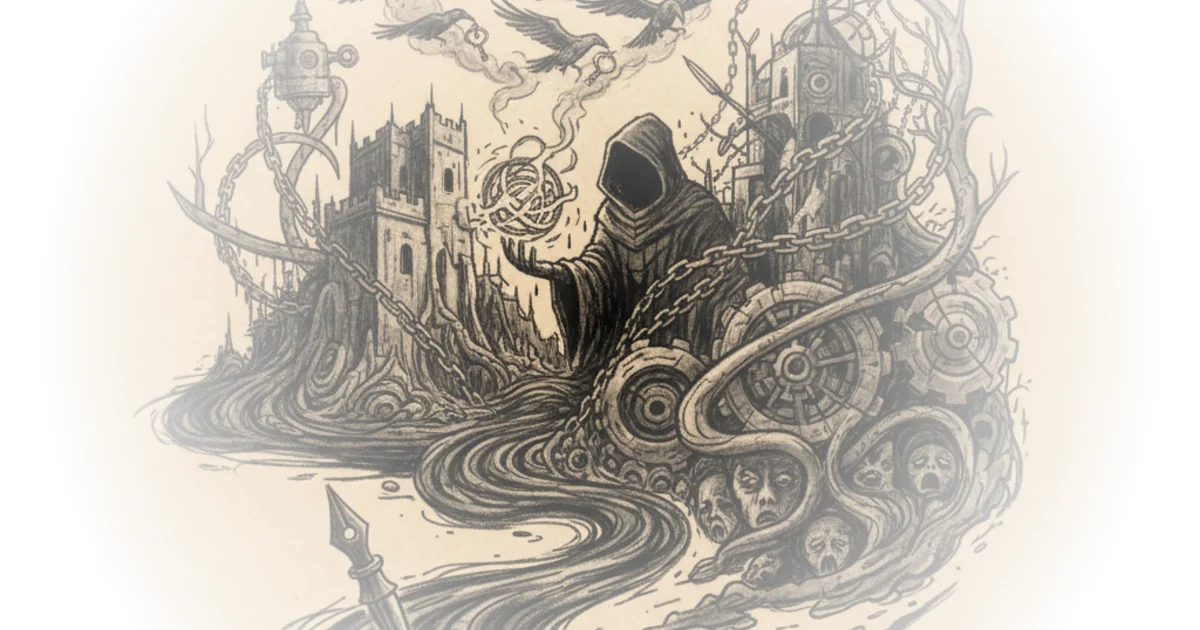
The author's framing here is effective because it shifts the locus of control from the unchangeable macro-political landscape to the micro-level of family and community. However, one might argue that this approach risks placing an undue burden on individuals to solve systemic failures through personal resilience. While the emotional truth of her argument is undeniable, it offers little concrete guidance on how to navigate the specific legal and economic traps Kendzior identifies elsewhere in her work. Yet, her insistence that "there is no 'wrong' way to feel" validates the rage and grief many are suppressing, a necessary step before any collective action can occur.
"In this sick, sad point in our national history, [loathing of] Jeffrey Epstein may be the only thing holding Americans together."
The Epstein Files and the Silence of the Elite
The commentary takes a darker turn as Kendzior tackles the question of the Epstein files, arguing that the suppression of these documents is not an oversight but a feature of the current power structure. She posits that the files have not been released because the elite have reached a point of consolidation where the information no longer threatens their hold on power, or worse, because the files contain evidence of crimes so heinous that their release would destabilize the entire global order. "We have reached that point," she asserts, linking the delay to the rise of artificial intelligence and the end of genuine electoral competition.
Kendzior draws a direct line between the Epstein network and broader geopolitical issues, specifically the treatment of Palestinians in Gaza. She argues that the same institutions protecting the traffickers are complicit in the "genocide" in Gaza, suggesting a moral equivalence in the dehumanization of victims. "Israel's unprecedented targeting of children... is ignored by Congress as they pocket money from Israel's supporters," she writes, claiming that the US government has become a "worst funder of the atrocity." This connection is the most controversial and provocative element of her analysis. Critics might note that conflating the specific criminal network of Epstein with the complex geopolitical dynamics of the Middle East risks oversimplifying distinct issues into a single conspiracy. However, Kendzior's point is not about the mechanics of the conflict but about the moral failure of the institutions that enable both. She argues that the refusal to address these crimes stems from a fear of the "universal taboo" of child torture, which has been normalized in specific geopolitical contexts.
The Transition to Technofascism
Perhaps the most unsettling part of Kendzior's analysis is her assessment of the political future, specifically regarding the health of the former president and the rise of his successor. She dismisses rumors of imminent death as a distraction, arguing that the real danger lies in the transition of power to figures like JD Vance, who represent a shift from traditional authoritarianism to "technofascism." "I am more worried about Vance than Trump because I think AI, surveillance, and technofascism pose the greatest threat to humanity," she writes. In her view, the former president is a "throwback dictator" who is being pushed aside by tech oligarchs who want to destroy the vestiges of 20th-century life.
Kendzior suggests that the "MAGA cult" is becoming obsolete, replaceable by an "AI cult" where the dictator no longer needs genuine followers, only the appearance of them. "If the dictator is insecure, it is easy for his team to create hordes of fake followers and not tell him," she observes, predicting a future of "oligarch turf wars" fought with digital illusions. This argument challenges the conventional wisdom that political movements are driven by ideology or grassroots support. Instead, she frames the future as a struggle between human agency and algorithmic control. While some may find this dystopian vision alarmist, Kendzior's background in studying authoritarian regimes lends weight to her warning that the tools of surveillance are being weaponized to create a reality where truth is irrelevant.
The Erosion of Democracy and the Path Forward
When addressing the integrity of elections, Kendzior is unequivocal: "As for the question of 'Are US elections safe and secure?' — no, they haven't been in years." She argues that the underlying cause of the crisis is not just political corruption but a brutal capitalist system that rewards abuse of power. "The main problem is abuse of power. A brutal capitalist system rewards and cultivates abuse," she states, linking the economic system to the erosion of democratic norms. Her advice to readers is to stop waiting for salvation from the state and to start building community support systems now. "Build up community support groups now in case elections don't occur or they do, and we're stuck with a new group of losers," she urges.
This call to action is grounded in a grim realism that acknowledges the potential failure of traditional political mechanisms. Kendzior does not offer a roadmap for electoral victory but rather a strategy for survival in a post-democratic landscape. She encourages readers to "fill the holes where the government fails," focusing on schools, libraries, and neighborly support. This pragmatic approach contrasts sharply with the partisan bickering that dominates mainstream discourse. While it may seem defeatist to some, Kendzior's argument is that preparing for the worst is the only rational response to a system that has already abandoned its citizens.
"Trump is pushing us over the cliff so we can land in Thiel's uncanny valley."
Bottom Line
Sarah Kendzior's commentary is a masterclass in connecting disparate threads of corruption, violence, and technological anxiety into a coherent, if terrifying, narrative of a "mafia state." Its greatest strength lies in its refusal to sanitize the moral failures of the current era, forcing readers to confront the uncomfortable reality that the institutions meant to protect them are actively complicit in their destruction. The argument's vulnerability is its reliance on a singular, highly specific interpretation of global events that may alienate those who view these issues through a more traditional geopolitical lens. However, for the reader seeking to understand the deeper currents driving the current crisis, Kendzior's warning that we are living through the transition to a technofascist future is impossible to ignore.