Michael Macleod delivers a jarring correction to the optimistic rhetoric surrounding the new administration's pledge to eliminate rough sleeping in London. Rather than celebrating the political promise, the former Metropolitan Police officer exposes a brutal administrative reality: housing people on paper does not equate to housing them in practice. This piece is essential because it moves beyond the statistics of bed counts to reveal the systemic fractures—cuckooing, mental health crises, and flawed outreach—that cause even the most well-funded interventions to fail.
The Illusion of Housing
Macleod anchors his argument in a personal anecdote that dismantles the binary definition of homelessness. He describes crouching next to a man named Michael on a street corner, only to learn the man has a council flat nearby. "On paper, Michael was housed. His tenancy agreement said so, so did his housing officer and so did the forms we filled out every time we met him." Yet, when Macleod visited the property, he found a bedsit filled with thirty-five dirty frying pans and a television teetering on a cardboard box, with the tenant nowhere to be found.
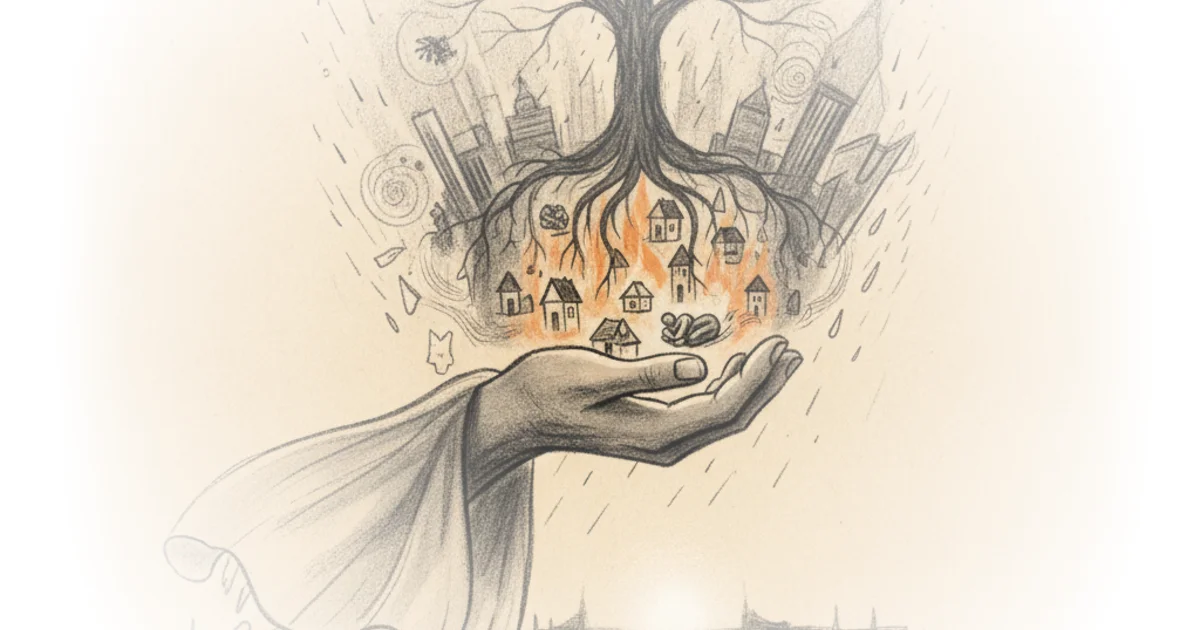
The author argues that the current policy focus risks repeating the mistake of counting tenancies rather than ensuring tenancies are functional. He illustrates this with the case of Simon, a vulnerable man whose flat was taken over by a drug gang. Despite the official record showing Simon was housed, the reality was a home where "drug addicts smoked crack on his sofa, sold to them minutes earlier by a 15-year-old." Macleod notes that while the courts eventually issued a closure order, the gang simply moved on, leaving Simon in a wrecked house. This highlights a critical gap in the administration's strategy: without robust enforcement and safeguarding, providing a roof can inadvertently enable exploitation.
Critics might argue that the solution to cuckooing is simply more police raids, but Macleod's experience suggests that enforcement alone is insufficient without addressing the underlying vulnerability of the tenants. The system often treats the symptom of the street rather than the disease of the home.
"Ending rough sleeping and giving everyone somewhere to sleep are not quite the same thing."
The Hotel Paradox
The commentary then shifts to the pandemic-era "Everyone In" scheme, where the government block-booked hotels to remove people from the streets. Macleod recalls a scene at a three-star hotel where the atmosphere was thick with microwaved food and tension. He describes a dispute over a ten-pound voucher that escalated into a shouting match, noting that for many of these men, "it was the first time I had seen either of them inside."
Macleod points out a fatal flaw in the outreach methodology: volunteers often relied on visual confirmation of rough sleeping without verifying existing tenancies. He recounts a Scottish man with a thick Glaswegian accent who was moved into a hotel room simply because he was found sleeping on the street, despite having a council flat nearby. The man's dog was left behind because the hotel wouldn't allow pets. "They had walked the borough late one night, found him in a sleeping bag, and informed him the council had booked him a hotel room," Macleod writes. "A volunteer doesn't think to ask whether the man sleeping rough on the street has been a long-term council tenant."
This section underscores the danger of one-size-fits-all policies. While the intention was humanitarian, the execution often ignored the complex realities of the individuals involved, treating them as a monolith rather than distinct cases with specific needs. The connection to the broader context of London's housing crisis is evident here; as seen in the deep dives on the City of London Corporation's commercial management of parks, there is a recurring theme of top-down decisions that fail to account for ground-level nuances.
The Silence of the Hostel
Perhaps the most haunting part of Macleod's analysis concerns the transition from the street to hostels like St Mungo's. He describes the radio silence that falls over police units when a call comes in for a homeless hostel, a stark contrast to the usual chaos of burglary calls. "For some of the people I dealt with, quiet was the enemy," he observes. The street provided a routine and a community, whereas the hostel offered "four white walls under fluorescent light, and a desk manned by officious people in lanyards who stopped you bringing in whatever you used to keep the trauma at bay."
Macleod details the story of a man who had lived his whole life on the streets before being placed in a St Mungo's room. The isolation and lack of autonomy led to a violent altercation, a syringe threat, and a desperate attempt to jump from a second-floor window. "He kicked, spat, scratched and assaulted everyone on the way to custody, and the courts decided that he would be returned to the community because of his mental health," Macleod writes. "I couldn't tell you what prison would have done for him either."
This narrative arc challenges the assumption that indoor accommodation is inherently superior. For individuals with severe trauma, the structured environment of a hostel can be as destabilizing as the street. The author's background as a police officer lends weight to this observation; he has witnessed the human cost of well-meaning policies that fail to account for psychological needs. The reference to St Mungo's here is not just a name-drop but a specific example of an institution struggling to balance safety with the autonomy required for recovery.
"Indoors there were four white walls under fluorescent light, and a desk manned by officious people in lanyards who stopped you bringing in whatever you used to keep the trauma at bay."
Bottom Line
Michael Macleod's piece is a necessary corrective to the political theater of solving homelessness with a single pledge. The strongest part of his argument is the distinction between administrative housing and functional safety, a nuance that policy makers often overlook. However, the piece leaves the reader with a difficult question: if the current system of hostels and tenancies fails so many, what specific, non-punitive mechanisms can the administration deploy to break the cycle? The answer requires more than just beds; it demands a fundamental rethinking of how support is delivered to those who have been failed by the system for decades.