Jeannine Ouellette reframes the act of writing not as a pursuit of comfort, but as a deliberate mechanism for emotional devastation, arguing that the most profound literature must "startle the reader back into Life." By weaving together personal grief, cellular biology, and ancient mythology, she constructs a compelling case that true craft requires an unflinching confrontation with the physical and metaphysical remnants of loss.
The Mechanics of Devastation
Ouellette begins by dismantling the notion that good writing should soothe. She anchors her argument in the work of Joy Williams, quoting the fiction writer's assertion that "Good writing never soothes or comforts. It is no prescription, either is it diversionary, although it can and should enchant while it explodes in the reader's face." This is a bold claim in an era of content designed for quick consumption, yet Ouellette backs it with a visceral personal anecdote: a childhood fall where a pebble lodged in her knee, remaining as a "pea-sized bump" for years before dissolving into scar tissue.
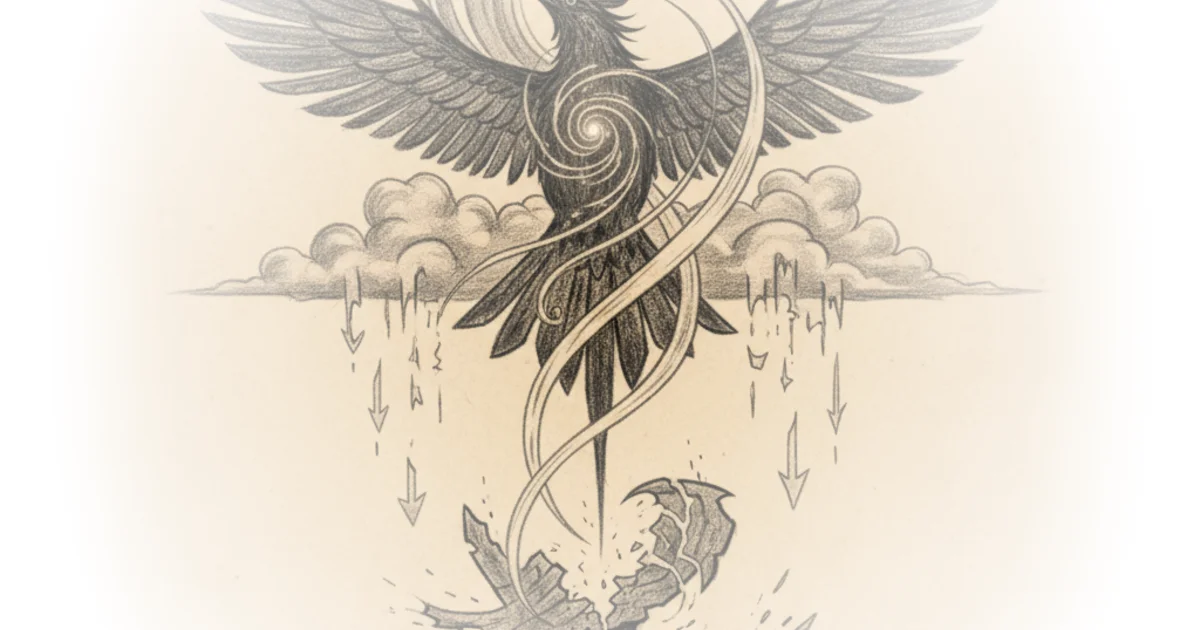
The author uses this physical memory to illustrate the texture of grief. She writes, "The sensation of rock on bone was always pleasantly painful, a sharp surprise." This metaphor serves as the foundation for her broader thesis: that impactful writing must leave a similar residue, a tangible sensation of "rock on bone" that refuses to dissolve easily. She posits that the goal of the writer is to understand the "mechanics of creating such writing," seeking not just the magic, but the "spinning wheel and I want each and every part that makes it go."
Good writing never soothes or comforts. It is no prescription, either is it diversionary, although it can and should enchant while it explodes in the reader's face.
Critics might argue that demanding "devastation" from every piece of art creates an unnecessarily narrow definition of literary value, potentially alienating readers seeking solace. However, Ouellette anticipates this by clarifying that "You do not have to be writing sad things in order for your work to be devastating." She expands the definition to include joy and hilarity, noting that even "mundanity" can steal the breath away if rendered with "clarion precision and unflinching truth."
The Biological and Mythological Braids
The piece's most distinctive move is its synthesis of hard science and mythological archetypes to explain the persistence of memory. Ouellette introduces the concept of microchimerism, noting that "it wasn't until 1979 that scientists discovered that the reverse is also true, finding Y-chromosome cells in a pregnant woman's blood." She traces the timeline further to a 1996 discovery of male fetal cells remaining in a woman's blood decades later, grounding the essay in empirical reality.
This scientific fact is then braided with the myth of the Chimera. Ouellette references the 15th-century Malleus Maleficarum, which described the Chimera as a "monster […] of three forms; its face was that of a radiant and noble lion, it had the filthy belly of a goat, and it was armed with the virulent tail of a viper." By linking the biological reality of cell-sharing to a creature historically used to demonize women, she adds a layer of historical weight to the personal narrative. The connection is striking: just as the Chimera was "beautiful to look upon, contaminating to the touch, and deadly to keep," the cells of a mother and child are inextricably linked, living and functioning alongside each other for years.
Part of me really did die that day. Part of what makes this opening as effective as it is comes from the way the science mirrors the metaphysics of loss.
The author applies this framework to the death of her own mother, Gry. She describes the unmooring sensation of loss not just as an emotional state, but as a literal cessation of future selves. "The Iselin who called her mom each evening after work as she unlocked her bicycle for the ride home: she died," she writes, listing the various versions of herself that ceased to exist. This enumeration is powerful because it treats identity as a collection of relationships rather than a singular, static entity.
A counterargument worth considering is whether the reliance on scientific studies to validate emotional truth risks reducing the complexity of grief to a biological imperative. Yet, Ouellette uses the science not to explain away the pain, but to validate its physical reality. She notes that a 2012 study found "most of us have our mother's cells embedded in our brains," suggesting that "three generations of cells inside a single brain" accompany each other into the grave. This biological continuity offers a strange, comforting horror that deepens the emotional resonance of the essay.
The Architecture of Grief
Ouellette's analysis of Iselin Gambert's essay, "The Great Chimera," serves as a practical application of her theoretical framework. She identifies specific craft elements that allow Gambert to achieve this level of impact, listing "Restraint" and "Rich, complex braiding" as key components. The author emphasizes that the essay's power lies in its "central metaphor of the chimera and microchimeric cells" and a "central question around the meaning of home."
She connects the concept of home to the work of Michele Filgate, noting that mothers are often "our first homes." This connection reframes the loss of a mother not just as the loss of a person, but as the loss of one's primary place of being. Ouellette writes, "Before I was falling, I was flying," a line that captures the sudden, violent transition from a state of safety to a state of impact. This imagery, drawn from her own childhood fall, becomes a universal metaphor for the abruptness of grief.
The author's insistence on "unflinching truth" suggests that the path to emotional resonance is through specificity, not generalization. She argues that even when writing about joy, the goal is to "steal our breath away in the most arresting manner." This demand for intensity is what separates the essay from a standard memoir; it is a manual for how to make the reader feel the weight of existence.
We can be swallowed whole by joy, as happens for me each time I read Brian Doyle's "Joyas Valadoras."
Bottom Line
Ouellette's strongest argument is her redefinition of "devastation" as a necessary component of high-quality writing, supported by a unique fusion of cellular biology and mythological history. The piece's primary vulnerability lies in its potential to alienate readers who view literature as a source of escape rather than confrontation, but her inclusion of joy as a valid vehicle for devastation mitigates this risk. Readers should watch for how this "rock on bone" philosophy influences the next generation of narrative nonfiction, particularly in how writers navigate the intersection of scientific fact and personal trauma.