Cory Doctorow delivers a startling thesis: the greatest threat to market competition isn't corporate greed itself, but the specific laws designed to stop people from fixing what they own. He argues that the very mechanisms meant to protect intellectual property have instead created a legal shield allowing giants to stifle innovation, turning a dynamic ecosystem into a stagnant oligarchy.
The Illusion of Market Forces
Doctorow begins by dismantling the idea that markets naturally self-correct. He posits that without competition, companies become indifferent to their customers. "Without competitors, companies are 'too big to care,'" he writes, noting that the pressure of greed only works when there is a viable alternative. The core of his argument is that competition serves a dual purpose: it forces ethical behavior through market pressure and provides a clear target for government regulators. When sectors consolidate into a handful of firms, they stop competing and start colluding, creating an "enshittogenic policy environment" where the rules are rigged to protect the few.
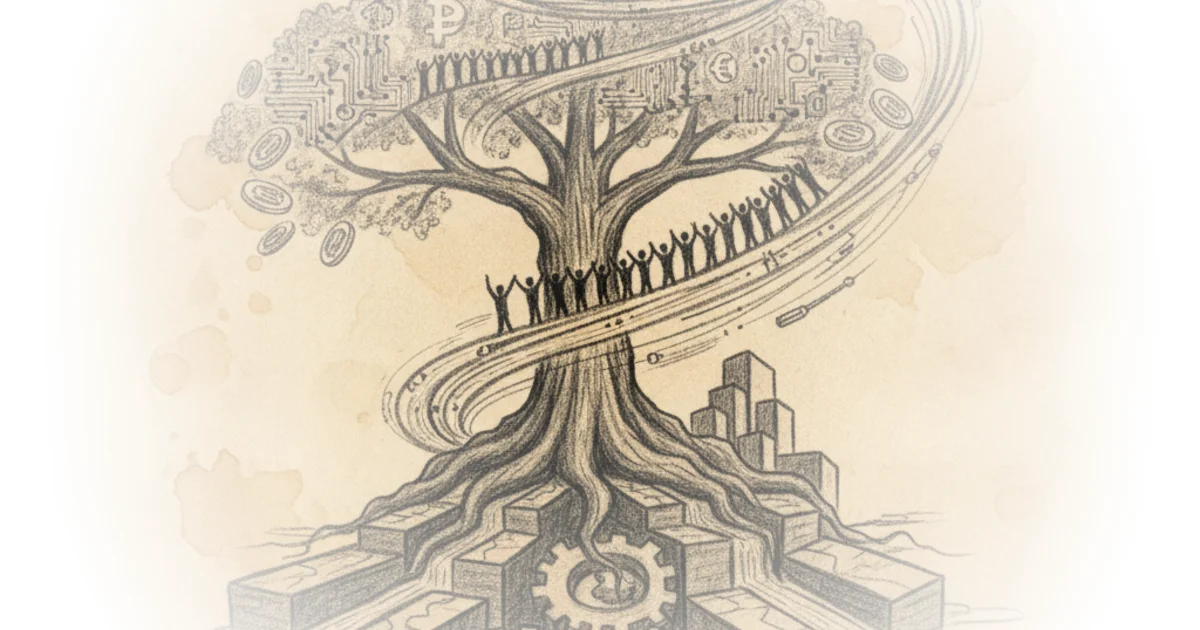
This framing is powerful because it bridges the gap between pro-market libertarians and anti-monopoly progressives. Both sides, Doctorow suggests, should want competition, but for different reasons. He argues that the rise of Big Tech's authoritarianism is not an accident of technology, but a direct result of policy choices that favored incumbents over challengers.
"Every time a tech boss introduces a 10' pile of shit to a digital product or service you rely upon, they induce rival technologists to create 11' ladders made of code that they can costlessly, instantaneously distribute to every one of the enshittifier's customers and suppliers."
This observation about the technical nature of computers is crucial. Doctorow reminds us that digital machines are "Turing-complete, universal von Neumann machines," meaning any device can theoretically run any valid program. Historically, this allowed for "adversarial interoperability," where new entrants could reverse-engineer dominant products to offer better services or fix defects. Think of the early days of printer ink or app stores; if a company locked out generic supplies, a competitor would simply build a workaround. This dynamic kept the market honest.
The Legal Ratchet
However, Doctorow argues this system was deliberately broken by legislation. He points to the 1998 Digital Millennium Copyright Act (DMCA) as the turning point. Specifically, Section 1201 made it a felony to circumvent access controls, effectively criminalizing the reverse-engineering that once drove innovation. "DMCA 1201 created a one-way ratchet that progressively narrowed the possibilities for tech competition," he explains. The result was a shift in startup culture: instead of disrupting giants, new companies began aiming for "acqui-hires," selling themselves to incumbents only to have their products mothballed.
Critics might argue that strong intellectual property protections are necessary to incentivize the massive R&D investments required for modern technology. Without the promise of exclusivity, they claim, companies would not innovate. Doctorow counters that the law has swung too far, protecting extraction rather than creation. He notes that the US government has exported this model globally, ensuring that "virtually every country in the world has a law that makes it illegal to disrupt American tech giants."
The most damning part of his analysis concerns the so-called "safety valves" in these laws. Governments claimed that exemption processes would allow for legitimate uses, like repairing a tractor or using assistive devices for the blind. But Doctorow reveals these exemptions as a "cheap trick." The law allows a user to petition for the right to use a tool, but not for someone else to make the tool. "The Copyright Office is only empowered to create 'use exemptions,'" he writes, "The Copyright Office does not have the power to create a tools exemption that would allow someone to make that unlocking tool and sell or give it to you."
"If the US Copyright Office legalizes alternative iPhone app stores, the only way to exercise this exemption is for every iPhone owner in the country to get a computer science degree, secure the use of a clean-room, decap the 'secure enclave' on a spare iPhone's CPU, extract its cryptographic keys, and integrate them in a new version of iOS that they personally write and install on their phone."
This absurdity highlights the disconnect between legal theory and practical reality. Whether it is a wheelchair user needing to fix their chair or a blind person needing to read an ebook, the current system forces individuals to undertake impossible technical feats to exercise rights they legally possess. This mirrors the issues seen in the "Ink cartridge" deep dive, where printer manufacturers use software updates to brick third-party cartridges, a practice now shielded by these same anti-circumvention laws.
The Necessity of Capital Formation
Doctorow concludes by addressing a common misconception: that individuals or small hackers can solve this alone. He dismisses the idea that a chatbot or a single hacker could bypass these restrictions effectively. "To make generic ink a viable check against the abuses of HP and its colored water mafia, you need a counter-industry," he argues. This requires "capital formation"—the ability to raise money, hire staff, and build a sustainable business model that can withstand the legal and technical onslaught of incumbents.
He illustrates that the dynamism of the past wasn't just about clever code; it was about a mass phenomenon where a counter-industry could emerge to serve the market. "You need salespeople making calls on large enterprises who buy their ink by the ocean," he writes, emphasizing that without the economic infrastructure to support interoperability, the law remains a one-way street favoring the powerful.
"Disruption for thee, never for me."
This succinctly captures the hypocrisy of the current regulatory environment. While companies are free to "move fast and break things," the law forbids anyone from "moving fast and breaking kings." The system is designed to protect the status quo, ensuring that once a company becomes dominant, it is insulated from the very competition that brought it to power.
Bottom Line
Doctorow's argument is a compelling indictment of how intellectual property law has been weaponized to cement oligopolies, transforming a dynamic digital landscape into a rigid hierarchy. The strongest part of his case is the exposure of the "use exemption" loophole, which renders consumer rights practically unenforceable. The biggest vulnerability in the current system is not just the law itself, but the lack of political will to distinguish between protecting innovation and protecting extraction. Readers should watch for upcoming legislative battles over right-to-repair and interoperability, as these will determine whether the digital economy remains open or continues to calcify.