The United States just seized a country—and the world is still processing what that means.
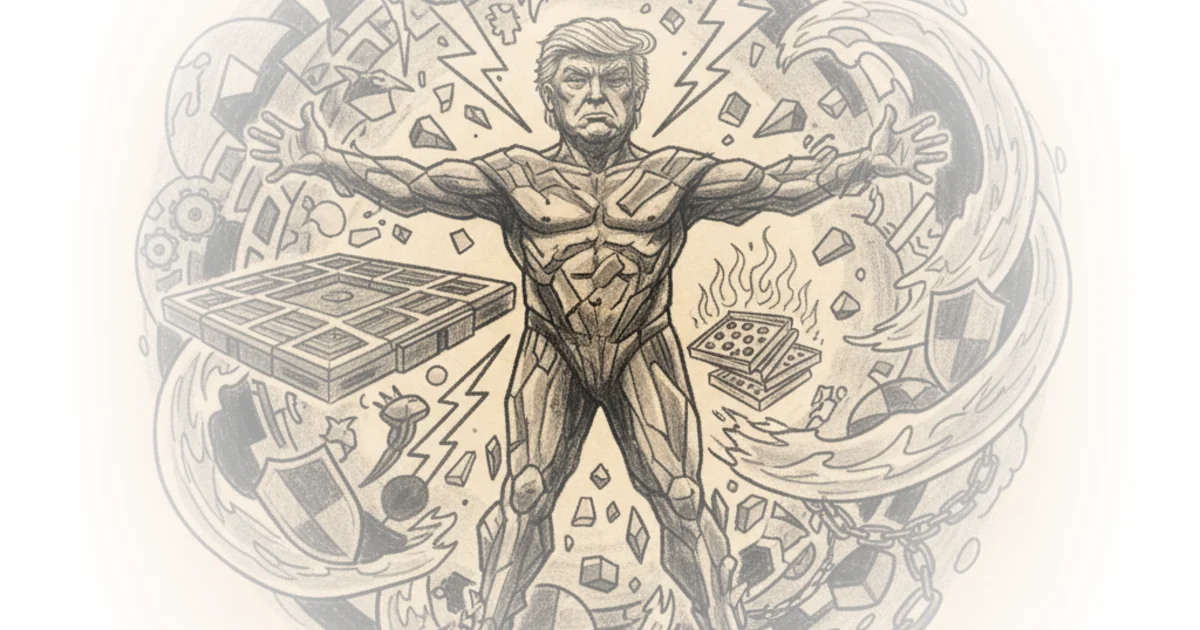
On January 3rd, 2026, President Donald Trump ordered the capture of Venezuelan leader Nicholas Maduro. Delta Force operators deployed via nightstalker helicopters, aircraft carriers and fourteen thousand troops descended on Caracas, and Maduro was photographed blindfolded and bound aboard a US naval vessel before being delivered to a Brooklyn jail. The operation, dubbed Operation Absolute Resolve, effectively decapitated the regime—but that's where certainty ends.
The Raid and the Vacuum
The military strike was precise. Venezuelan air defenses were disabled by US Cyber Command while ground forces moved in. Maduro, reportedly caught attempting to reach a steel safe room, now faces federal charges of naroterrorism in New York.
Yet capturing a leader does not mean the United States is suddenly in charge. When Saddam Hussein was pulled from a spider hole in 2003, it didn't transform Iraq into a peaceful American asset—it signaled the start of a bloody decades-long insurgency. The 2011 ousting of Muammar Gaddafi in Libya left behind fractured militias, not stable democracy.
In Caracas, regime loyalists quickly moved to reassert control. The raid was spectacular, but critics argue there was no plan for what comes next.
The Oil Question
The administration framed the incursion as a response to illegal drug trade and national security. But the real prize is oil—and the numbers demand skepticism.
Venezuela claims 303 billion barrels of proven oil reserves, representing roughly 20% of global supply. Energy analysts view this with deep skepticism. High-profile investors like John Arnold have noted these figures were reported by Hugo Chavez to OPEC to bolster international standing and have been uncritically repeated ever since. Some estimates suggest the reserves may be exaggerated by as much as 220 billion barrels.
Even if accurate, Venezuelan oil is not the light sweet crude from the Permian Basin. It's heavy and sour with the consistency of molasses, high sulfur content, requiring expensive blending with dilutants like NAFTA that Venezuela imports from Russia. Current global crude prices hover around sixty dollars per barrel—far below the eighty-dollar break-even price for new projects.
Exxon Mobil CEO Darren Woods made this clear at a White House meeting: Venezuela is uninvestable without significant changes to legal and commercial frameworks. The industry itself has been hollowed out by decades of neglect. Under Chavez and then Maduro, Petrós was transformed from an energy giant into a cash machine for the military. Refineries run at twenty percent of original capacity; pipelines are over fifty years old.
Most skilled engineers have fled. The ones remaining are soldiers with no technical expertise. Exxon Mobil and ConocoPhillips are still chasing over ten billion dollars in unpaid compensation for assets seized decades ago.
Who Rules Venezuela Now?
In the vacuum left by Maduro's capture, the Trump administration did not turn to the democratic opposition. Instead, it signaled intent to work with the very figures who served as the backbone of the existing regime.
The Rodriguez siblings—Deli and George—rose to power as loyalists to Hugo Chavez and then Maduro. George serves as National Assembly president; his sister Deli is acting president and former oil minister. They represent the regime's pragmatic face but remain deeply implicated in its brutal misdeeds, from systematic repression to blatant election fraud.
The decision to sideline Maria Corino Machado, Nobel Prize-winning leader of the opposition who won her 2024 landslide with two-thirds of the vote, has stunned Venezuelan diaspora communities. Sources close to the White House indicate Trump viewed her acceptance of the Nobel Peace Prize as an ultimate sin—some insiders suggest if she'd turned it down and stated it belonged to Trump, she'd be president of Venezuela today.
The New Doctrine
The Caracas incursion has signaled a dramatic pivot in US foreign policy toward what's being termed the DoRque Doctrine. While the term originated as tongue-in-cheek New York Post headline describing Trump's regional aspirations, the president officially embraced it at Mara Lago last weekend, boasting that his administration has superseded the original Monroe Doctrine by quite a lot.
The central justification is Venezuela's natural resources—but prioritizing resources over rights represents a new coercive regional doctrine. As one letter to the Financial Times observed: the scandal isn't that Washington used force, but that it wielded it like a raider rather than a statesman—transforming what might have been stabilizing deterrence into signal of predation.
The administration has signaled a move toward a new coercive regional doctrine, prioritizing resources over rights.
Critics might note that this analysis assumes the operation was purely predatory, while defenders argue it represents necessary enforcement of international norms against drug trafficking and regime violence. Others would contend that Venezuela's oil wealth genuinely represents a national security priority worth protecting. The economic skepticism also assumes global prices will remain low indefinitely—historically, oil markets have proven volatile.
Bottom Line
The strongest part of this argument is its clear-eyed assessment of what actually motivated the raid: not principle but petroleum. The biggest vulnerability is strategic—if the economics don't work and the political plan relies on regime loyalists no one trusts, then what exactly are we building? The administration has secured a symbolic victory but inherited neither a plan for democracy nor an honest reckoning with what it would cost to extract Venezuelan oil at current prices. That tension is unresolved—and it's the most interesting part of the story.