In an era where algorithms promise to deliver exactly what we want, Daniel Parris argues that this hyper-efficiency is quietly dismantling the shared cultural moments that once defined us. By treating Wikipedia traffic as a proxy for collective consciousness, Parris uncovers a startling paradox: while entertainment consumption has exploded, the cultural footprint of individual shows and albums is shrinking, leaving politics and blockbuster films as the only remaining unifying forces.
The Death of the Water Cooler
Parris begins by dismantling the assumption that streaming dominance equals cultural unity. He writes, "With Spotify and Netflix, you're paying for media abundance. There is so much music and so much television that few shared touchstones exist within these mediums." This observation is crucial because it reframes the narrative of "content abundance" not as a victory for the consumer, but as a fragmentation of the collective experience. The author notes that while pre-pandemic hits like Game of Thrones created "appointment viewing," today's landscape is defined by siloed consumption where viewers rarely watch the same thing at the same time.
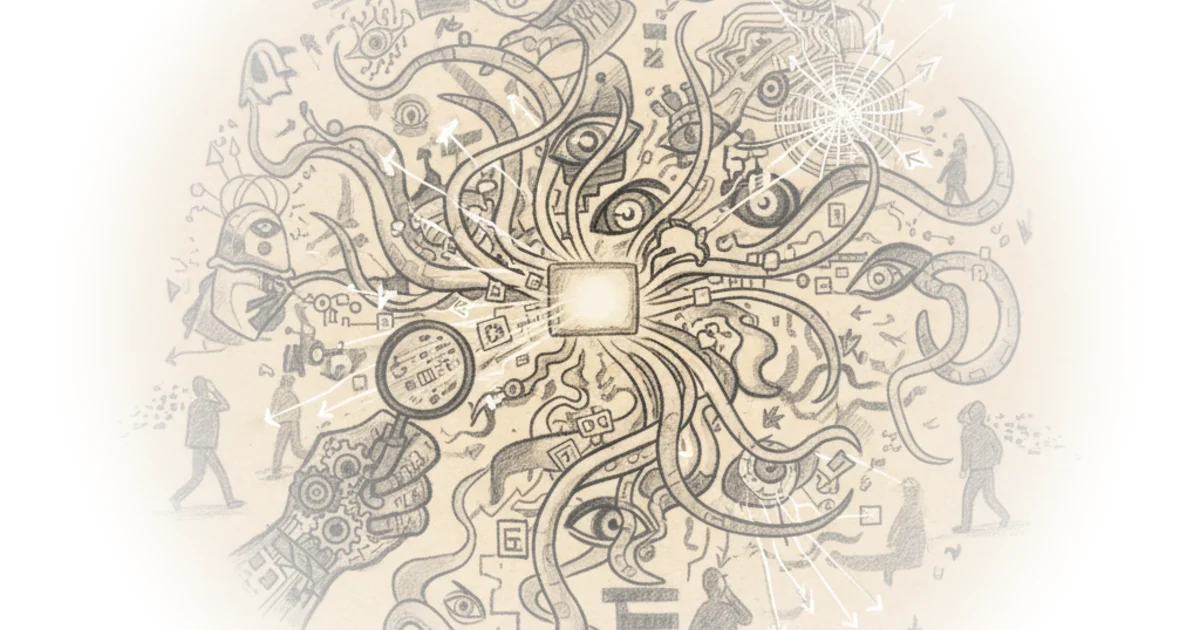
The data supports this shift. Parris found that while movies, death, and politics have expanded their cultural footprint, music and television are less prominent in the zeitgeist. This defies the conventional wisdom that streaming would make TV the new king of culture. Instead, the author suggests that the very mechanisms designed to personalize our experience are eroding the common ground necessary for a shared society. As Parris puts it, "Aside from the occasional Taylor Swift release or Netflix's most-watched show of all time (Squid Game), there is no such thing as an event-ized TV show or album."
Critics might argue that this nostalgia for a unified culture ignores the democratizing power of niche interests, allowing subcultures to flourish without mainstream gatekeepers. However, Parris's point remains potent: without a central narrative, the friction required to build a society weakens.
The Economics of Isolation
The piece takes a sharp turn into behavioral economics, using Parris's own tenure at DoorDash to illustrate how efficiency is being prioritized over human connection. He describes a shift from face-to-face handoffs to "leave at the door" features, noting, "The platform became (and remained) a little more impersonal." This isn't just a logistical change; it is a cultural one where saving time is valued higher than social interaction.
Parris connects this to the concept of Homo economicus, a theoretical figure who always makes perfectly rational, self-interested choices. He writes, "When given the ability to save time and money, Homo economicus will do that thing—no questions asked." The author argues that we are now hyper-aware of the "inefficiencies" of shared experiences, such as coordinating with friends for a movie or waiting for a live TV broadcast. We have optimized our lives to the point where the "taxes" of social friction feel unbearable.
Post-pandemic, we're hyper-aware of the costs we endure for collective experience—the effort required to work alongside others, go to theaters, or watch a TV show at its precise airtime.
This framing is particularly striking when applied to the workplace. Parris recounts how employees, despite feeling disconnected, refused to return to the office because the "fix for cultural isolation was too inconvenient." The result is a world where we have maximized our time but minimized our shared reality. This aligns with the broader historical trend of the "filter bubble," where algorithmic personalization creates distinct realities for different groups, making a unified public discourse increasingly difficult.
The Last Bastion of the Collective
If TV and music have fractured, what remains? Parris identifies two main pillars: politics and the "event-ized" movie. He notes that political news, particularly surrounding the 2016 election cycle and its aftermath, "remains one of the few topics that commands mass attention." Similarly, the film industry has doubled down on creating spectacles that force audiences out of their homes. "Intellectual property, such as superheroes and reboots, has proven most adept at generating cultural spectacle and convincing people to spend $20 on a movie ticket," Parris writes.
The author suggests that this reliance on massive, singular events is a reaction to the fragmentation of the rest of the media landscape. Without a shared TV schedule or a dominant music album, society clings to the few things that still demand simultaneous attention. This creates a strange dichotomy where the most polarizing topics (politics) and the most escapist ones (superhero films) are the only things that truly capture the collective imagination.
The piece concludes with a haunting question about the future of this hyper-rational existence. Parris asks, "in this streamlined future devoid of cultural touchstones, what does Homo economicus talk about at the water cooler?" The implication is that if we continue to optimize for efficiency, we will eventually find ourselves in a world where there is no water cooler, and nothing to say.
Bottom Line
Daniel Parris's analysis offers a sobering corrective to the tech industry's promise of a frictionless future, revealing that the cost of efficiency is the erosion of shared culture. While the argument brilliantly connects data trends to human behavior, it perhaps underestimates the resilience of new, digital-first communities that form outside traditional "water cooler" moments. The strongest takeaway is the warning that a society optimized for individual gain may ultimately lose the ability to function as a collective.