Michael Macleod delivers a rare, clarifying dissection of London's layered political architecture, cutting through the confusion of titles to reveal the high-stakes reality of Sadiq Khan's elevation to the House of Lords. This is not merely a story about a new peer; it is a forensic look at how the capital's governance is shifting while a teenage hacker's sentencing exposes the terrifying fragility of its digital infrastructure. The piece forces the reader to confront the collision between ancient ceremonial traditions and modern cyber threats, asking whether the city's institutions are robust enough to handle both.
The Architecture of Power
Macleod immediately tackles the semantic minefield surrounding the Mayor of London's new status. He writes, "As he is the first Lord to also be a mayor of London, it's very important not to confuse Lord Khan, mayor of London, with the Lord Mayor of London, a largely ceremonial position appointed by the entirely separate City of London." This distinction is critical, as the City of London Corporation is a quasi-medieval institution that predates the modern metropolis, yet it controls the financial heart of the capital while the Mayor governs the sprawling Greater London area. Macleod notes that despite his new title, Khan "will not get to ride in the ceremonial coach at the annual Lord Mayor's Show," a privilege reserved for the separate officeholder, currently Susan Langley, who is rebranding the role as "Lady Mayor of London."
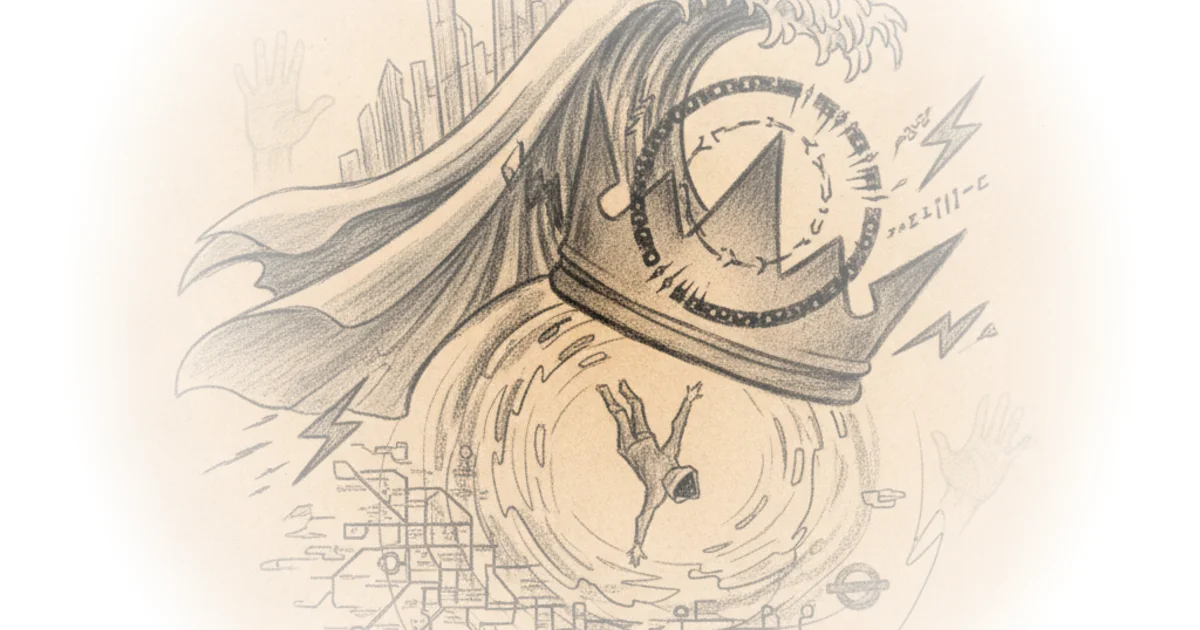
The author uses this confusion to pivot to the political implications of Khan's move. While the official line from City Hall insists Khan will serve his full term and use the Lords to advocate for London, Macleod points to the groundwork being laid for his successor. He observes that political ally Dawn Butler has begun fundraising for a campaign that "definitely looks a lot like a mayoral campaign that is ramping up," while other Labour figures like Rosena Allin-Khan are also positioning themselves. The core of Macleod's argument is that Khan's elevation signals a transition, even if the timeline remains opaque. He notes that Khan has promised to make his decision public in "year three" of his term, suggesting that the upcoming pedestrianisation of Oxford Street could be the catalyst for a formal announcement.
Khan's elevation to the House of Lords is another point in favour of the theory that he won't run for a fourth term as mayor in 2028.
Critics might argue that assuming Khan's departure is premature, given his continued popularity and the lack of a clear successor with a unified mandate. However, the sheer volume of internal maneuvering Macleod documents suggests the political machinery is already turning toward the next cycle, regardless of the Mayor's personal intentions.
The Digital Frontline
The tone shifts dramatically as Macleod moves from the corridors of power to the courtroom at Woolwich Crown Court. Here, the focus is on Thalha Jubair, a teenager from Tower Hamlets, and his co-conspirator Owen Flowers, who were jailed for five and a half years for a massive cyberattack on Transport for London. Macleod highlights the chilling casualness of the attackers, quoting Jubair's message to Flowers: "Everyone in irl [in real life] is [p]robably mad as fck." This sentiment was proven correct as the court heard how the pair, motivated by "selfish bravado heedless of the severe consequences to others," caused £39m in damages and stole millions of records.
The coverage is particularly effective in contrasting the sophistication of the hack with the immaturity of the hackers. Macleod details how the pair used social engineering to bypass security, tricking support staff into resetting passwords, and then used their access to snoop on celebrity travel history. The text reveals the disturbing reality of Jubair's "online upbringing," where he was "groomed and exploited" by older hackers after seeking validation due to severe bullying. His defense team argued a link between his autism spectrum disorder and the offenses, yet the prosecution rightly countered that "thousands of young people with autism and ADHD who do not choose to undertake this kind of criminal activity."
"Fuck the railways n shit"
This phrase, exchanged by Jubair after being kicked out of the system, encapsulates the reckless disregard that defined the attack. Macleod notes that even while awaiting trial, Jubair managed to smuggle mobile phones into his cell, complete with cryptocurrency wallets and encrypted messaging tools. This detail underscores the difficulty of containing digital threats; as Olly Shaw of the City of London police noted, the case highlights the need for a "digital prison" to monitor such offenders, yet the reality is that "the life chances of these two defendants are now heavily restricted."
The Battle for Public Space
The final section of the piece turns to a physical struggle for space, contrasting the digital chaos with the eviction of The Artist's Garden from the roof of Temple tube station. Macleod describes the garden as the "world's only women-only sculpture park," a project that took five years to establish on neglected Victorian land. The conflict arises from TfL's property arm, Places for London, which claims the roof is needed for repairs to attract a new tenant, potentially linked to Soho House founder Nick Jones.
Macleod captures the frustration of founder Claire Mander, who feels her charity is being "steamrollered" in a power play. She argues that the space is "de facto public land" and that the eviction ignores the "gentlemen's agreements" that allowed the gallery to flourish during the pandemic. The article raises a vital question about the prioritization of commercial value over cultural and social utility. Mander's assertion that "women do not see themselves reflected in the sculpture of the city" adds a layer of social urgency to the dispute, framing the eviction not just as a lease issue but as a setback for representation.
"We're in the middle of a power play and we're being steamrollered."
While TfL maintains that the garden has been "valued and much-loved," the imminent eviction suggests that financial imperatives often override community achievements in London's crowded landscape. The potential involvement of a high-profile figure like Nick Jones complicates the narrative, raising questions about whether the garden is being sacrificed to facilitate a luxury development.
Bottom Line
Michael Macleod's piece is a masterclass in connecting disparate threads of London life, showing how the city's ancient institutions, its digital vulnerabilities, and its struggle for public space are all part of the same fragile ecosystem. The strongest element is the unflinching portrayal of the TfL hackers, which strips away the glamour of cybercrime to reveal the human cost and the systemic failures that allowed it. The biggest vulnerability lies in the speculative nature of the political section, where the assumption of Khan's departure relies on circumstantial evidence rather than a confirmed decision. Readers should watch closely for the Oxford Street announcement, which will likely serve as the definitive moment for London's next political chapter.