Devin Stone doesn't just report on a chaotic congressional hearing; he dissects a surreal breakdown of the rule of law where the Attorney General of the United States seemingly treats a federal oversight committee like a personal debate stage. The most startling claim isn't just that Pam Bondi refused to answer questions about Jeffrey Epstein's co-conspirators, but that she justified this evasion by pivoting to stock market indices and that the Department of Justice was actively spying on lawmakers reviewing the very documents they were legally required to release. For anyone trying to cut through the noise of political theater, Stone's analysis of the "Twilight Zone" atmosphere provides a necessary map to a situation where the chief law enforcement officer appears to be working against the law she swore to uphold.
The Spectacle of Non-Responsiveness
Stone opens by highlighting the sheer absurdity of the hearing, where Attorney General Pam Bondi ignored the cardinal rule of congressional testimony: answering the question asked. As Stone puts it, "It was like a Twilight Zone moment... to have a witness who also happened to be the attorney general of the United States of America, our chief law enforcement officer, not being able to respect a single rule of the committee." The author notes that Bondi didn't just dodge questions; she filibustered, insulted members of Congress, and bizarrely cited the Dow Jones Industrial Average as a defense for inaction on child trafficking.
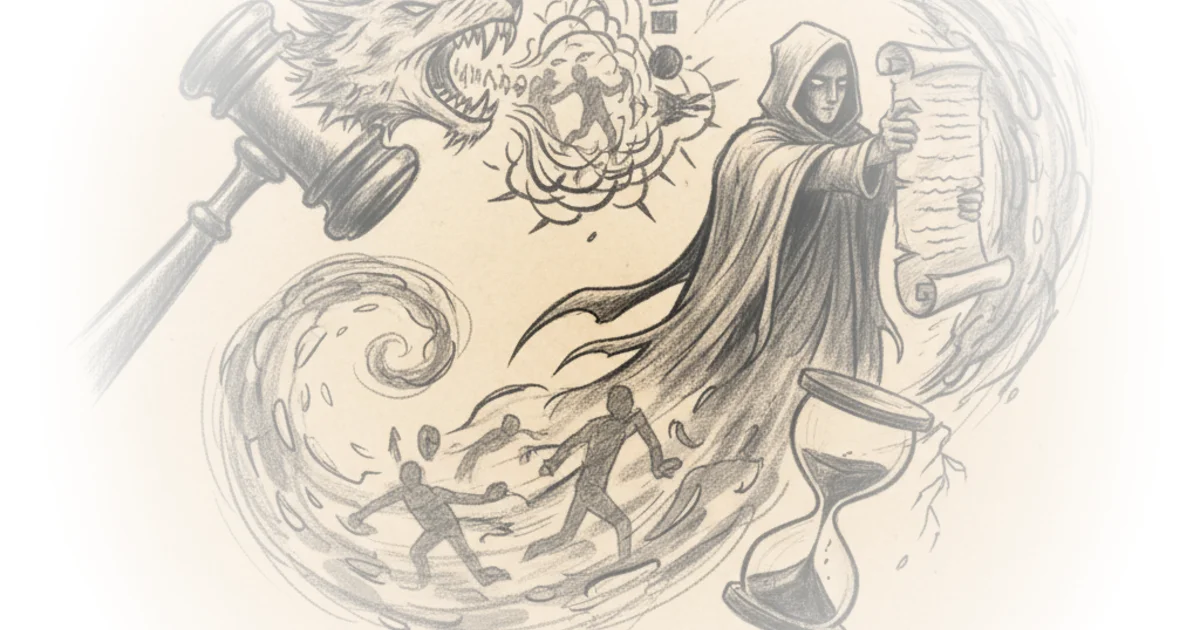
This framing is effective because it moves beyond standard political bickering to expose a fundamental disrespect for the oversight process. Stone argues that Bondi's behavior wasn't a mistake but a calculated strategy. "She became very animated and passionate and focused when she was talking about the Don Lemon case... And then with more than a thousand victims of Epstein, it was all completely bureaucratic cold indifference." The contrast Stone draws between Bondi's fervor for political distractions and her apathy toward victims suggests a deliberate prioritization of the administration's agenda over justice.
Critics might argue that the sheer volume of documents—six million—makes immediate, perfect compliance impossible, and that Bondi was simply managing a massive logistical challenge. However, Stone counters this by pointing out that the law mandated a 30-day release window that has long passed, and that the administration has already admitted to releasing only half the required files.
Pam Bondi, it's very clear to me, especially after yesterday, is just part of a systemic cover up of what was taking place. And Donald Trump is central to it.
The Spying Scandal and the "Burn Book"
The piece takes a darker turn when Stone details the mechanism used to obstruct the review of unredacted documents. Instead of providing secure, independent access, the Department of Justice set up four computers in an annex that allowed them to track every search and document viewed by members of Congress. Stone describes this as a "cat and mouse" game where the government was "following um all the breadcrumbs of where we were going so they would know what we were looking at."
This revelation transforms the narrative from one of bureaucratic incompetence to active surveillance of the legislative branch. Stone notes that this was discovered when a photographer captured a "burn book" Bondi had compiled, listing insults for each committee member alongside their search history. "They were basically spying on us as we were using their computer program," Stone writes, emphasizing that this violates the separation of powers and the Speech and Debate Clause. The argument here is compelling because it suggests the administration views the transparency law not as a mandate, but as a game to be rigged.
A counterargument worth considering is whether the "burn book" was a formal record or a private note, and if the tracking was a standard security protocol gone wrong rather than a malicious plot. Yet, Stone's insistence that the procedure was designed to monitor lawmakers rather than protect documents undermines the administration's claim of good faith.
Legal Obstruction and the Privilege Defense
Stone also tackles the legal maneuvering employed by Bondi, specifically her claim that internal Department of Justice memos and indictments were protected by privilege. Stone dismantles this defense by pointing to the text of the Epstein Files Transparency Act, which explicitly overrides such claims. "Privilege is not a defense to withholding responsive documents," Stone asserts, noting that the federal law passed almost unanimously was clear on this point. He argues that Bondi's reliance on privilege is a "fraudulent argument" designed to stall.
The author connects this legal obstruction to a broader pattern of leniency toward the wealthy and powerful, citing Trump's pardons of insurrectionists and white-collar criminals. "Hundreds of millions of dollars that was supposed to have gone to the victims of crime have gone back to the perpetrators because of Donald Trump's extraordinary white collar leniency pardon policies," Stone writes. This connects the specific hearing to a systemic issue of justice being for sale.
While separation of powers disputes over executive privilege are complex and often settled in court, Stone's interpretation that the specific statute overrides general privilege claims is a strong legal reading that aligns with the intent of the transparency law. He challenges the notion that the President can use executive privilege to hide his own potential criminal activity as a private citizen.
We're not going to accept that anymore and we're going to need a complete reset on the procedure of this thing. It's not a game.
Bottom Line
Devin Stone's most powerful contribution is his unflinching portrayal of the hearing not as a political dispute, but as a systemic failure where the rule of law is being actively dismantled by the very people sworn to enforce it. The strongest part of his argument is the evidence of active surveillance of Congress, which shifts the blame from incompetence to malice. The biggest vulnerability in the administration's defense is their own admission that they are playing a "game" rather than executing the law faithfully. Readers should watch for how Congress responds to the spying allegation, as this may be the only leverage strong enough to force the release of the remaining documents.