Michael Macleod delivers a rare, ground-level look at the impending arrival of self-driving robotaxis in London, cutting through the hype to reveal a city that is largely unaware of the transformation about to unfold. While the technology promises a revolution in urban mobility, Macleod exposes a stark disconnect between the corporate rollout and the chaotic, human-centric reality of British streets.
The Invisible Rollout
The piece opens with a striking observation: despite the imminent launch of Waymo's service, most ordinary Londoners treat the technology as science fiction. Macleod writes, "Self-driving taxis really are on track to carry paying customers in London this year. Most ordinary Londoners haven't the faintest clue that this is happening." This framing is crucial; it shifts the narrative from a futuristic fantasy to an immediate, unannounced policy shift. The author's investigation into the physical logistics—tracking the vehicles from Chiswick to the industrial sprawl of Park Royal—grounds the story in tangible reality rather than abstract algorithmic promises.
"Moving around London is not the same as moving around Phoenix in Arizona."
This quote from Professor Jack Stilgoe, cited by Macleod, serves as the article's intellectual anchor. The argument here is that the regulatory and physical environment of London presents unique hurdles that US-based testing cannot anticipate. Macleod effectively highlights the specific friction points: zebra crossings that rely on non-verbal eye contact and narrow lanes designed for horse-drawn carts. The coverage suggests that the "magic" of the technology may falter when faced with the messy, improvisational nature of London traffic.
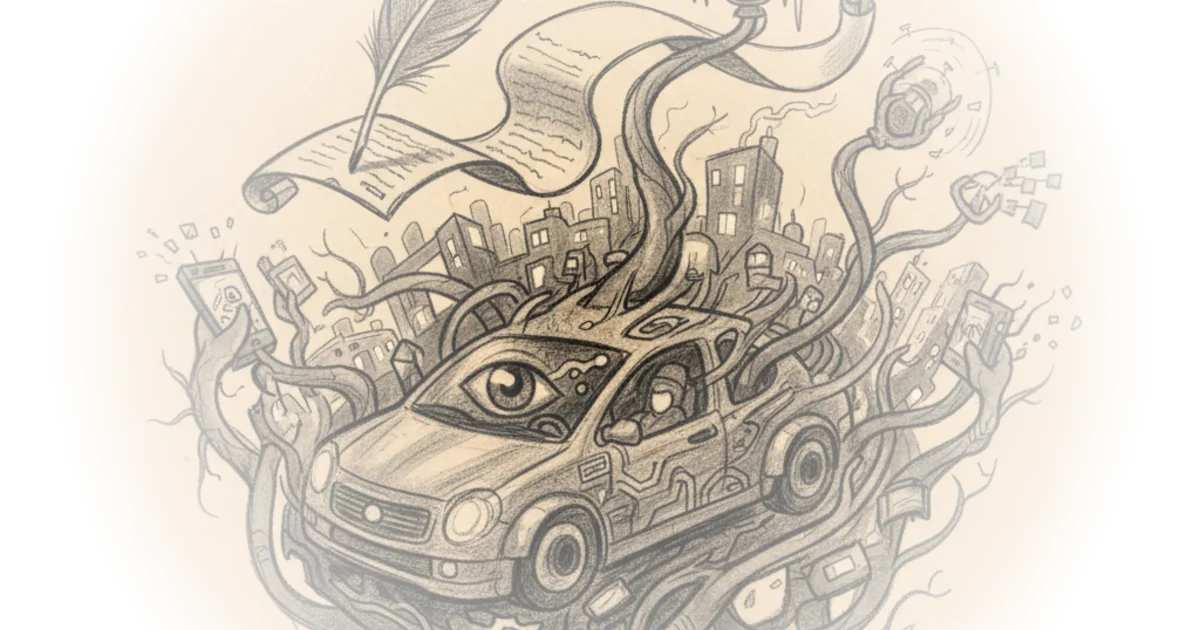
Critics might argue that the focus on edge cases like zebra crossings distracts from the broader safety data, but Macleod's inclusion of the "Mechanical Turk" situation—where a human driver was actually behind the wheel during the author's observation—adds a layer of necessary skepticism. It forces the reader to question how much of the current "autonomous" behavior is truly AI and how much is human calibration.
The Human Cost of Automation
Beyond the technical glitches, Macleod pivots to the social and economic friction inevitable in any disruptive transport launch. The article notes that Uber drivers are already protesting, fearing for their livelihoods, while the company prepares for the "inevitability that accidents will happen." Macleod writes that Waymo is "hiring London-based staff to deal with serious and 'graphic' incidents," a chilling detail that underscores the high stakes of deploying unproven systems in dense urban centers.
The author draws a parallel to previous transport shocks, noting, "It's possible that it achieves both [revolution and controversy]." This balanced perspective avoids the binary of utopia or dystopia. Instead, it presents a likely future of "street-by-street battles" similar to those seen with e-bike operators like Lime, where regulatory net-closing intensifies as public trust erodes. The coverage of the Lime situation in Islington serves as a cautionary tale: "The council made clear that operational noise at night, dangerous and inconsiderate parking, unsafe rider behaviour are all unacceptable and must be addressed immediately." This context suggests that robotaxis may face an even steeper climb to public acceptance.
The Regulatory Void
Macleod also touches on the broader institutional dynamics, questioning whether the current framework can handle the complexity of AI-driven transport. The article highlights the tension between the desire for innovation and the need for safety, quoting Waymo's spokesperson who claims their cars are "ten times less likely to be involved in a serious injury crash." However, Macleod juxtaposes this with the reality of San Francisco, where the service has been linked to blocked fire hoses, honking disturbances, and even fatalities involving pets.
The core of the argument is that safety statistics from the US may not translate directly to the UK. As Macleod puts it, "If the police put tape across a road and ask vehicles to turn around, what happens if that vehicle doesn't have anybody in it?" This question cuts to the heart of the institutional gap: the law and social norms have not yet caught up with the technology. The piece implies that without a robust, adaptive regulatory body, the rollout could become a series of reactive crises rather than a planned evolution.
"Negotiating with a robot, where you can't read the robot's intentions, becomes really complicated."
This observation from Professor Stilgoe encapsulates the fundamental cultural barrier. The British road system relies heavily on implicit social contracts and non-verbal communication. Macleod's reporting suggests that the algorithmic rigidity of the robotaxi may clash violently with the fluid, often rule-bending nature of London driving.
Bottom Line
Macleod's strongest contribution is the demystification of the robotaxi rollout, revealing it not as a distant future event but as an immediate operational reality that the public and regulators are ill-prepared to handle. The piece's biggest vulnerability is its reliance on the assumption that the technology will inevitably succeed despite these cultural mismatches, though the author does a commendable job of highlighting the potential for significant disruption. Readers should watch for how the government responds to the first major incident involving an autonomous vehicle in London, as that will likely define the future of the industry in the capital.