In an era where synthetic voices can mimic human experience with terrifying precision, The Walrus delivers a forensic autopsy of a fraud that exposes a rotting foundation in modern journalism. This isn't just a story about a fake byline; it is a chilling examination of how economic desperation and algorithmic ease have converged to trick editors into publishing content that never happened. The piece forces a confrontation with a terrifying question: if we can no longer trust the human behind the keyboard, what is left of the newsroom?
The Architecture of Deception
The Walrus frames the case of "Victoria Goldiee" not merely as a prank, but as a symptom of a degraded media ecosystem where the barrier between pitch and reality has dissolved. The authors note that while the Sports Illustrated scandal involved a magazine choosing to use AI to fill pages, the Goldiee case represents something far more insidious: "publications being duped by bad actors who, aided by technology, are sneaking in stuff that appears totally made up." This distinction is crucial. It shifts the blame from a conscious corporate decision to cut corners to a systemic vulnerability where editors are actively being tricked.
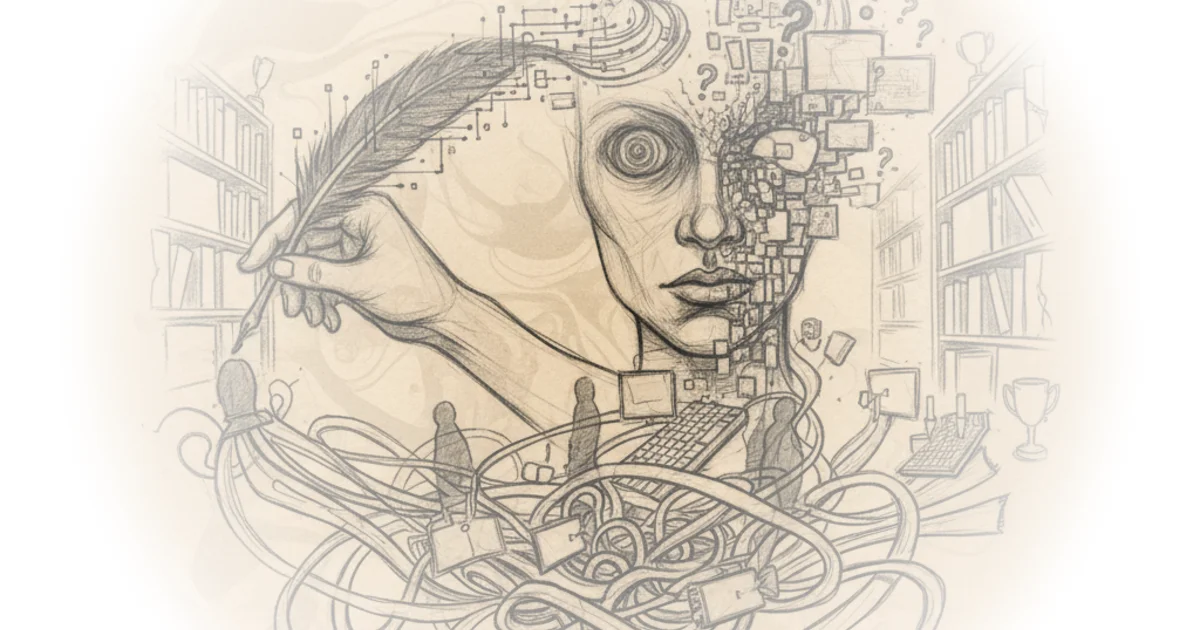
The commentary highlights the terrifying ease with which this deception occurs. "An amazing pitch can be this key that opens doors you never thought could be opened," the text observes, recalling the traditional meritocracy of journalism where a strong sample could launch a career. Today, that meritocracy is broken because "there doesn't need to be any link between the pitch and the person." The authors argue that this separation of the writer from the work creates a world where editors cannot verify the source of the content, rendering the traditional vetting process obsolete.
"It has no value to me, even if I might not be able to spot it at this point, unfortunately."
This sentiment strikes at the heart of the philosophical crisis. The Walrus suggests that the value of journalism is not just in the information conveyed, but in the human experience behind it. When a piece describes moving through underground music spaces in England with vivid detail, but the author may never have left Nigeria, the text becomes a hollow shell. The authors argue that while the writing might be "impressive," it lacks the "irreducible value" of a human soul. Critics might note that readers often consume news for utility rather than art, and if the facts are correct, the origin might matter less to a casual consumer. However, the piece counters that in a landscape flooded with AI, the origin story becomes the only remaining metric of truth.
The Economic Engine of Fake News
Moving beyond the mechanics of the fraud, the commentary digs into the economic incentives driving this phenomenon. The authors speculate that the perpetrator is likely based in Nigeria, where "a terrible word rate at a publication in the United States could actually be a pretty decent payday—especially if you just have to enter it into ChatGPT." This reframes the story from a simple act of deception to a rational economic response to global inequality. The technology allows a writer to bypass geographic and cultural barriers, turning the global content market into a place where low-cost, high-volume AI generation can outcompete human labor.
The Walrus draws a parallel to social science research, noting that researchers are now finding participants in qualitative studies using AI to generate responses and turning off cameras during interviews. "She was kind of at a loss about how to keep doing the qualitative studies that they usually do," the authors write, illustrating how the problem extends far beyond journalism into the very fabric of knowledge production. This suggests that the "Goldiee-ization" is a widespread issue where the cost of human verification is becoming too high for institutions to bear.
"You can't give an inch to it. You can't have a mix of things that are true and not true in your news publication or the whole thing is destroyed."
This warning underscores the fragility of trust. The authors argue that once a publication accepts synthetic content, the entire brand is compromised. The piece suggests that the industry is at a tipping point where the pressure to feed the content machine is overwhelming the need for verification. "Some of the places that published her were not fly-by-night places," the text notes, pointing out that even reputable outlets are failing because their editorial teams are "leaner and just don't have the resources to vet stuff." This is a damning indictment of a business model that prioritizes volume over quality.
The Future of the Human Voice
The final section of the commentary turns to the future of the profession, asking whether the threat of AI will drive a return to "New Journalistic" standards where the writer's unique voice is paramount. The authors suggest that "writerliness is the expression of an organism," and that sentences carry the rhythm of a person's gait and breath. While chatbots can replicate the "skin" of these sentences, they cannot "incarnate the substance." This somatic view of writing offers a glimmer of hope: that the human element is the one thing AI cannot truly replicate.
However, the authors also express deep skepticism about whether this distinction will hold. "I don't know if there's a way anymore to see a piece of writing and recognize the human soul behind its structure," they admit. The fear is that as AI improves, the tells will disappear, leaving editors with no way to distinguish between a human report and a machine-generated fabrication. The piece concludes with a stark warning about the potential for the industry to collapse into a "content business" where the goal is simply to generate clicks at the lowest possible cost, regardless of truth.
"If there isn't a desk somewhere deep in Condé Nast mulling this, I'd be surprised."
This line captures the anxiety that the "Sports Illustrated" incident was not a blunder, but a preview of a future where media giants might choose efficiency over integrity. The authors argue that while this might make economic sense in the short term, it is a path to the destruction of the journalism industry itself. As search engines degrade and readers are trained to accept AI summaries, the value of original, human-reported work becomes the only remaining differentiator for those who care about truth.
Bottom Line
The Walrus delivers a powerful, unsettling diagnosis of a media industry in crisis, arguing that the rise of AI-generated fraud is a direct result of economic pressures and the erosion of editorial standards. Its strongest move is reframing the "Victoria Goldiee" scandal not as a lone wolf deception, but as a systemic failure that threatens to render the concept of human authorship obsolete. The piece's biggest vulnerability lies in its somewhat romanticized view of the "human soul" in writing, which may struggle to compete with the sheer volume and utility of AI content in a market driven by speed. Readers should watch for how major news organizations respond to this threat, as the choice between maintaining rigorous fact-checking and succumbing to the efficiency of automation will define the future of the newsroom.