More Perfect Union challenges the dominant political narrative by reporting from inside a Trump rally in Erie, Pennsylvania, and finding a surprising consensus on economic justice. The piece argues that the working class, often portrayed as deeply divided by culture war issues, actually shares a unified critique of corporate power, inflation, and the military-industrial complex that transcends traditional party lines.
The Myth of Polarization
The core of the argument rests on a simple, provocative hunch: that the focus on cultural division obscures a shared economic reality. More Perfect Union writes, "for all the focus on culture War issues the working class on the left and the right have a lot more in common than we're led to believe." This framing is effective because it forces the reader to confront the possibility that the political elite benefit from keeping these groups at odds. The author notes that while the bartender and the patrons at a Rust Belt dive bar might assume they are on the same page, the reality is often that they are, despite the media's insistence on their differences.
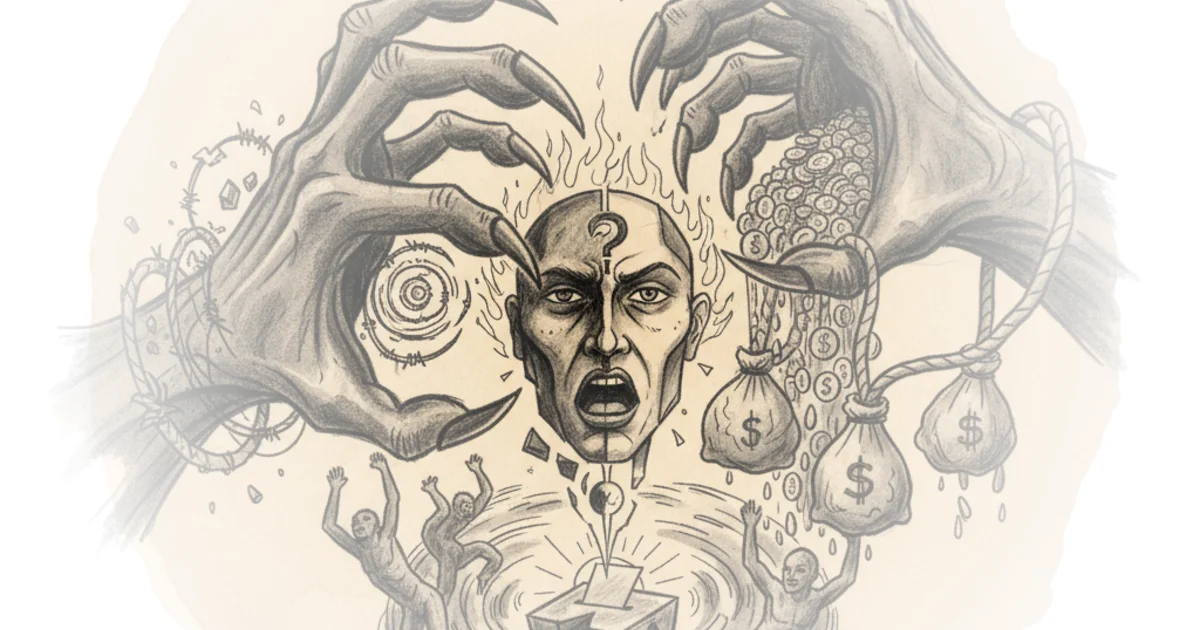
The coverage highlights a specific, recurring theme among the rally attendees: a deep skepticism of the financial sector and corporate consolidation. One attendee, a former oil rig worker, articulates a sentiment that echoes across the political spectrum when he states, "the whole inflation thing it's been building and building for multi- decades." More Perfect Union captures the frustration of workers who feel "hoodwinked" by decades of policy that prioritizes corporate interests over labor. This is not just about partisan grievance; it is about a tangible erosion of purchasing power and job security that affects everyone regardless of their vote.
"We lost our Republic decades ago we're living in an oligarchy so they're the ones calling the shots because that's where the money has come from the media everybody you'll see things like the board or whatever they put on you know the TV you'll have we trying to divide people a lot of the stories are trying to divide divide keep them off the ball."
Critics might note that attributing this unity solely to economic factors ignores the very real and potent role of social identity in driving political behavior. However, the piece suggests that these identity markers are often manipulated by the very same "unelected officials" and corporate interests that workers resent.
The Paradox of the Billionaire Candidate
Perhaps the most striking element of the coverage is how the attendees reconcile their anti-corporate sentiment with their support for a billionaire candidate. The author explores this tension without dismissing it, noting that voters see the current system as corrupted at the highest levels. One rally-goer explains the logic: "whether it's left or right these people they're not really going to change the tax laws from the donors that fund their campaign." The argument here is that the political establishment, regardless of party, is beholden to the same donors, leaving voters with no viable option within the traditional framework.
More Perfect Union points out that these voters do not necessarily trust the billionaire candidate to be a savior, but they view him as a disruptor. As one attendee puts it, "I don't know you know I come to a trump rally um doesn't mean I think he's the greatest guy." The coverage suggests that for these voters, the choice is not between a perfect leader and a flawed one, but between a system that protects monopolies and a candidate who, despite his own wealth, has historically positioned himself against the "Washington establishment." The author notes that the desire to break up monopolies is strong, with voters comparing the current market concentration to the AT&T breakup of the 1980s.
The Power of Direct Action
The piece concludes by shifting from the limitations of electoral politics to the potential of organized labor. More Perfect Union highlights the recent UPS contract negotiations as a concrete example of working-class power in action. The author writes, "There Was You Know the threat of the strike they're really organized they won $30 billion over the term of that contract." This serves as a counter-narrative to the idea that politics is the only path to change. The coverage suggests that when workers stand together, they can achieve results that politicians cannot.
The final argument posits that if the political discourse were to focus on these shared economic demands rather than cultural distractions, the landscape of the election would look radically different. More Perfect Union asks, "what would it look like if for this one presidential election we had conversations like these that focused on the work in class what they demand what they need what they deserve." This question reframes the upcoming election not as a choice between two ideologies, but as a test of whether the political system can respond to the economic realities of the working class.
Bottom Line
More Perfect Union's strongest move is its refusal to caricature the voters at the rally, instead presenting their economic grievances as rational and widely shared. The piece's biggest vulnerability is its reliance on the assumption that these shared grievances will translate into a unified political movement, a leap that history suggests is difficult to make. Readers should watch to see if this economic common ground can survive the intensifying cultural polarization of the election cycle.
"They want us to argue it is that's I mean they want us to argue facade of by or there's two sides when in reality there hasn't been two sides since the 1980s."
The article serves as a crucial reminder that the most potent political force may not be the culture war, but the quiet, shared anger of a working class that feels abandoned by both parties.