Yale University reframes the 1990s not as a simple era of peace, but as a paradoxical decade where a broad policy consensus coexisted with the deep roots of modern political polarization. This lecture, part of the "America at 250" series, offers a crucial corrective to the idea that history is a straight line, suggesting instead that the political fractures we see today were forged in the very years we thought we had solved them.
The Illusion of the Post-Cold War Consensus
The lecture begins by dismantling the comforting narrative that the 1990s were defined solely by a "Washington consensus" or a "neoliberal consensus." Yale University argues that while there was remarkable accord on how the United States should run its economy and project power, this surface-level agreement masked deeper, emerging divisions. "One is about the rise of a postcold war consensus... an a remarkable amount of accord around certain ideas about how the United States ought to be running its politics and economy," the text notes, immediately pivoting to the counter-narrative. This dual framing is essential for any serious student of modern history, as it prevents the reader from viewing the decade as a mere interlude between the Cold War and the 21st century's conflicts.
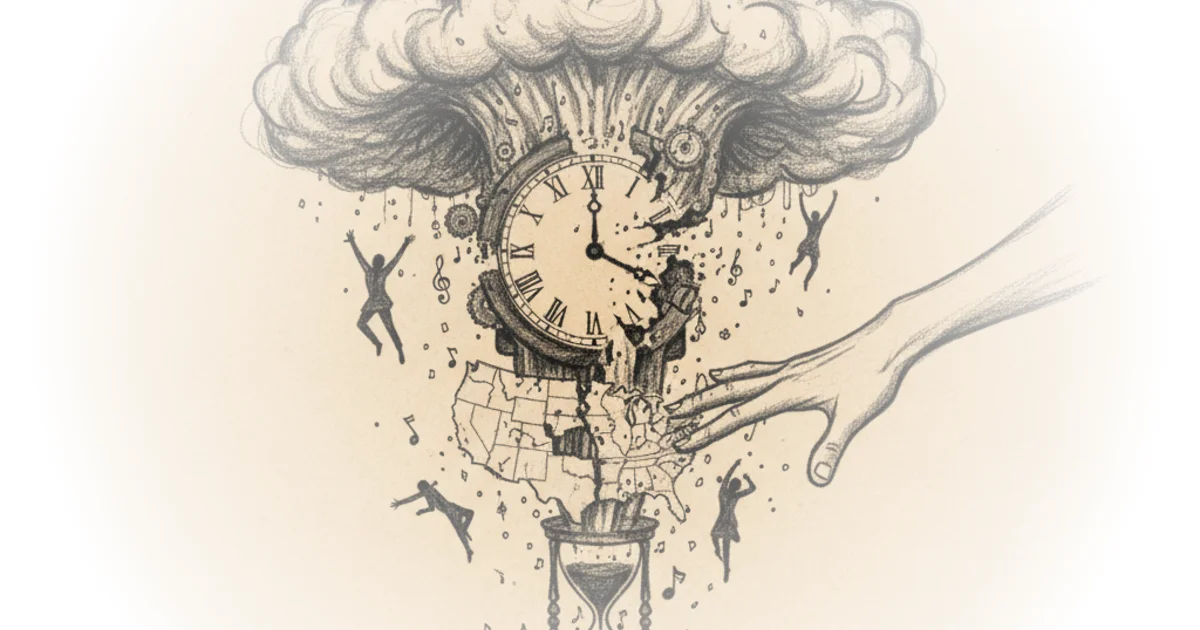
The speaker posits that the 1990s are still being "thought through and defined and redefined as we get a little more distance on it," noting that historians generally need about thirty years to make sense of patterns. This methodological point is vital: it reminds the audience that the current political turbulence is not an anomaly, but the result of long-term structural shifts that began decades ago. The argument holds up well because it acknowledges the complexity of the era rather than forcing it into a single, tidy box.
"It's a good question, and it's one we're going to wrestle with... how could that be a decade of consensus and a decade of polarization at the same time?"
The Reagan Revolution: Ideology Meets Pragmatism
Moving backward to the 1980s, the lecture dissects the rise of the Reagan administration, portraying it as a movement that was both ideologically rigid and pragmatically flexible. Yale University highlights how Reagan himself framed his 1981 inauguration as the culmination of decades of conservative intellectual work, name-checking figures like Friedrich Hayek and Margaret Thatcher. The text quotes Reagan's assertion that "the cult of the state is finally dying," a bold declaration that set the tone for the era's push against the administrative state.
However, the commentary effectively complicates this image by suggesting that governing is rarely as clean as campaigning. The lecture points out that the 1980s were driven as much by "pragmatic exchanges and constraints" as by grand ideology. This is a nuanced take that avoids the trap of treating political leaders as mere caricatures of their manifestos. The firing of the air traffic controllers in 1981 is presented not just as a labor dispute, but as a watershed moment that "led to a dramatic decrease in the use of strikes as a form of political organizing," fundamentally altering the balance of power between workers and the government.
Critics might note that the lecture glosses over the human cost of these economic shifts, particularly regarding the AIDS crisis, which the text admits Reagan was "famous for... late and relatively hesitant to engage with." While the focus remains on policy and institutional dynamics, acknowledging this hesitation is a necessary, if brief, nod to the administration's blind spots.
Starving the Beast and the Deficit Paradox
Perhaps the most striking economic insight in the piece is the discussion of "starve the beast," the theory that cutting taxes would force the government to shrink because it would lack the funds to spend. Yale University explains that while the theory of "trickle down economics" promised growth that would increase the tax base, the reality was different. "It turns out actually if you lower tax rates, you have less tax revenue," the text states bluntly. This admission of unintended consequences is a powerful moment of historical honesty.
The lecture connects this fiscal reality to a strategic political goal: using deficits to shrink the welfare state. David Stockman, Reagan's budget director, is cited as a champion of this view. This reframes the massive deficits of the 1980s not as a failure of management, but as a deliberate, if risky, political strategy. It forces the reader to reconsider the origins of modern fiscal debates, showing how the tools used to dismantle the New Deal state were forged in the fires of the 1980s.
The Cold War's Endgame
The lecture concludes its historical sweep by examining the end of the Cold War, moving beyond the iconic "tear down this wall" moment to explore the complex machinery of diplomacy and military buildup. Yale University describes Reagan's strategy as simple on the surface—"we win they lose"—but complicated in execution, involving everything from the "Star Wars" missile shield to negotiations with Mikhail Gorbachev. The text captures the shift in tone as the decade closed, noting Reagan's prediction that the US and Soviet Union were moving toward a "much more cooperative relationship."
This section serves as a bridge to the 1990s, illustrating how the resolution of one global crisis (the Cold War) created the conditions for new, domestic ones (polarization). The framing suggests that the peace of the 1990s was not a return to normalcy, but a transition into a new, unstable era.
"Part of what history is all about is looking at people in their moment, trying to make sense of the past to tell them where they might be going in the future. And sometimes they get it right, sometimes they can't see what's coming."
Bottom Line
Yale University's strongest contribution here is its refusal to let the 1990s off the hook as a decade of simple consensus, instead revealing it as the incubator for today's political fractures. The argument's greatest vulnerability is its reliance on high-level policy analysis, which may leave the human cost of these shifts feeling abstract. Readers should watch for how these historical patterns of "starving the beast" and ideological polarization continue to shape current legislative battles.
"It turns out actually if you lower tax rates, you have less tax revenue. And that was one of the great lessons of the 1980s."
The lecture succeeds in making the past feel urgent, proving that the debates of the 1980s and 1990s are not just history, but the very foundation of the world we inhabit today.