The Culture War Backfire
Asawin Suebsaeng's piece captures a striking moment when institutional power and cultural influence diverge sharply. The administration that confidently launched cultural battles now finds popular entertainment and public sentiment moving in the opposite direction. What makes this notable isn't just the political messaging—it's the visible gap between official positioning and what ordinary audiences actually embrace.
The Super Bowl as Political Barometer
The halftime show became an unexpected referendum. Bad Bunny's performance carried an explicit message of diversity and inclusion that stood against the administration's ethnic-cleaning campaigns. Asawin Suebsaeng writes, "The only thing more powerful than hate is love," quoting the performer's Grammys speech that echoed through the Super Bowl stage.
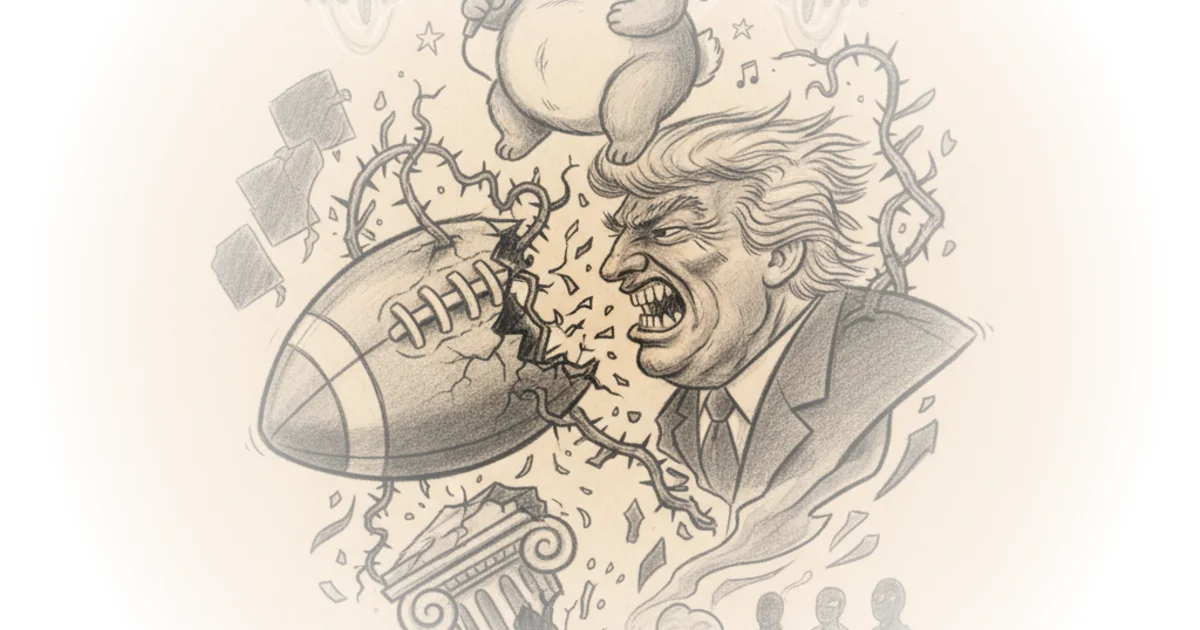
The White House response was immediate and harsh. Asawin Suebsaeng writes, "The Super Bowl Halftime Show is absolutely terrible, one of the worst, EVER! It makes no sense, is an affront to the Greatness of America, and doesn't represent our standards of Success, Creativity, or Excellence." This reaction came via social media, complete with complaints about the dancing being "disgusting" for children watching worldwide.
Administration officials attempted counter-programming. Defense Secretary Pete Hegseth endorsed the Turning Point USA alternative concert. Health Secretary Robert F. Kennedy Jr. posted videos with Kid Rock. Dan Bongino wrote, "Kid Rock > Sad Bunny. Congrats TPUSA." The forced enthusiasm, as Suebsaeng notes, matched only by "the smiling face at the end of the 2022 horror film 'Pearl.'"
"Basically anyone who ordinary people like."
The polling told a clear story. Asawin Suebsaeng writes, "More Americans are interested in watching Bad Bunny perform in Sunday's Super Bowl's halftime show than Turning Point USA's Kid Rock-headlined alternative concert." The administration's cultural positioning lost the popular vote.
The Epstein Class Scandal
A three-word term gained traction among Democratic operatives this weekend: "The Epstein Class." Senator Jon Ossoff used it to describe the ruling party and its ultra-wealthy enablers, comparing the presidency to a klansman. Several longtime Democratic operatives wanted their party to discover message discipline and relentlessly brand the administration with this label.
The Epstein files continue producing disclosures. Howard Lutnick, who once said he never wanted to spend time with "that disgusting person" Jeffrey Epstein, appears in the files 250 times. In the UK, Prime Minister Keir Starmer faces pressure after his chief of staff resigned over appointing Peter Mandelson—Epstein's close friend—as ambassador to the US.
Asawin Suebsaeng writes, "How come Europeans are quitting over Epstein, but Americans—like Howard Lutnick—aren't?" The question underscores the accountability gap between institutions.
Blue Wave Building
Electoral dynamics suggest 2026 could produce significant shifts. Democrat Chasity Verret Martinez won a Louisiana state House special election in a administration-dominated district with a 37-point swing. A Texas Democrat recently won a ruby-red district with a 31-point swing.
Critics might note that special elections often reflect local dynamics rather than national trends, and that one or two results don't guarantee a wave. But the magnitude of these swings—particularly in districts previously considered safe—suggests something broader is happening.
The administration's mass detention policies received backing from the 5th Circuit Court of Appeals in a 2-1 decision. Judges ruled the administration can detain deportation targets without bond, regardless of criminal record or time spent in the US. A federal judge in New Jersey said she's "unpersuaded" by the ruling, which applies only in Texas, Louisiana, and Mississippi.
The Cultural Currency Question
At the dawn of this administration's second term, advisers and GOP politicos believed they were winning the culture wars. The presidency had secured a share of the popular vote. A-list celebrities calculated that being publicly opposed would lose them business and fandom. Mainstream entertainment looked poised to shift.
Now, the culture drifts faster away. Asawin Suebsaeng writes, "what Trumpism truly represents is a moral minority, with rapidly diminishing cultural currency." Polls show the American people rejecting the administration's policies across the board—including younger voters who took a chance in 2024.
The president turned releasing the Jeffrey Epstein files into a campaign promise. That chain reaction led to the second administration drowning in months of scandal and embarrassing disclosures. Asawin Suebsaeng writes, "the right is being reminded—and not just by Bad Bunny and perennially liberal celebs—that what Trumpism truly represents is a moral minority, with rapidly diminishing cultural currency."
Critics might argue that cultural popularity doesn't translate to electoral outcomes, and that entertainment figures' positions carry limited political weight. They might also note that the administration's base remains committed regardless of mainstream cultural shifts.
Bottom Line
The administration launched cultural battles confident in victory, but popular sentiment and institutional accountability have moved against it. The gap between official positioning and public embrace keeps widening—and that gap, not any single scandal or result, is what defines this moment.