Sam Dalrymple forces a necessary reckoning with a historical blind spot: the 1937 separation of Burma from India was not a minor administrative tweak, but the detonator for a century of cascading crises, from the Rohingya genocide to the longest-running civil war in the world. By reframing "Partition" not as a singular 1947 event but as a series of five imperial breakages, the author exposes how economic desperation and xenophobic nationalism in the 1930s laid the groundwork for modern atrocities. This is not just history; it is the missing manual for understanding why the borders of South and Southeast Asia remain so violently contested today.
The Forgotten Domino
Dalrymple begins by dismantling the standard narrative that focuses solely on the 1947 split between India and Pakistan. He argues that the Raj was far more expansive than modern maps suggest, stretching from Yemen to Burma. "Partition was not one rupture, but a series of five imperial breakages that created twelve modern nation states," he writes. This reframing is crucial because it shifts the analytical lens from a single moment of independence to a prolonged process of imperial disintegration that reshaped the entire region.
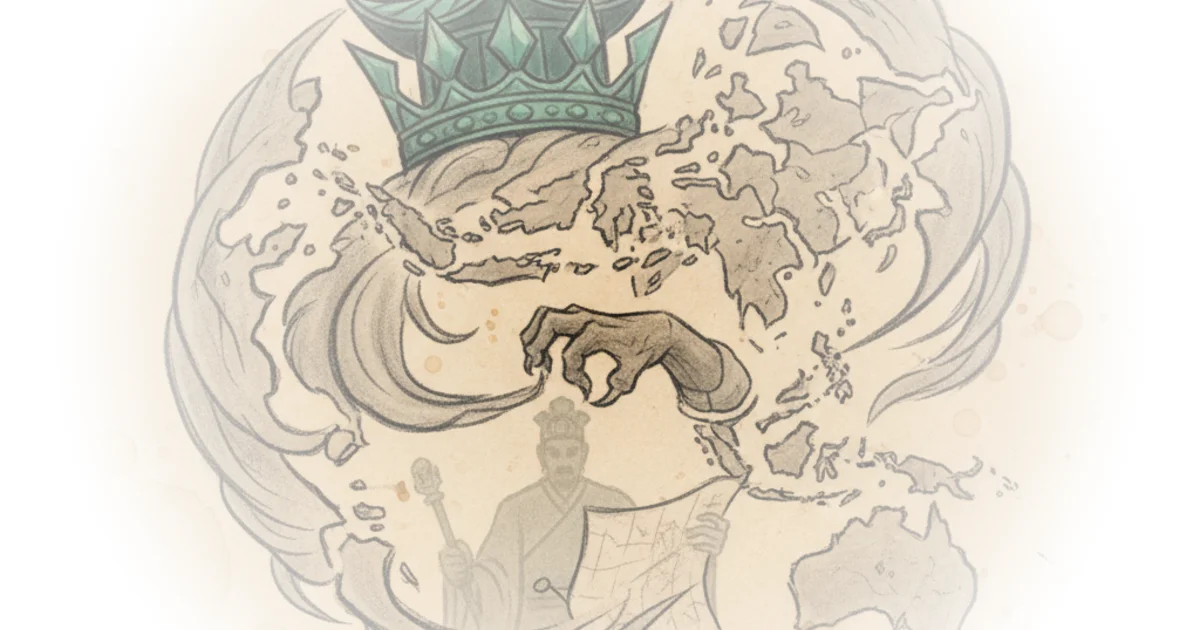
The author zeroes in on the 1937 separation of Burma, an event he describes as "almost entirely forgotten" despite its catastrophic consequences. He notes that in the 1920s, Rangoon was a global economic powerhouse, with one British official noting it had become the "first immigration and emigration port of the world." However, the Great Depression shattered this prosperity, turning economic anxiety into racial hatred. Dalrymple explains how Burmese elites, facing debt defaults on land held by Tamil moneylenders, began to champion a movement to "take back control," painting Indian migrants as a parasitic burden.
"The Burmese Dream was rapidly outpacing the American one... but in the wake of a massive recession, an anti-immigration lobby in Burma would gain massive power."
This historical parallel to modern anti-immigration movements is striking, yet Dalrymple is careful to ground it in the specific mechanics of the Great Depression. The core of his argument is that the separation of Burma was driven less by a desire for genuine self-governance and more by a reactionary panic over economic displacement. Critics might argue that this economic determinism downplays the genuine cultural and religious distinctiveness of the Burmese people, but the evidence of debt-driven land seizures suggests the economic trigger was the primary accelerant.
The King of the Emerald Pagoda
The narrative then shifts to the human cost of these political shifts, centering on the Saya San Rebellion of 1930. Dalrymple vividly reconstructs the rise of a Buddhist monk who crowned himself king, not as a figure of superstition, but as a symptom of a society pushed to the brink. He describes the scene at the Myasein Taungyo Pagoda where Saya San declared war: "I, Thupannaka Galon Raja, declare war on the heathen British who have enslaved us."
The author's on-the-ground reporting from Tharrawaddy adds a layer of immediacy often missing from historical analysis. He interviews descendants of the rebels, including U Khyaw Soe, whose grandfather fought alongside the monk. The motivation was starkly material: "They came in dhotis, shirtless. If you couldn't pay, they took your buffalo. If you still couldn't, they took your land." Dalrymple uses this testimony to argue that the rebellion was a rational, albeit desperate, response to the collapse of the agrarian economy and the predatory practices of colonial finance.
"People trusted him," Khyaw Soe said plainly. "We had nothing to suspect about his dignity."
This quote underscores the profound disconnect between the colonial administration and the lived reality of the peasantry. While the British dismissed the rebellion as the work of "ignorant" superstitious peasants, Dalrymple shows it was a coordinated uprising fueled by very real grievances. The author details the brutal suppression that followed, noting that the Indian Army was deployed to quell the revolt, leading to atrocities that would haunt the national memory. The description of colonial forces cutting off the heads of sixteen rebels and carrying them to the police station is presented not as a footnote, but as a central event that radicalized the population.
The Legacy of Violence
Dalrymple's analysis of the trial and execution of Saya San reveals the deep irony of the colonial legal system. The prosecution attempted to criminalize traditional tattooing, a cultural obligation, by claiming it marked rebels. The author notes that the decision to proceed was only halted because one of the Burmese judges was himself covered in tattoos. Despite this, the British courts condemned Saya San to death, a move that failed to extinguish the spirit of resistance.
"Saya San, U Aung Hla and other rebel leaders were hanged, but the nationalism that they had helped to further refused to be buried with their bodies."
This is the piece's most powerful insight: the violence of the state did not break the movement; it cemented a distinct Burmese nationalism that was separate from the Indian independence struggle. Dalrymple argues that this separation was the true origin of the region's modern conflicts. By severing Burma from India, the British created a vacuum that allowed for the rise of ethnic insurgencies and the eventual persecution of the Rohingya. The author suggests that the "Rohingya crisis" and the "origins of the Gulf War" are all aftershocks of these imperial breakages.
Critics might note that attributing the entirety of modern Southeast Asian instability to the 1937 separation risks oversimplifying a complex web of Cold War dynamics and post-colonial governance failures. However, Dalrymple's focus on the seeds of these conflicts provides a necessary foundation for understanding their persistence. The argument holds weight because it connects the economic policies of the 1930s directly to the ethnic tensions of the 21st century.
Bottom Line
Sam Dalrymple's most compelling contribution is his ability to link the economic anxieties of the Great Depression to the ethnic violence of the modern era, proving that borders drawn in colonial offices have lethal consequences decades later. The piece's greatest vulnerability is its heavy reliance on a single historical narrative to explain a continent's complexity, yet its emotional resonance and rigorous attention to the human cost of policy make it essential reading. For anyone trying to understand the current instability in South and Southeast Asia, this is the story that was never told, but must now be known.