This piece delivers a chilling verdict on a hypothetical future: the moment hawkish factions finally achieved their decades-long dream of war, they found themselves trapped in a nightmare of their own making. Reason reports that the Strait of Hormuz, once a storybook waterway, has become a chokehold on the global economy, proving that the cost of regime change is not just in blood, but in the collapse of the very systems the administration sought to protect.
The Price of a Closed Strait
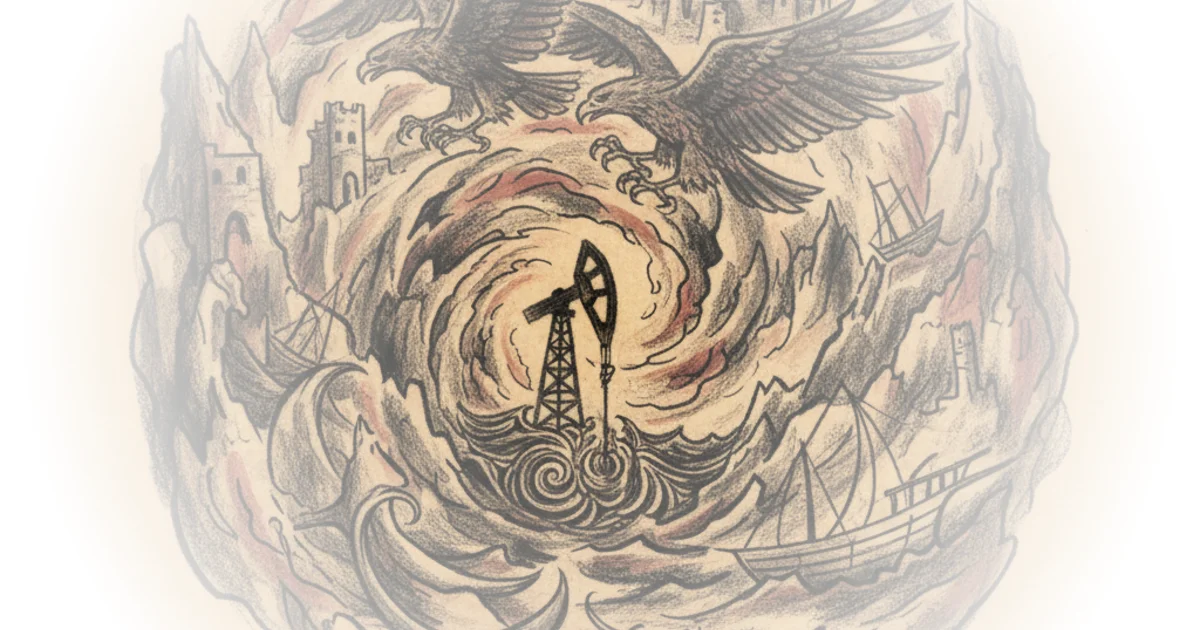
The article opens with a stark contrast between the beauty of the Persian Gulf and the devastation of a modern industrial crisis. "The Strait of Hormuz is straight out of a storybook," the editors note, describing jagged cliffs and ancient castles, before pivoting to the grim reality: "On February 28, 2026, shortly after Israel and the United States attacked Iran, the Iranian military broadcast on the radio that the strait was closed for shipping." The consequences were immediate and catastrophic. Global crude oil prices nearly doubled, and critical shortages began to ripple through the semiconductor, pharmaceutical, and food industries.
The piece argues that the administration's goal of reopening the strait is now a desperate struggle to reverse the consequences of starting the war. "Starting this war was indeed a choice," the editors assert, highlighting that the executive branch spent months building up forces while issuing shifting demands, only to attack on a weekend between scheduled talks. This framing is crucial; it strips away the illusion of inevitability. The conflict was not a reaction to an immediate threat, but the culmination of a political strategy that made diplomacy impossible.
If the United States wants to stop plunging into Middle East wars, it needs to value its own interests more than it hates its old enemies.
This quote from Robert Malley, cited by Reason, cuts to the core of the failure. The article suggests that hawkish factions from both parties created a political environment where compromise was a liability. They pushed for greater risks while avoiding public debate, effectively rigging the game so that war was the only option left on the table. Critics might argue that Iran's own aggressive rhetoric and support for proxy groups necessitated a hardline response, but the piece counters that a majority of Americans and Iranians were not even born when the original grievances occurred, and the world has fundamentally changed since then.
The Failure of Maximum Pressure
The commentary delves into the historical pattern of missed opportunities, specifically the "grand bargain" offered by Iran in 2003. The piece notes that after the September 11 attacks, Iranian intelligence actually participated in the U.S. retaliation in Afghanistan and proposed a deal to normalize relations in exchange for an end to regime change threats. "The Bush administration disagreed internally on whether the offer was serious and how to respond," Reason reports, but ultimately, the view that the offer was a sign of weakness prevailed. This decision set a dangerous precedent: every time Iran offered compromise, American hawks used it to argue for more pressure.
The article traces this logic through the Obama administration's nuclear deal, which hawks dismissed as appeasement, and into the Trump administration's "super maximum economic pressure." The result was a cycle of escalation that ignored the reality on the ground. "Hawks hated the deal, insisting that they could have secured a better bargain with just a little more pressure," the editors write. This circular logic made diplomacy impossible, leading to a situation where the administration felt compelled to use military force to solve problems that pressure had only exacerbated.
The piece highlights the absurdity of the administration's shifting victory conditions. Since the conflict began, the White House has thrown out contradictory goals: overthrowing the government, making a deal, destroying the nuclear program, or sending Iran's industrial base "back to the Stone Age." "For many hawks, the specific rationales for fighting Iran don't seem to matter," Reason argues. "What they want is someone to pay for the past decades of U.S. failures in the Middle East." This is a powerful indictment of the political motivations driving the war, suggesting that the conflict is less about national security and more about settling old scores.
The Illusion of Quick Victory
The narrative takes a darker turn as it examines the administration's miscalculations regarding the Iranian people and the region's stability. The piece draws a parallel between the current rhetoric and the Bush administration's failed predictions about Iraq. "Iran is not Iraq," argued Rep. Nancy Mace, echoing the sentiment that the Iranian people would welcome foreign intervention. But the article points out that this is "a lot like how the Bush administration sold the Iraq War in 2002," with Deputy Defense Secretary Paul Wolfowitz claiming Iraqis would welcome liberators.
The human cost of this miscalculation is laid bare. Following the arrest of a Venezuelan leader in January 2026, which seemed to validate the idea of easy regime change, the administration encouraged protests in Iran. "Iranian Patriots, KEEP PROTESTING—TAKE OVER YOUR INSTITUTIONS!!!" the President posted, promising help. But instead of a bloodless uprising, the government cracked down with gunfire, killing thousands. "The unrest died down as the government imposed martial law," Reason reports, leaving the country in a state of terror rather than liberation.
The administration's expectation of a quick victory proved fatal. "A month into the war, Trump admitted at an Easter dinner that he had told the British prime minister the war would last only three days," the piece notes. This hubris ignored the complex realities of Iranian society and the resilience of the regime. The article suggests that the administration's strategy was based on a fantasy of control, where military force could simply overwrite political and social complexities.
The hawkish coalition's shifting goalposts, designed to make avoiding war impossible, haunted the execution of the war itself.
This observation underscores the strategic incoherence of the campaign. The administration's inability to define a clear end state has left the U.S. and its allies in a quagmire, with no clear path to victory and no mechanism to exit the conflict. The piece argues that the war has not only failed to achieve its stated goals but has also destabilized the region and threatened the global economy.
Bottom Line
The strongest part of this argument is its unflinching exposure of the political machinery that made war inevitable, stripping away the veneer of national security necessity to reveal a drive for retribution and regime change. Its biggest vulnerability lies in the hypothetical nature of the events, which, while grounded in real historical patterns, requires the reader to suspend disbelief regarding the specific timeline and outcomes. The reader should watch for how real-world policymakers react to the warning signs of escalating rhetoric and the erosion of diplomatic channels, lest this fictional scenario become a tragic reality.