This isn't just a story about grief; it is a forensic examination of how war forces individuals to become legal pioneers in real-time. Tim Mak’s reporting for The Counteroffensive exposes a terrifying gap where the state's definition of family lags behind the biological reality of soldiers dying before their children are conceived. In an era where demographic collapse threatens nations globally, this piece argues that Ukraine is not merely losing population to death, but actively losing its future generations to bureaucratic inertia.
The Biology of Survival
Mak anchors his narrative in the visceral intimacy of Lyudmila and Serhii's relationship, stripping away political abstractions to reveal a couple racing against time. He writes, "We understand that we're old, but we won't leave here without two children," capturing the desperate urgency that defined their brief courtship during active conflict. This isn't romanticized; it is a strategic decision made by a 42-year-old woman and her 48-year-old partner who knew the war would not wait for them.
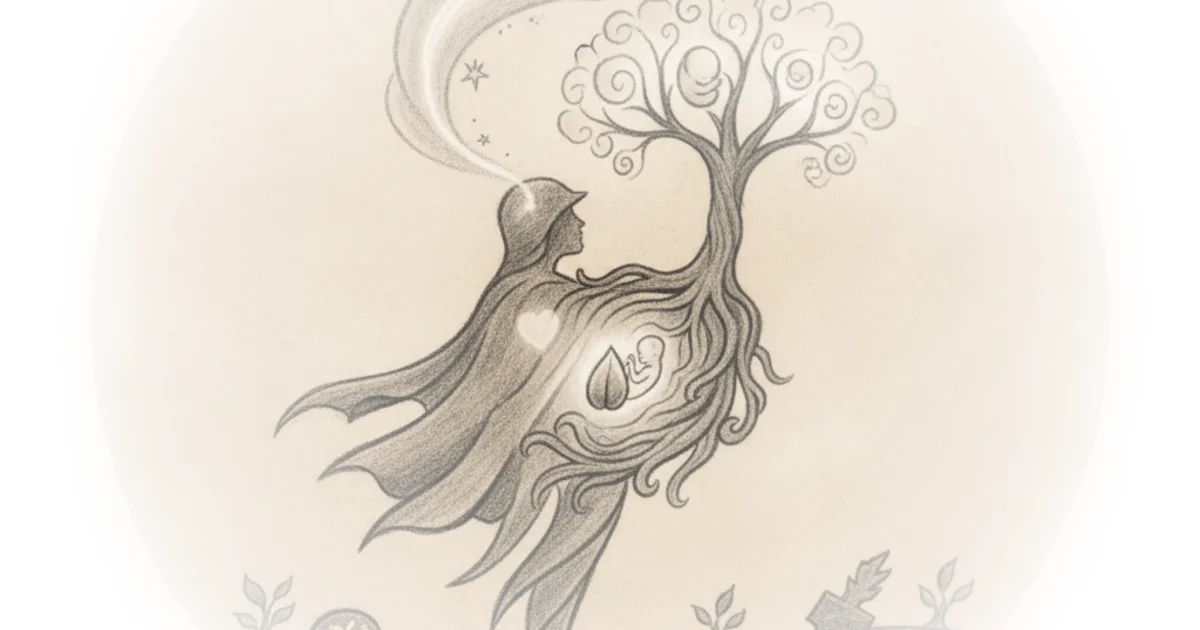
The author skillfully contrasts this personal resolve with the cold mechanics of the law. When Serhii fell in battle, the couple's lack of formal marriage became a legal barrier rather than a social detail. Mak notes that under Ukraine's Civil Code, common-law wives have no automatic rights to a deceased partner's reproductive material. This creates a scenario where clinics, terrified of litigation, refuse to perform IVF using frozen sperm from unmarried men.
"The current Civil Code says that if a couple wasn't officially married, the law doesn't automatically give the common-law wife rights to her late partner's reproductive material in the event of his passing."
This framing is crucial because it shifts the blame from individual tragedy to systemic failure. The author highlights how Lyudmila had to navigate a legal landscape where the default action for clinics was disposal, not preservation. While critics might argue that posthumous reproduction raises complex ethical questions regarding consent and inheritance, Mak effectively demonstrates that in this context, the lack of clarity is itself a form of violence against the bereaved.
The Legislative Whiplash
The piece takes a sharp turn into the chaotic evolution of Ukrainian policy, illustrating how quickly laws can shift under the pressure of public outcry. Mak details the legislative rollercoaster: first, President Zelenskyy signed Law No. 3496 in November 2023, mandating that clinics dispose of deceased servicemembers' reproductive cells. This decision sparked immediate backlash.
As Mak puts it, "In early March 2024 the president reversed via another bill, No. 10448, which guaranteed military personnel the right to biological parenthood even after death." This reversal underscores a critical point about democratic responsiveness in wartime: policy is often reactive rather than proactive. The government was forced to correct a mistake that threatened to erase the legacy of fallen soldiers.
However, Mak points out that these legislative fixes are still incomplete. Even with the new law, the specific case of unmarried couples remains in a gray zone. Lyudmila's journey required a six-month lawsuit where she leveraged a notarized power of attorney containing the phrase: "I agree to have children with her even after my death." Mak writes that these words "sent a chill down Lyudmila's spine," yet they became the key to unlocking her right to motherhood. This legal victory was not guaranteed; it required a court to interpret intent in the absence of clear statute.
"I knew that even if I won, there was no guarantee that I'd be able to get pregnant... She recalls that Sergei's power of attorney included the phrase: 'I agree to have children with her even after my death.'"
The author connects this individual struggle to a broader historical context. He notes that Ukraine is facing a catastrophically low birth rate, exacerbated by the exodus of women and the trauma of war. This mirrors global trends where 71% of the world's population lives in territories below replacement fertility levels. But as Mak argues, for Ukraine, this is not just an economic statistic; it is a struggle for national survival.
The Human Cost of Bureaucracy
Mak does not shy away from the emotional toll of navigating these legal hurdles while raising children alone. He describes Lyudmila's routine of ordering clothes and preparing kids for school as a mechanism to cope with loss, only to have that stability disrupted by the fight to register her daughter's father.
The article reveals that under outdated rules, a man is automatically listed as the father only if the child is born within 300 days of his death. Lyudmila's second child, conceived via IVF long after Serhii's death, fell outside this window. Mak writes, "Lyudmila went through the paternity recognition process for nearly a year," highlighting how the state forces grieving mothers to prove their family's legitimacy before granting them basic civil rights.
This is where the story transcends individual tragedy and becomes a critique of institutional rigidity. The author notes that Serhii's mother had to testify in court, stating she "wouldn't mind having more heirs," turning a grandmother into a legal witness for her son's biological legacy. It is a stark reminder that when laws fail to adapt to modern realities like cryopreservation and war-time separation, families are forced to litigate their own existence.
"To be honest, I'm afraid of the phrasing that suggests I've defeated death — I haven't defeated it. I understand that I have to keep living, and I'll never be able to raise children the way Sergei would have."
Mak's choice to end with Lyudmila's humility is powerful. She rejects the narrative of "defeating death," acknowledging instead that she is simply continuing life despite the odds. This reframing avoids the trap of triumphalism often found in war reporting, grounding the story in the quiet, persistent reality of survival.
Bottom Line
Tim Mak delivers a compelling argument that Ukraine's demographic crisis cannot be solved by statistics alone; it requires a legal framework that recognizes the humanity of those left behind. The piece's greatest strength is its refusal to treat posthumous reproduction as an abstract ethical dilemma, instead presenting it as a necessary act of preservation in a war-torn society. Its vulnerability lies in the fact that while Lyudmila won her case, the broader legislative clarity remains elusive, leaving countless other families in legal limbo. Readers should watch for how Ukraine's courts continue to interpret these gaps, as their rulings will likely set precedents for post-conflict family law globally.