Few personnel moves in modern Vatican history carry as much subtext as the reassignment of a man who admitted under oath that his own actions were not always honest or lawful — and who is being rewarded with a prestigious diplomatic post for it. The transfer of Archbishop Edgar Peña Parra from papal chief of staff to apostolic nuncio to Italy is a study in institutional face-saving, and The Pillar dissects it with unusual candor.
Eight Years at the Center of the Storm
Peña Parra became sostituto — effectively the Vatican's day-to-day chief of staff — in 2018, stepping into a role freshly vacated by Cardinal Angelo Becciu, who was himself later arrested and convicted in a financial crimes trial. The timing was inauspicious from the start. The Secretariat of State's finances were already embroiled in what became known as the London property scandal, a labyrinthine series of investments that would eventually cost the Holy See hundreds of millions of euros and generate years of litigation across multiple jurisdictions.
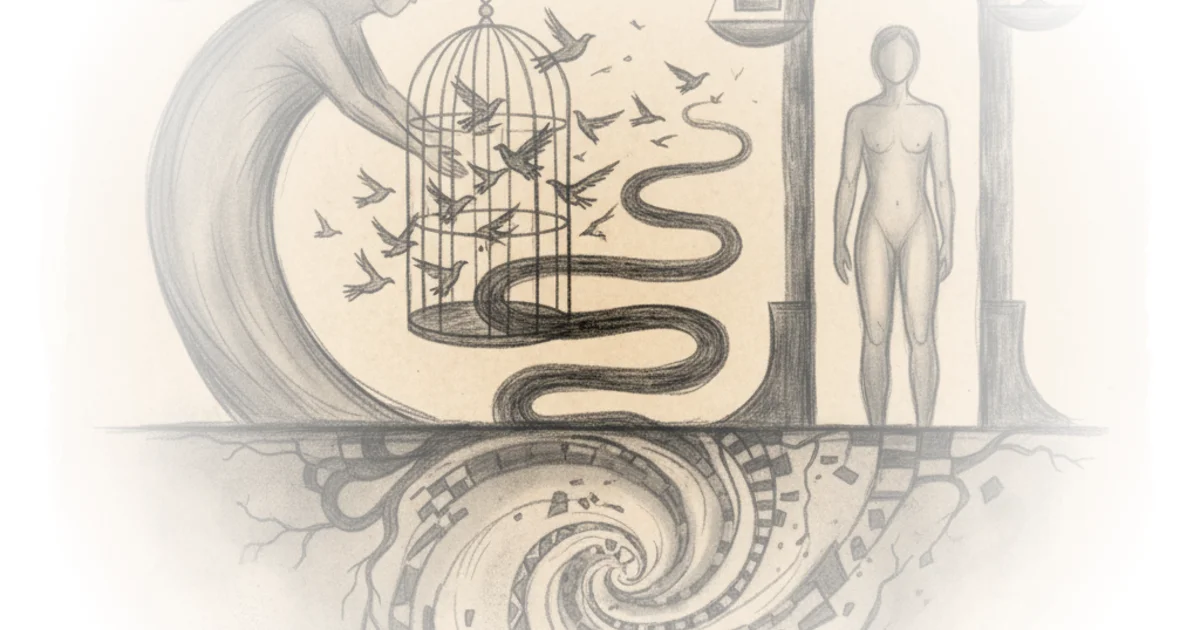
By his own account, Peña Parra inherited a department in chaos. The Pillar reports that "the archbishop inherited a department where officials stone-walled oversight, blind-sided superiors with last minute decisions, and deploying accounting sleight-of-hand to cover the true state of the financial affairs." That framing — the new sheriff arriving to find the town already on fire — has been central to how Peña Parra has understood and presented his own tenure.
But The Pillar is not willing to let that self-portrait go unchallenged. Rather than pursuing transparent corrective measures, the article notes, Peña Parra "decided that reporting and correcting corruption risked departmental reputational damage, and elected instead to effect a brute-force separation of the Secretariat of State from its investment managers." The decision backfired catastrophically — triggering serious embarrassment for Pope Francis, the loss of vast sums, and a cascade of lawsuits in foreign courts. In testimony before the Vatican's own tribunal, Peña Parra conceded the obvious: that his actions were not always honest or necessarily lawful.
A Record Unlike Any Other
The financial scandal alone would make Peña Parra one of the most controversial figures in recent curial history. But The Pillar documents a pattern of conduct that goes well beyond it.
In one episode that received relatively little attention outside Vatican-watching circles, the archbishop ordered illegal electronic surveillance of a Vatican banking official — a man who had simply refused to extend the Secretariat of State a nine-figure loan to help it escape the consequences of the London deal. The irony is almost too neat: the very loan request that sparked the initial criminal investigation into the affair triggered an act of illegal retribution against the official who turned it down. Witnesses at the Vatican trial also testified to Peña Parra engaging freelance members of Italian intelligence to conduct what The Pillar calls "extra-territorial, and presumably also extra-legal, surveillance" of other financial contacts.
These episodes were serious. What followed them was extraordinary. In September 2024, Peña Parra intervened in the case of an Argentine priest, Alberto Ariel Príncipe, who had been convicted of sexual abuse of a minor by not one but two separate canonical tribunals operating under the authority of the Dicastery for the Doctrine of the Faith. Peña Parra signed a letter announcing an unspecified "extraordinary procedure" — he did not explain by whose authority or under what canonical norms — that vacated both convictions and ordered the priest reinstated, describing his conduct as mere "recklessness."
The Pillar describes this as perhaps "the most extraordinary incident of the now-former sostituto's career." The sostituto's office has no jurisdiction over sexual abuse cases — none. The intervention was so far outside any recognizable legal framework that it prompted a public, formal nullification from Archbishop John Kennedy, head of the disciplinary section of the Dicastery for the Doctrine of the Faith. A senior curial official publicly contradicting another senior curial official in real time is vanishingly rare. That it happened at all signals how anomalous Peña Parra's action was.
The possibility that Francis had personally, albeit informally, ordered his attempted rehabilitation of Príncipe was arguably the most plausible explanation for an otherwise incredible act of overreach by the archbishop, one which canonical experts apart from Archbishop Kennedy were curiously unwilling to criticize.
Francis's Shadow, Leo's Problem
To understand why Peña Parra remained in office through all of this, The Pillar asks readers to reckon with something uncomfortable: the late Pope Francis bore a degree of responsibility for the environment in which these decisions were made. The piece argues that Peña Parra's conduct "cannot be considered apart from the context of his directly serving under a pope with his own distinctly unorthodox style of governance — one which clearly at least tolerated the archbishop's style, if not encouraged it or even directed it at times."
This is a delicate but consequential claim. If the Príncipe intervention was undertaken on informal papal instruction, then the Vatican's chief of staff was not a rogue actor but an obedient one — executing the wishes of the man he served. The silence of canonical experts in the immediate aftermath of the incident, The Pillar notes, made that interpretation more plausible, not less. Whatever the truth, Francis's death did not free Pope Leo XIV to simply dismiss Peña Parra without consequence. The article explains why: doing so "would likely have provoked some attempts at public self-justification from the archbishop, and could have triggered the release of damaging allegations against the previous pope." A man who knows where the bodies are buried is not easily fired.
Critics might note that this framing — however plausible — is itself speculative. The Pillar offers no documentary evidence that Francis directed Peña Parra's more controversial interventions. The more prosaic explanation, that an ambitious official overreached in ways a tired and ailing pope failed to check, is equally consistent with the facts. The institutional culture that allowed these incidents may say as much about structural dysfunction as it does about personal loyalty or papal instruction.
The Assignment Itself
The Roman nunciature — the Vatican's diplomatic mission to Italy and San Marino — is simultaneously one of the most prestigious and least operationally demanding postings in the entire Vatican diplomatic service. The Pillar captures the paradox precisely. As Bishop of Rome, the pope already plays an unusually direct role in Italian ecclesiastical affairs, often bypassing the nuncio entirely. Relations between the Italian state and the Holy See, when they become genuinely significant, are typically handled at the level of the Secretariat of State, not the nunciature. Italian bishops, given their proximity to the Vatican, have "much less practical need to send communications to and from different Vatican departments care of a diplomatic pouch."
The result, as The Pillar observes, is that "Peña Parra's new assignment could be seen as a prestigious non-job, or at the very least turned into such by the pope if that's what he wanted it to be." The title is real. The rank is real. The office is real. The leverage is largely gone.
Peña Parra is also, as the piece emphasizes, physically still in Rome — "only literally and metaphorically across the street" from the Vatican. He vacates the corridors of power but not the city. Whether that proximity produces continued informal influence or simply makes his sidelining more visible depends, The Pillar suggests, on what he does next.
Exile, Probation, or Audition?
The Pillar's headline frames Peña Parra's new post as either exile or probation. But the piece's own analysis suggests a third possibility: audition. At 66, Peña Parra is not finished. A full decade of diligent service as nuncio would, by Vatican custom, come with a reasonable expectation of elevation to cardinal — even if paired with retirement. A shorter successful term might enable a return to curial work. Both outcomes depend on his behavior, and The Pillar is blunt about the incentive structure: "Both those prospects could serve to incentivize Peña Parra to adapt quietly to his new post, and keep to the Italian side of the river."
This is also, implicitly, a statement about Pope Leo XIV's governing philosophy. The departure from custom here is notable: sostituti are typically given charge of a Vatican dicastery and elevated to the College of Cardinals. Peña Parra gets neither. His predecessor in the role, Becciu, ended up in court. Peña Parra ends up across the street. The Pillar frames Leo's emerging approach as a preference for "by-the-book governance and the rule of law" — a pointed contrast with the informality that characterized much of the Francis years. Whether that preference translates into structural reform of the Secretariat of State, or merely a personnel change at its top, remains to be seen.
Critics might also raise the question of whether any of this constitutes accountability. A man who admitted to ordering illegal surveillance, who intervened without jurisdiction to reverse the conviction of a sexual abuser, and who conceded under oath to acting dishonestly, has been given a senior diplomatic posting with the implicit promise of further honors if he behaves himself. The institutional logic is coherent. The moral arithmetic is harder to defend.
The Price of Institutional Memory
One of the quieter arguments running through The Pillar's analysis is about the cost of institutional knowledge. Every sostituto exits the job carrying a detailed map of curial operations, relationships, and vulnerabilities. Peña Parra carries an unusually detailed one — including, the article notes, knowledge acquired through "private intelligence contractors." That is not knowledge a new pope can simply wish away. The months of negotiation over a "mutually agreeable" assignment reflect the reality that managing an exit is sometimes more important than enforcing consequences.
The Vatican is not unique in this respect. Institutions regularly negotiate the departures of figures who know too much to dismiss cleanly. What is unusual here is the degree to which The Pillar makes this calculus explicit, tracing the logic from the final year of the Francis pontificate through to the Roman nunciature announcement. The piece treats the reassignment not as a clean break but as a managed transition — one that tells the curia something about how Leo XIV intends to govern without quite committing him to any particular course of action.
Bottom Line
Archbishop Peña Parra's transfer to the Roman nunciature is less a verdict than a deferral — a carefully constructed arrangement that removes him from the center of curial power while leaving open the question of what his record ultimately means for his standing in the Church. The Pillar's analysis makes clear that this outcome reflects the accumulated weight of two pontificates, not just one man's reassignment. Pope Leo XIV has signaled a preference for legal governance by what he declined to give Peña Parra, not merely by where he sent him.