In an era obsessed with digital immortality and Silicon Valley's promise to upload our minds, Justin E. H. Smith offers a startlingly ancient perspective: the modern quest for eternal life is not a technological breakthrough, but a centuries-old vanity project dressed in new clothes. Smith argues that the desire to preserve the self has shifted from physical monuments to informational ones, yet the underlying metaphysical error remains unchanged. This is not just a history lesson; it is a necessary critique of the very real, very expensive industry selling us the illusion that we can outsmart death by becoming data.
The Evolution of the Auto-Icon
Smith begins by tracing the lineage of our refusal to let go, moving from the physical preservation of the body to the preservation of the mind. He notes that while ancient cultures focused on the spirit, the modern West has obsessed over the material vessel. He points to Jeremy Bentham, the 19th-century philosopher who had his body preserved and displayed at University College London, as the pivotal figure in this transition. "Bentham would write in his Auto-Icon of 1832 that '[i]f, by means of the improvements of chemistry and the progress of the arts, the preservation of the dead body can be so far effected as to render it incorruptible, then every man may be his own statue,'" Smith writes. This ambition, once the exclusive domain of pharaohs, has been democratized into a consumer product.
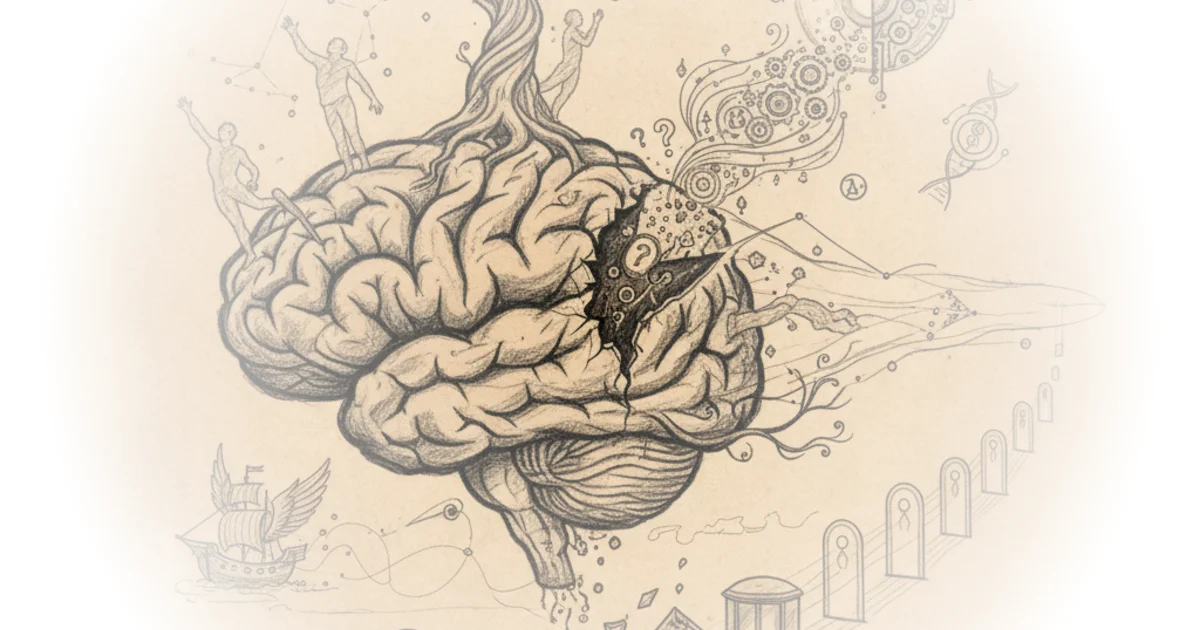
The author suggests that Bentham's pickled corpse represents the first phase of a "privatization of the self," where the individual becomes a self-referential monument. Smith argues that we have moved past Sir Thomas Browne's 17th-century warning that "Gravestones tell truth scarce forty years," and instead embraced the idea that we can maintain "the same proportion of rest" indefinitely. This framing is compelling because it strips away the sci-fi veneer of modern transhumanism to reveal a very human, very old desire for permanence. Critics might note that Smith underestimates the genuine philosophical and scientific challenges of consciousness, treating them as mere continuations of vanity rather than distinct problems. However, his historical grounding forces us to ask if the technology is solving a problem or just amplifying an obsession.
The auto-icon has come a long way since Bentham, but it continues to exploit the same underlying psychology of vainglory and pride, and to rely on the same metaphysical fallacy — that a monument of the self, simply by accumulating detail, could ever become the self itself.
From Ritual Objects to Informational Mummification
Smith expands the scope beyond the West, drawing fascinating parallels between modern digital preservation and ancient ritual practices. He describes how Sakha people in Siberia trap spirits in wooden chests called tüktüïe, or how Balkan tombstones engage in ongoing conversation with the living. These practices acknowledge that death is a change, not a cessation, but they do not claim to keep the person alive in their original form. In contrast, the modern West seeks to encode the self into a substrate-neutral medium. Smith uses the example of the Etruscan mummy, whose bandages contain a ritual text, to illustrate this shift. He asks us to imagine if that text were not just a calendar, but a "bespoke account of the singular, irreducible 'life in ritual' of the person."
The core of Smith's argument here is that the promise of consciousness-uploading is merely "informational mummification." He posits that if we could encode enough detail into a text or a digital file, we could theoretically "strip it off the mummy, run it through a specialized machine, and get right back the person the mummy had once been." This is a powerful critique of the transhumanist dream. Smith suggests that whether the medium is wax, wood, or binary code, the attempt to capture the self in a static object is a category error. He writes, "The promise of consciousness-uploading, as teased by philosophers such as Nick Bostrom or David Chalmers, turns out in the end to involve little more than such informational mummification as we have been considering." This lands with force because it reframes a futuristic concept as a regressive one, suggesting we are trying to solve the problem of death by turning ourselves into books.
The Lockean Turn and the Illusion of Continuity
The piece culminates in a philosophical pivot to John Locke, whose definition of selfhood as continuous consciousness marks a radical break from earlier traditions. Smith explains that for Locke, "'Consciousness,' ... 'always accompanies thinking, and 'tis that, that makes every one to be, what he calls self.'" This means that without the continuous flow of subjective experience, the self ceases to exist. Smith argues that this definition makes the modern project of uploading consciousness logically impossible, because a file or a monument cannot "vibe" or "chill"; it cannot possess a perspective on the world.
Smith writes, "A self is an entity that consciously experiences being a self from one moment to the next, and if that experience stops, selfhood itself stops." This is the piece's most devastating blow to the idea of digital immortality. If the self is defined by the process of experiencing, then preserving the data of that experience is not preserving the self. Smith notes that Locke's agnosticism about whether consciousness comes from a soul or "thinking matter" actually strengthens this practical definition. The argument is effective because it shifts the debate from engineering feasibility to ontological necessity. Even if we could perfectly copy a brain's data, Smith implies, we would only have a monument, not a person. A counterargument worth considering is that if the copy behaves exactly like the original and claims to be them, does the distinction matter? Smith would likely say yes, because the feeling of being the self is the only thing that matters, and that feeling cannot be transferred.
There is no transtemporal continuity of identity without continuity of subjective experience, of having a perspective on the world, of being a node of perception, of vibing, of chilling.
Bottom Line
Justin E. H. Smith delivers a masterful critique that dismantles the hype around life-extension technologies by exposing their deep roots in human vanity and metaphysical confusion. The strongest part of the argument is the historical continuity he draws between Bentham's preserved body and the modern digital upload, proving that the medium changes but the fallacy remains. The piece's biggest vulnerability is its reliance on a specific, subjective definition of self that may not satisfy those who view identity as purely informational. Readers should watch for how this philosophical skepticism plays out as the technology for brain-computer interfaces advances, and whether society will accept Smith's conclusion that we are merely building better monuments for the dead.