John Campbell doesn't just report on a coffee farm in Uganda; he reframes the entire concept of foreign aid as a partnership where local expertise, not external charity, drives the solution. While most development stories focus on what is missing, Campbell highlights what is already present: generations of agricultural knowledge and a landscape that can sustain itself without chemical dependency. This approach challenges the tired narrative of the "helpless beneficiary" and replaces it with a model of economic self-reliance that is as practical as it is poetic.
The Economics of Local Expertise
Campbell begins by dismantling the assumption that the organization is simply growing coffee for a caffeine fix. Instead, he positions the crop as a strategic financial engine designed to fund their medical work. "We found it there and it is something that we realize that if we can farm, we have enough knowledge about it and it can also have some market," he explains. This is a crucial pivot. The argument is that sustainability comes from leveraging existing skills rather than importing new, untested methods. By relying on farmers whose fathers and grandfathers have tended these slopes for centuries, the project avoids the common pitfall of outsiders dictating terms to locals.
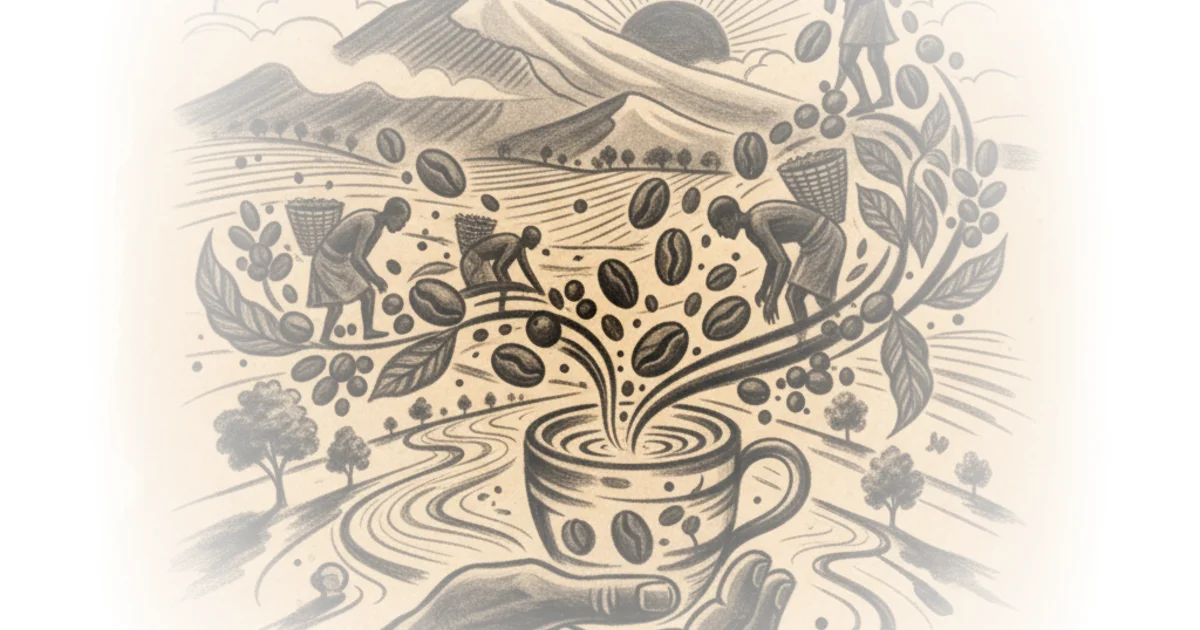
The coverage emphasizes that this is not just about money; it is about social stability. Campbell notes that urbanization often forces men to leave their families for city jobs, a dynamic that "contributes to HIV and all the other problems of poorer areas." By providing local employment, the coffee garden allows men to stay home with their wives and children. "They're not living in some multi occupancy house in the middle of some crummy polluted city," Campbell observes. This framing is powerful because it connects agricultural policy directly to public health outcomes, suggesting that a coffee plant can be just as effective as a clinic in preventing disease.
Critics might argue that relying on a single cash crop like coffee exposes the community to volatile global market prices, a risk that diversification could mitigate. However, Campbell counters this by pointing to the sheer volume of local demand for medical services, noting that "there was 700 people arrived the first day" at a recent clinic, creating a constant need for the funds this crop generates.
"We're using local expertise. It's not outsiders coming in saying, 'This is how you do it.'"
A Sustainable Cycle of Nature
The piece shifts from economic theory to the tangible reality of the soil, offering a masterclass in organic farming. Campbell details how the plantation avoids chemical fertilizers entirely, relying instead on "chicken poop" and cow manure collected in sacks. "When you use them in the soil, they will also affect the soil. Sometimes you reach a stage where your land can't support anything without using them," he warns. This is a stark critique of industrial agriculture's long-term toxicity, contrasting it with a method that builds soil health over decades.
The longevity of the project is another key pillar of Campbell's argument. He points out that a single coffee tree can produce fruit for over fifty years, and even when it ages, it can be cut back to grow anew from the stump. "They may even outlive me," he admits, suggesting a timeline that extends far beyond the typical grant cycle of many NGOs. This intergenerational perspective transforms the coffee garden from a temporary project into a permanent legacy.
The environmental benefits are further highlighted by the terrain itself. The coffee is planted on steep hillsides where the roots "stop the soil from slipping down," preventing the desertification that often follows deforestation in tropical regions. Campbell notes that while the rain here can be "incredible tropical rain," the trees hold the earth together. This is a compelling example of how economic activity can serve as an ecological shield.
From Seedling to Roast
The narrative concludes by looking forward, detailing the transition from raw beans to a finished product. Campbell reveals that the organization plans to roast the coffee themselves, creating a "pure organic product" with no contaminants. "It's just a pure product," he asserts, emphasizing the integrity of the supply chain from the seedling to the cup. This vertical integration promises higher margins for the community, ensuring that the value added stays local rather than being captured by international processors.
The sheer scale of the operation is also impressive, with over 1,500 to 2,000 plants already in the ground and yields expected to triple in the coming years. "Next year that could be double couldn't," Campbell says, with the confidence of someone watching a proven model scale up. The project is not just surviving; it is expanding its capacity to support the local economy.
"We can go and I mean hopefully these will be going on for well certainly most of your lifetime."
Bottom Line
John Campbell's coverage succeeds because it treats the local population as partners and experts rather than recipients of pity, grounding the argument in the tangible reality of organic farming and community health. The strongest element is the clear link between local employment and the prevention of social ills like HIV, proving that economic development is a form of medical intervention. The biggest vulnerability remains the inherent risk of monoculture in a volatile global market, though the project's focus on local medical funding provides a buffer against total market failure. Readers should watch to see if the organization successfully navigates the complexities of international export while maintaining its organic standards.