Why the Extremist Trap Matters
Noah Smith's latest piece cuts through the noise of daily political drama to diagnose a structural problem: America's moderate majority is being governed by an engaged extremist fringe. This isn't just another polarization complaint—it's a theory about who actually runs the country when most citizens tune out.
The Technology of Extremism
Smith identifies the root cause as technological rather than purely institutional. Social media doesn't just amplify voices—it systematically rewards emotional intensity over reasoned argument, creating self-sorting communities of like-minded activists who then challenge traditional institutions.
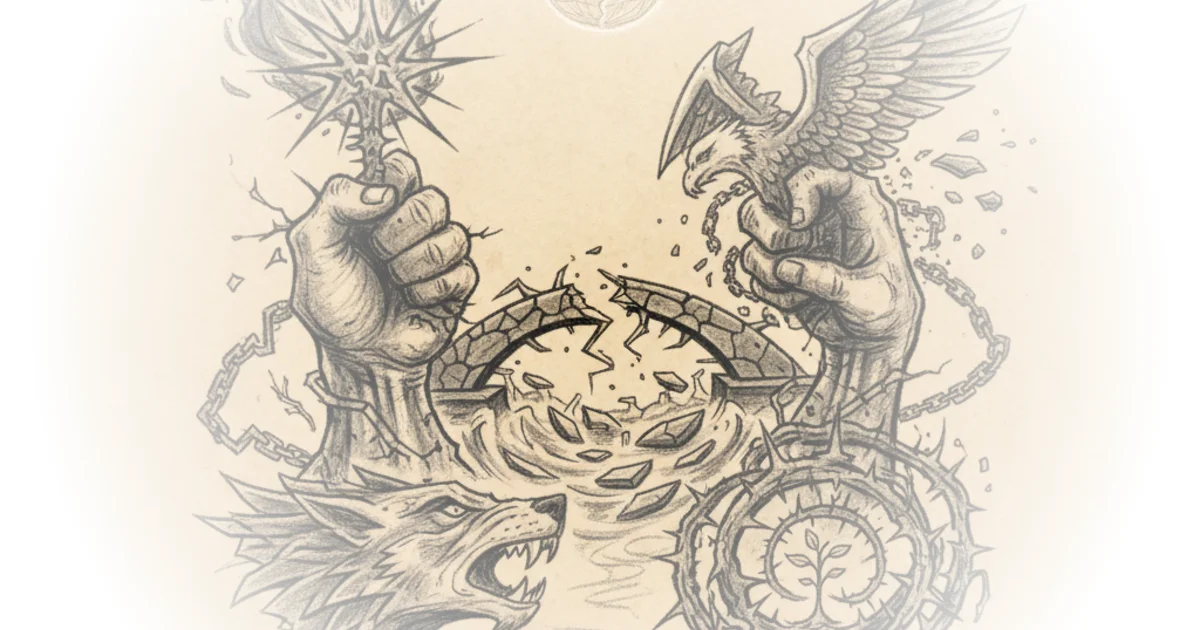
As Noah Smith puts it, "Modern social media bypasses traditional hierarchies and institutions and gathers together communities of like-minded extremists who then create challenges to traditional institutions."
The data backs this up. Smith cites Törnberg's 2025 research showing that political posting is "tightly linked to affective polarization, as the most partisan users are also the most active." When casual users disengage, "the online public sphere grows smaller, sharper, and more ideologically extreme."
This creates a feedback loop. Moderates leave toxic spaces for peace of mind. Extremists remain, shouting at each other or into the void. The space becomes more extreme, driving out more moderates.
The Staffer Problem
Here's where Smith's argument gets concrete—and uncomfortable. The people running day-to-day governance aren't the elected officials voters see on television. They're unelected staffers in their late 20s, deeply embedded in online extremist ecosystems.
Noah Smith writes, "These staffers are much younger than the politicians they ostensibly serve — the typical Congressional staffer is in their late 20s, while the typical Congressperson is in their late 50s."
This age gap matters. Younger staffers are more online, more exposed to conspiracy theories and radical tropes, and free from electoral accountability. They write legislation. They advise on policy. They handle communications. When politicians fundraise or give speeches, staffers run the country.
"These 28-year-old extremely online radicals — along with the larger network of think tankers, lobbyists, and activists with whom they are deeply enmeshed — are a key part of America's ruling class, invisible and unaccountable and unelected and more powerful than almost anyone realizes."
The Coalition Collapse
Smith argues both movements will fail, but for different reasons. The right's problem is coalition shrinkage. Winning requires building broad alliances. Yet the movement systematically attacks every group it could recruit.
Noah Smith writes, "MAGA insists on attacking every group it could bring into its tent."
The piece documents how this plays out: Black voters who shifted toward the GOP in 2024 face racist imagery defended by party leaders. Jewish voters encounter rising antisemitism. Hispanic voters see profiling and raids. Indian professionals face hiring bans. Asian immigrants get accused of threatening American culture by "working too hard."
Smith's verdict: "It's hard to think of a group of Americans — other than White Protestants — that the MAGA movement has not turned its outrage machine on."
Demographics make this unsustainable. There simply aren't enough White Protestants to form an electoral majority, regardless of deportation levels or visa restrictions.
Progressive Governance Failure
The left fails for a different reason: it has governed and failed. Smith points to Portland as the case study—a progressive mecca that became a cautionary tale.
Noah Smith puts it bluntly: "Hard core progressivism has destroyed what old school Oregon liberals built – farmers markets, parks, walkable communities, transit, and all the good kind of Portlandia-era liberal lifestyle stuff."
The results are measurable. Portland now has the second-highest crime rate in America. One out of every 16 residents is victimized annually. Property crime remains sky-high despite nationwide declines. Police departments remain chronically understaffed after defunding efforts.
Smith writes, "This brand of progressivism is just so against the rule of law, it's ruined all those institutions that made Portland a cool, trendy, quirky place. It's not really quirky anymore. It's dangerous."
What Voters Are Doing
Americans sense this dysfunction. Majorities say both parties are too extreme. Voters are registering as Independents in record numbers.
But this escape valve worsens the problem. Independents can't vote in closed primaries—a structural feature of American politics that Smith identifies as a root cause. Those remaining in party primaries are the most engaged, most extreme voters. They nominate more extreme candidates. Moderates face polarized choices. Frustration deepens.
Noah Smith writes, "The United States is a nation of moderates ruled by a fringe of extremists. The extremists rule because they are more engaged than the moderates."
Counterpoints
Critics might note that Smith's theory assumes moderates are inherently reasonable and extremists inherently unreasonable—but history shows moderate majorities can support terrible policies while extremist minorities can drive necessary reforms. The abolitionists were extremists. The civil rights activists were extremists. Engagement isn't always a bug.
Others might argue the staffer dynamic is overstated. Elected officials retain final authority and can rein in radical staff. The piece offers anecdotes but limited evidence that staffers systematically override their bosses rather than execute their agendas.
Finally, Smith's proposed fixes—open primaries, a restored Fairness Doctrine for social media—are dismissed as impossible. But if the diagnosis is structural, and the solutions are politically unachievable, the piece offers diagnosis without treatment.
Bottom Line
Smith's core insight holds: engagement asymmetry lets extremists govern a moderate nation. Social media rewards intensity. Closed primaries amplify it. Unelected staffers operationalize it. Both movements are self-sabotaging—the right by shrinking its coalition, the left by failing at governance. The verdict: neither extremism is durable, but the damage they inflict while failing is real and lasting.