Zichen Wang exposes a jarring disconnect between the polished narratives the state exports and the raw, unvarnished reality of China's labor force. While official channels rush to co-opt a viral essay as proof of a harmonious society, the author reveals a story where poverty is not an anomaly but a generational inheritance. This is not a tale of individual triumph, but a quiet indictment of a system that demands relentless toil while offering no escape.
The Currency of Exhaustion
Wang begins by grounding the viral phenomenon in the brutal economics of daily survival. The essay's origin was not a literary contest, but a street challenge where a 66-year-old migrant worker chose a chance to win 1,000 yuan over a guaranteed 100. For An Sanshan, the prize represented "standing under a nearly 40°C sun for three days, moving 20,000 bricks, and shovelling several tonnes of sand and cement." Wang writes, "So when he heard that he could earn that amount by sitting in an air-conditioned room and writing an essay, he did not hesitate at all." This framing is crucial; it strips away any romanticism about the man's literary ambitions and replaces it with the stark arithmetic of poverty. The essay was not written for glory, but for survival.
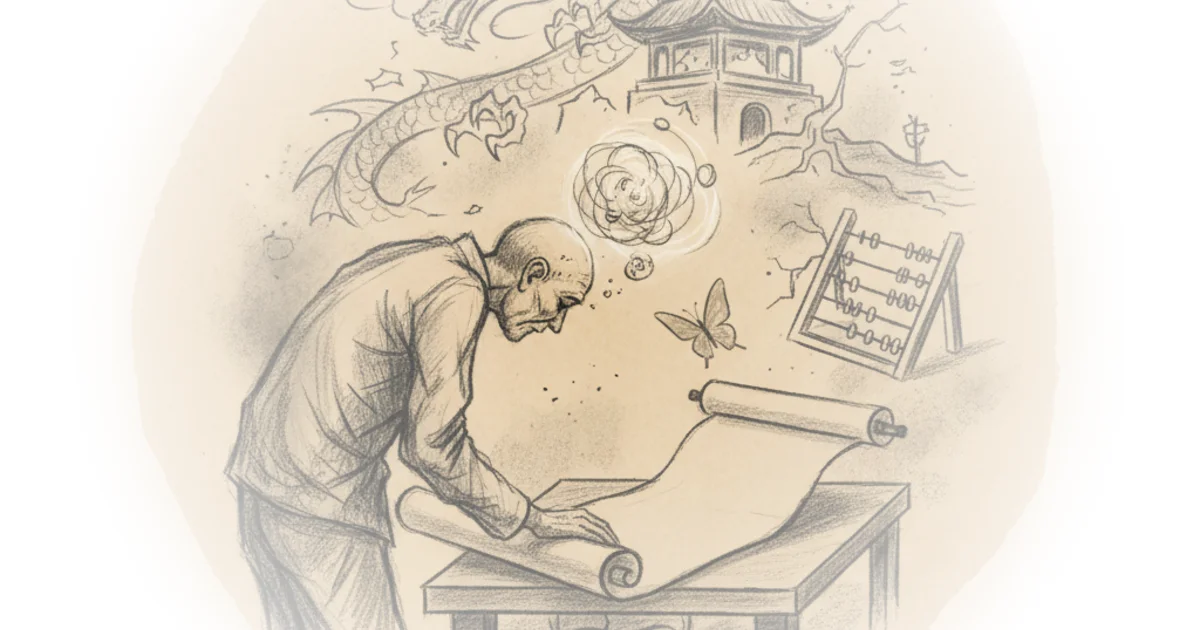
The piece effectively argues that the viral nature of the text stems from its unfiltered depiction of a life defined by bodily exhaustion. Wang notes that the mother's story is one of a woman who "never had a moment of rest her entire life," and that the son, decades later, is "still living by the same logic of bodily exhaustion." This continuity is the essay's devastating core. It mirrors the historical trajectory of the hukou system, where rural workers are legally tethered to their land of origin yet forced to sell their labor in cities without access to the social safety nets enjoyed by urban residents. The tragedy is not that An Sanshan failed to rise, but that the system is designed to keep him in the same position as his mother.
"His story is therefore not just about memory, love, or literary talent. It is also a plain record of how poverty can travel across generations."
Critics might argue that focusing on individual hardship ignores the broader economic gains China has made in lifting millions out of poverty. However, Wang's reporting suggests that for the lowest tier of the workforce, the promise of mobility remains a distant illusion. The essay's power lies precisely in its refusal to offer a happy ending or a policy solution.
The State's Co-option
The narrative takes a sharp turn when the essay is picked up by state media. Wang details how the translation was "picked up by Chinese state media and official overseas-facing accounts, including China Daily, Xinhua, Chinese embassies, and China's Foreign Ministry spokesperson, as an example of a 'China story' that could move audiences beyond China." This reframing is a classic example of the state attempting to sanitize the narrative of its own making. By presenting An Sanshan's grief as a universal human emotion, the executive branch sidesteps the structural causes of that grief.
Wang observes that the official response treats the essay as a cultural export, a tool to project soft power. Yet, the reality on the ground tells a different story. When visitors descended on An Sanshan's village, they found a man who "did not want to 'make a spectacle of myself.'" The author highlights the tension between the state's desire for a heartwarming story and the subject's desire for dignity. An Sanshan's reaction to the fame was not gratitude, but a guarded silence. He told visitors, "I'm just a farmer," a statement that serves as a quiet rebuke to the grand narratives being constructed around him.
The author points out that An Sanshan's home, with its "mud and stones" walls and a gate made of "a bundle of wooden sticks tied together," stands in stark contrast to the polished image of modern China the state wishes to project. The fact that his courtyard was built from earthen walls while the rest of the village modernizes underscores the uneven development that the hukou system perpetuates. The state can translate his words into English for a global audience, but it cannot translate his reality into a life of comfort.
The Silence of the Workers
Perhaps the most poignant section of Wang's commentary is the observation of An Sanshan's peers. While the internet celebrated him, the other migrant workers at the railway station remained largely unaware or indifferent. "What? He can write essays?" one fellow worker asked, "first widening his eyes, then curling his lip." Wang writes, "They had no time to think more about it. The foremen would soon arrive to pick workers, and this was the moment that would decide whether they could earn a day's living." This detail is devastating in its simplicity. It reveals that for the vast majority of the workforce, the viral fame of one man is irrelevant noise against the backdrop of daily survival.
The author captures the isolation of An Sanshan's experience. He is a man caught between two worlds: the digital sphere where he is a literary sensation, and the physical world where he is just another pair of hands. Wang notes that An Sanshan "resented outsiders 'asking around everywhere in the village'" and stressed a "farmer's proper place." This resistance to exploitation is a testament to his dignity, even as the system around him seeks to commodify his pain. The essay's final lines, where he says, "Maybe then, when I call out mom, she'll be able to hear me," are not a call to action, but a resignation to a life where rest is only found in death.
"The knowledge of intellectuals should be used for understanding and helping, not for speculation and calculation."
This quote, written by An Sanshan in a notebook, serves as a direct challenge to the intellectual and media class that has descended upon him. Wang uses this to underscore the disconnect between the observers and the observed. The intellectuals see a story to be analyzed; the worker sees a boundary that has been violated. The state's attempt to use this story for propaganda is further complicated by the fact that the subject himself rejects the spectacle.
Bottom Line
Zichen Wang's piece is a masterful deconstruction of how the state attempts to harvest human suffering for political capital. The strongest part of the argument is the juxtaposition of the viral, sanitized version of the essay with the gritty, unyielding reality of the migrant worker's life. The biggest vulnerability, however, is the lack of a clear path forward; the piece brilliantly diagnoses the problem of generational poverty and state co-option but offers no mechanism for change. Readers should watch for how the state continues to frame such narratives in the coming months, as the tension between official propaganda and the lived experience of the working class only deepens.