In a geopolitical landscape often defined by stalemate, Good Times Bad Times presents a startling thesis: Turkey's transformation under Recep Tayyip Erdoğan is not merely a political shift, but the birth of a fragile empire built on a foundation of economic ruin and authoritarian consolidation. The author's most distinctive claim is that Erdoğan's twenty-year rule represents a complete inversion of the Turkish Republic's founding principles, turning a once-marginalized nation into an assertive regional power while simultaneously hollowing out its internal stability. This is a crucial read for anyone tracking the volatility of emerging markets, as it dissects how a leader can project power globally while his domestic economy crumbles.
The Economic Paradox
The commentary begins by dismantling the myth of the "Turkish economic miracle," distinguishing sharply between the first decade of Erdoğan's rule and the chaotic years that followed. Good Times Bad Times writes, "Without grasping the mechanics of the so-called Turkish economic miracle of the AK's first decade in power, it is impossible to understand today's Turkey." The author correctly identifies that the initial success was not homegrown genius but a disciplined adherence to International Monetary Fund orthodoxy and EU integration, which fueled a genuine rise in living standards for the conservative Anatolian middle class.
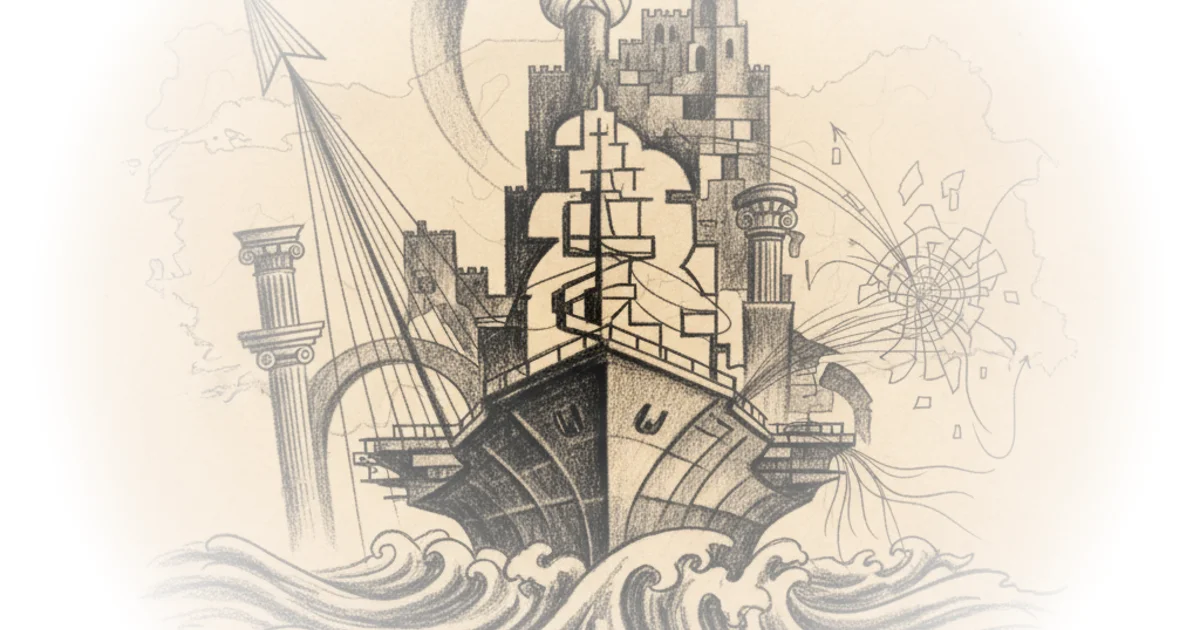
However, the piece argues that this stability was traded for a short-term boom driven by construction. As Good Times Bad Times puts it, "Balanced growth based on exports, productivity, and integration with the west was replaced by a steroidfueled model driven by domestic consumption, cheap credit, and above all, construction." This shift created what the author terms the "economy of concrete," where capital flowed into unproductive assets like shopping malls rather than innovation. The author's analysis of this pivot is compelling because it links macroeconomic policy directly to political survival, noting that the construction sector became a vehicle for corruption and clientelism to fund the ruling party.
The opportunities created during that period were never fully exploited. Erdoğan's stubborn adherence to 'Erdoganomics' ultimately plunged the country into a deep economic crisis, one Turkey remains trapped in today.
Critics might note that the global financial environment and the post-2013 geopolitical isolation played a larger role in the crisis than domestic policy alone, but the author's focus on the deliberate rejection of interest rate hikes remains a damning indictment of the administration's later years. The text highlights that inflation peaked at 86% in 2022, with independent estimates suggesting it exceeded 100%, a direct result of the president blocking standard economic corrections.
The Architecture of Autocracy
Moving from economics to domestic politics, the author traces Erdoğan's rise from a prisoner to an autocrat, framing his journey as a systematic dismantling of the secular "Kemalist" order. Good Times Bad Times writes, "Erdogan had the votes, but he lacked loyal cadres within the state. Without them, he was little more than a temporary tenant." This observation is vital; it explains why Erdoğan initially allied with the Gülen movement to purge the military and judiciary, only to turn on them later.
The narrative details how the failed 2016 coup attempt served as the catalyst for a total consolidation of power. The author notes, "The state of emergency imposed after the coup lasted 2 years. During that period, more than 100,000 people were arrested and over 150,000 employees of the state apparatus were dismissed from their jobs." This purge effectively eliminated the last checks and balances, allowing Erdoğan to transition Turkey from a parliamentary system to a presidential one where the parliament lost its legislative function.
The piece draws a sharp parallel between Erdoğan's past and present, observing that the man once imprisoned for reciting a poem now uses the state to silence rivals. Good Times Bad Times writes, "The man who went to prison in 1999 for reciting a poem once a symbol of the struggle for freedom of speech now uses the power of the state to silence the opposition." The author uses the case of Ekrem İmamoğlu, a potential presidential rival who was arrested and stripped of his degree, to illustrate this point. This is a powerful rhetorical move, framing the current political climate not just as authoritarian, but as a tragic cycle of history.
You either die a hero or live long enough to see yourself become the villain. Erdoğan has become the mirror image of the system he once fought against.
A counterargument worth considering is whether this centralization was a necessary response to the deep state's historical coups, as Erdoğan's supporters would argue. However, the author's evidence of the systematic neutralization of rivals suggests the scale of the crackdown has far exceeded any defensive necessity.
The Fragile Empire
Finally, the commentary addresses Erdoğan's grand geopolitical strategy, which has moved Turkey from the margins to the center of global power struggles. Good Times Bad Times writes, "After decades spent on the margins of the geopolitical chessboard, the country has emerged as a textbook example of an assertive regional power." The author highlights Turkey's new role in Syria, Libya, the Caucasus, and the Horn of Africa, noting that the nation now projects power far beyond its borders, much like the Ottoman Empire.
Yet, the author insists this external strength masks internal decay. "Every empire exacts a price. Turkey is no exception," the text states, arguing that the foundations of Erdoğan's power are eroding under the weight of economic crisis and political isolation. The construction of a massive new aircraft carrier is presented not just as a military achievement, but as a symbol of this paradoxical era: a nation building super-weapons while its currency collapses and its democratic institutions vanish.
Bottom Line
Good Times Bad Times delivers a rigorous, if sobering, assessment of Erdoğan's legacy, successfully arguing that Turkey's rise as a geopolitical heavyweight is inextricably linked to its domestic fragility. The strongest part of the argument is the clear causal link drawn between the shift to an "economy of concrete" and the subsequent authoritarian turn, showing how economic failure necessitated political repression. The piece's biggest vulnerability is its reliance on a linear narrative of decline that may underestimate the resilience of Erdoğan's base, who continue to view him as a protector against external threats despite the economic pain. Readers should watch closely for the 2028 constitutional changes mentioned, as they will likely determine whether Erdoğan's era ends with a whimper or a final, desperate grab for power.