The Walrus delivers a searing indictment of a colonial policy that treats childbirth as a logistical problem rather than a sacred human event, revealing how the Canadian state effectively exiled Indigenous mothers from their own communities. This is not merely a story about healthcare access; it is a forensic accounting of how systemic erasure continues to kill, isolate, and silence families, all while the government claims to be "returning the cries of birth" to the very people it displaced.
The Architecture of Displacement
The piece opens with a chilling thought experiment that reframes the current reality for Indigenous birthers. The Walrus writes, "Imagine you are a pregnant Canadian, close to your due date, when the government tells you to fly to Denmark to deliver your baby... Refusing this plan, you are told, is selfish and ignorant—even though there's no evidence to support its promised benefits." This analogy is devastatingly effective because it strips away the euphemisms of "birth evacuation" to reveal the absurdity and cruelty of the policy. It forces the reader to confront the isolation and cultural dislocation that are currently normalized for Indigenous families.
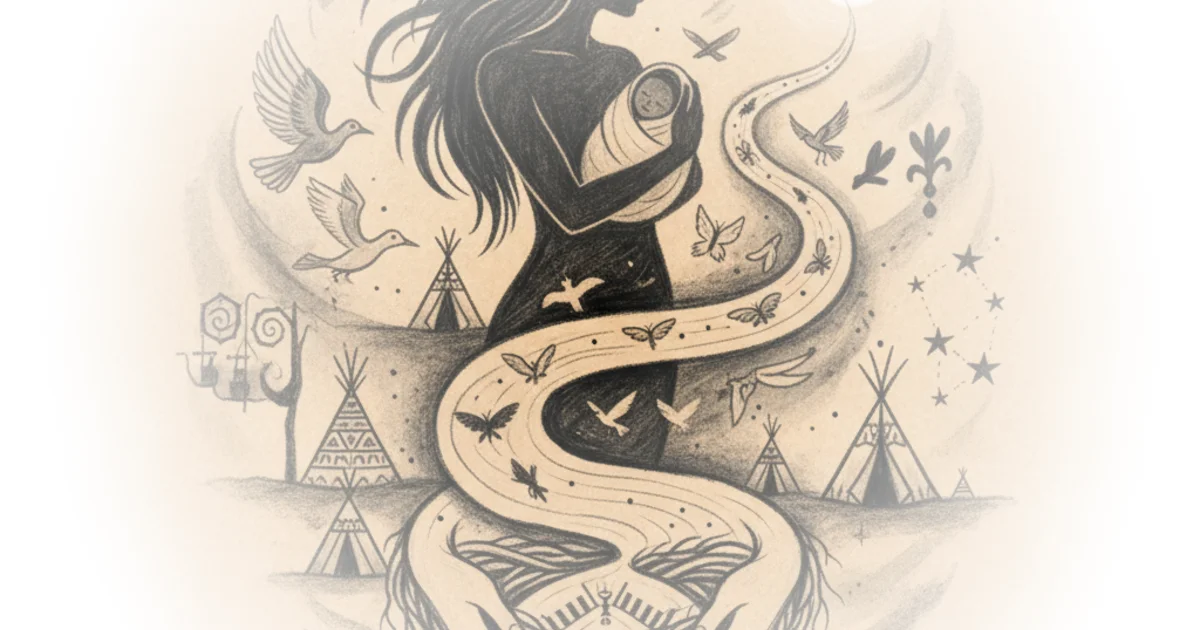
The author traces this disruption back to the mid-twentieth century, noting that before government intervention, "nearly every community had someone who caught babies—and that person also led ceremonies, cared for families, and guided others through important transitions in life and death." This historical context is crucial. It connects the current crisis directly to the residential school system, which fractured the intergenerational transmission of knowledge. The Walrus argues that the dismantling of traditional midwifery was not an accident of modernization but a deliberate act of assimilation, mirroring the logic that drove the residential schools: to break the family unit to break the culture.
"We were one plane crash away from extinction," says Carol Couchie, an Anishinaabe midwife from Nipissing First Nation. "And we're still not far from that. Like, a big enough plane could still do us all in."
This quote from Carol Couchie, cited by The Walrus, underscores the precariousness of the entire profession. The data supports the fear: with only 120 members in the National Council of Indigenous Midwives, the field is dangerously thin. The argument here is that the survival of Indigenous midwifery is not just a healthcare issue but an act of cultural preservation against a system that nearly erased it.
The Myth of Safety and the Reality of Harm
The Walrus dismantles the federal government's long-standing justification for evacuation policies: the claim that it ensures better health outcomes. The author points out that "there is little evidence for the health and safety benefits of evacuating low-risk pregnancies, and tremendous social and financial costs." Instead, the policy has created a cascade of negative outcomes. The piece highlights that infant mortality rates are more than twice as high among First Nations people and nearly four times as high among Inuit. Sudden infant death syndrome (SIDS) rates are more than seven times higher.
This framing is essential because it shifts the blame from individual choices to structural failures. The Walrus notes that the patronizing attitude of the past persists today, quoting a 1923 government physician who urged authorities to "break up this custom among the Indians" because they preferred home care. The author argues that this same logic now drives a system where Indigenous parents are denied autonomy, often facing discrimination and negligence in the very hospitals they are forced to travel to.
The human cost is illustrated through the story of Joyce Echaquan, who livestreamed hospital staff mocking her pain before her death. The Walrus writes, "Such discriminatory care can be deadly," linking this specific tragedy to a broader pattern of forced sterilizations and systemic racism that continues into the present day. A counterargument worth considering is that remote communities lack the specialized medical infrastructure for high-risk births, making evacuation a necessary safety net. However, the article effectively counters this by showing that the policy is applied even to low-risk pregnancies and that the trauma of separation often outweighs the marginal medical benefits, while successful models like Inuulitsivik in Nunavik prove community-based care is viable.
The Funding Gap and the Path Forward
Despite a 2017 pledge by the federal government to "return the cries of birth" to Indigenous communities, The Walrus reveals that the financial commitment has been woefully insufficient. The piece notes that while the government announced a "comprehensive assessment," it proposed "almost $2.3 billion cut from federal Indigenous services by 2030." This contradiction is at the heart of the article's critique: the administration talks of reconciliation while tightening the fiscal noose.
The Walrus highlights the logistical barriers to training new midwives, noting that "there are currently no post-secondary midwifery programs located north of Calgary." This geographic exclusion forces aspiring practitioners to leave their communities, perpetuating the cycle of brain drain. The author praises the Inuulitsivik Health Centre, where 86 percent of Inuit give birth in their community, as a model of what is possible when funding and regulatory support align with cultural needs.
"Being able to give birth in the place of your choosing is a very empowering thing. It kind of sets the tone of your own personal sovereignty as an Indigenous person."
Laura Mayer, executive director of the National Council of Indigenous Midwives, is quoted by The Walrus to emphasize that this is about more than just healthcare; it is about sovereignty. The article argues that without a dedicated, culturally safe training framework and stable funding, the return of midwifery will remain a patchwork of exceptions rather than a systemic solution.
Bottom Line
The Walrus makes a compelling case that the current birth evacuation policy is a continuation of colonial assimilation, not a benevolent healthcare measure. Its strongest asset is the seamless weaving of historical trauma with contemporary data, proving that the high mortality rates are a direct result of policy, not culture. The piece's biggest vulnerability is its reliance on the hope that federal funding will eventually match the rhetoric of reconciliation, a gamble that history suggests is risky. Readers should watch for the outcome of the promised "comprehensive assessment" and whether the administration will commit to the permanent funding required to make Indigenous midwifery a reality, not just a memory.