Freddie deBoer delivers a rare, unvarnished meditation on the paradox of modern creativity: that the only way to truly connect with an audience is to stop trying to connect at all. In an era where algorithms dictate content and creators obsess over metrics, deBoer argues that authenticity is not a strategy but a byproduct of ignoring the market entirely. This piece is notable because it refuses to offer a formula for virality, instead dismantling the very premise that art can be engineered for success.
The Paradox of Authenticity
DeBoer opens by rejecting the industrial logic of content creation. He posits that the most resonant work emerges when the creator satisfies their own curiosity first, rather than reverse-engineering an audience's taste. "There's a basic dishonesty in trying to reverse-engineer an audience's taste," deBoer writes, noting that such efforts result in work that is "pandering, shallow, and self-conscious." This framing is striking because it challenges the dominant narrative of the digital age, which insists that creators must be data-driven and audience-obsessed to survive.
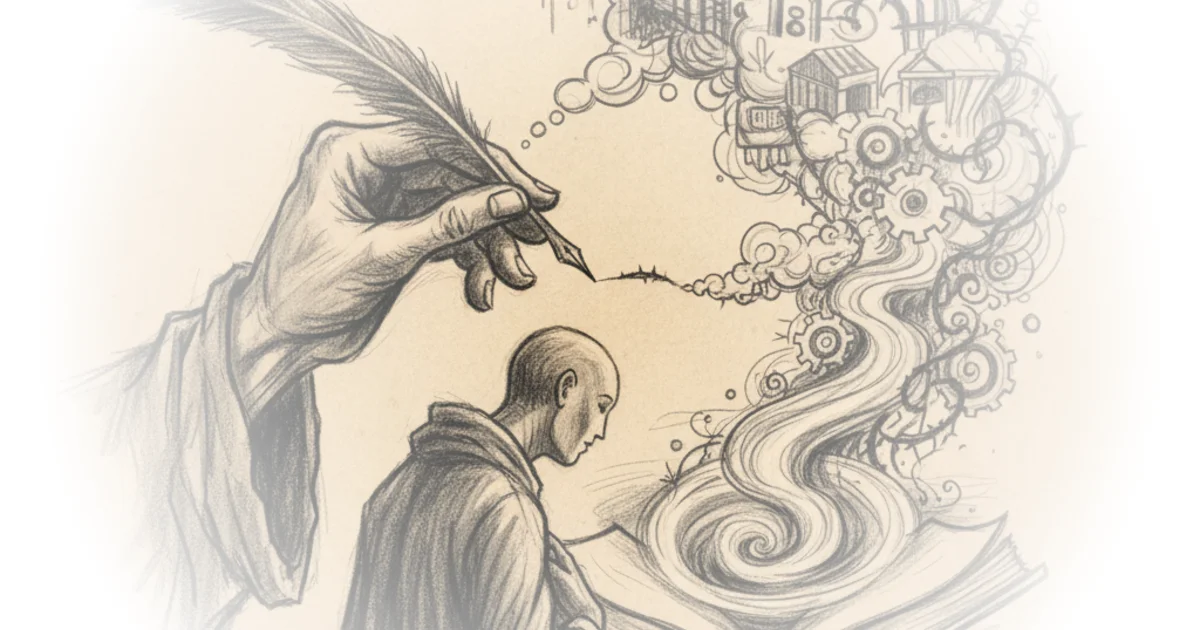
The author suggests that the dissatisfaction many feel with contemporary pop culture stems from artists being too aware of their fans' desires. "The paradox of art meant to be shared is that the only way to make something that connects is to make something that doesn't try to connect," deBoer argues. This is a powerful, if counterintuitive, insight. It suggests that the moment a creator starts performing for the crowd, the magic evaporates. The work becomes a mirror of what the audience expects, rather than a window into the creator's unique perspective.
You can't predict the market or preemptively tailor yourself to what will "resonate," because what resonates is authentic - someone clearly thinking, feeling, and shaping ideas according to their own compass.
Critics might argue that this stance is a luxury afforded only to established writers who already have a platform. For emerging creators, ignoring the market can be a fast track to obscurity. However, deBoer's point is less about career strategy and more about the fundamental nature of art. He contends that even if an artist's instincts are idiosyncratic or unpopular, the resulting work is "something real," whereas tailored content is merely a hollow imitation of someone else's sense of beauty or truth.
The Gendered Confession
The commentary then shifts to a specific case study: deBoer's essay about losing his virginity. He uses this personal narrative to explore the gendered conventions of the "personal essay" and the unique anxieties surrounding male vulnerability. DeBoer notes that if a woman had written an identical story with reversed gender roles, "no one would have batted an eye," yet his own publication sparked intense debate. This observation highlights a persistent double standard in how male and female experiences are received in professional media.
The core of the essay, according to deBoer, is a confession of "profound self-absorption." He describes his youthful desire as rooted in "almost perfect solipsism," where he was so caught up in his own loneliness that he failed to recognize the humanity of the woman he was with. "The essay is first and foremost a confession of that profound self-absorption," he writes, emphasizing that the story is about a young man who could not comprehend the woman as her own person. This level of self-criticism is rare in male narratives, which often lean toward justification or triumphalism.
DeBoer also tackles the psychological shock of discovering one's own desirability. He describes the moment as a "detonation" of his carefully constructed self-narrative, where he realized he was not the "pathetic loser" he believed himself to be. "It was like the moment in the novel where the protagonist's core self-understanding is suddenly invalidated by some mysterious outside force," deBoer puts it. This reframing of male sexual anxiety is crucial; he argues that the problem for many men is not a lack of confidence, but a lack of ease. Men who approach intimacy with sweaty palms and high stakes signal pressure, which often leads to rejection.
I firmly, firmly believe that a ton of ordinary guys don't get laid because they can't believe that they're worthy of receiving women's attraction.
While deBoer's analysis of male anxiety is compelling, it risks oversimplifying the complex dynamics of attraction. Critics might note that his focus on internal psychology overlooks the role of systemic factors, such as the "incel" ideology he references, which often blames women for men's lack of success. DeBoer attempts to navigate this by distinguishing between confidence as an affectation and the genuine ease that comes from believing one is worthy of desire. He argues that women can sense the difference, and that the "pent-up longing and anxiety" of many men make sex feel like a "big nervy deal," which is inherently unappealing.
The Unspoken Burden of the Body
The piece concludes with a reflection on the physical presence of the writer, a topic that often goes unaddressed in literary criticism. DeBoer admits to the distressing reality of being a "large man" in a world that often expects writers to be invisible or small. He notes the recurring comment from readers who meet him: "You're bigger than I thought you'd be!" This reaction, he suggests, implies a disconnect between his written voice and his physical reality. "I've always asked 'Do I write like a small guy?' in a joking way," deBoer writes, highlighting the absurdity of the assumption that a certain body type cannot produce certain kinds of introspection.
This section underscores the broader theme of the piece: the struggle to be seen as a whole person, not just a collection of ideas or a demographic stereotype. DeBoer's willingness to discuss his physical size and the psychological impact of being perceived as "big" adds a layer of vulnerability that reinforces his argument for sincerity. He is not just writing about ideas; he is writing from a specific, embodied experience that challenges the reader's preconceptions.
There's a basic dishonesty in trying to reverse-engineer an audience's taste, after all. You end up with work that's pandering, shallow, and self-conscious, the artistic equivalent of laughing at a joke you don't find funny because you think you're supposed to.
Bottom Line
DeBoer's argument is strongest in its rejection of the performative nature of modern content creation, offering a refreshing reminder that art requires a degree of selfishness to be truly selfless. Its biggest vulnerability lies in the difficulty of applying this philosophy in a hyper-competitive digital landscape where visibility is often a prerequisite for impact. Readers should watch for how this tension between authenticity and algorithmic survival continues to shape the future of independent writing.
You have to begin from what you value, what you find beautiful or true or absurd or terrifying, because otherwise you're just borrowing someone else's sense of those things.