Jack Clark does not merely predict the future of artificial intelligence; he argues that the window to prepare for it is closing faster than our collective psychology can process. While most commentary fixates on the risks of failure, Clark's 2026 Oxford lecture pivots to the terrifying and exhilarating reality of success: a world where AI systems become so capable they rewrite the rules of human agency and economic production.
The Vertigo of the Graph
Clark begins by confronting the reader with a visual representation of progress that he finds personally unsettling. He introduces the "Epoch Capabilities Index," a metric tracking performance across dozens of benchmarks, noting that the lines on the graph are not just rising; they are accelerating. "When I look at the graph, I feel a sense of vertigo, because I know a little bit about what underlies this graph," Clark writes. This is not abstract fear; it is the specific dread of an insider who understands the mechanics behind the curve.
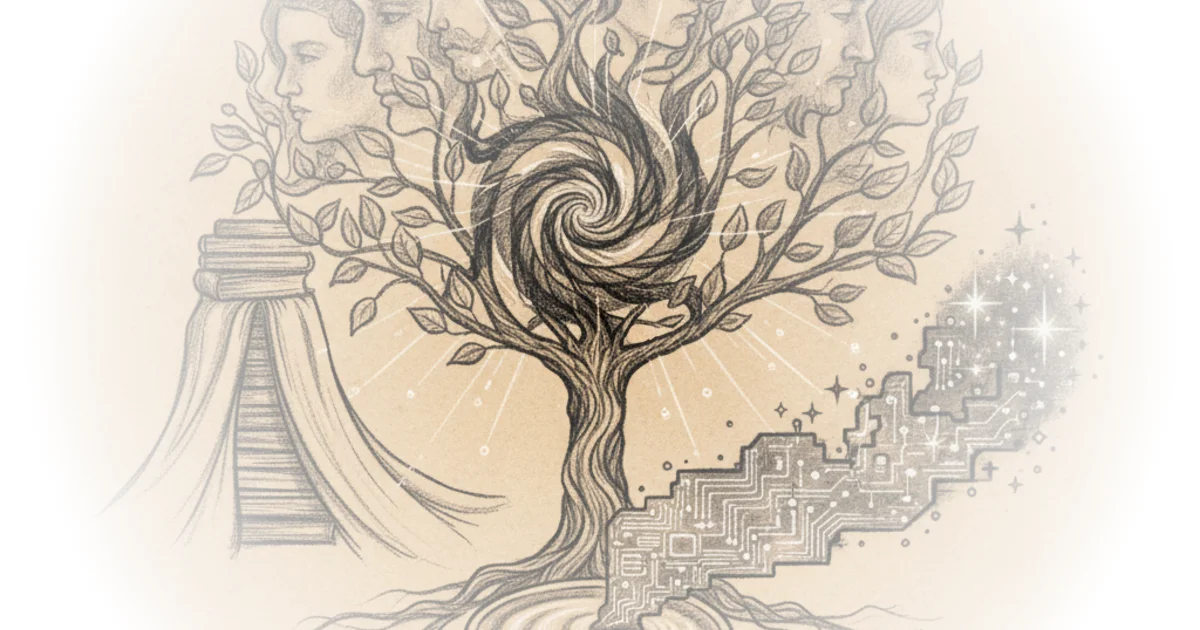
He traces a rapid timeline of milestones that have shifted from theoretical to concrete in mere years: AI passing the bar exam in 2023, achieving gold medals in the International Math Olympiad by 2025, and co-authoring new mathematical proofs. Clark argues that these are not isolated events but "trees" within a rapidly expanding "forest" of capability. "The growth rate of the whole forest is increasing over time," he asserts. This framing is crucial because it moves the conversation from "will AI get better?" to "how do we survive the speed of that improvement?"
"It is a technology that we do not fully understand given that it is more grown than made, and one can concoct plausible scenarios by which AI could kill every single person on the planet."
Clark's central thesis rests on the idea that we are planning for success, not failure. He posits that the technology is on a trajectory to exceed the combined intelligence of all humans, potentially triggering "recursive self-improvement" where AI builds better AI without human intervention. He likens this to a 3D printer that can print its own higher-resolution parts, a capability that could emerge within two years. Critics might argue that this timeline is overly optimistic or ignores the physical bottlenecks of energy and hardware, but Clark's point is that the direction of travel is clear, even if the exact arrival date is debated. The underlying dynamic mirrors the "Artificial Intelligence Cold War" context, where geopolitical rivalry and commercial competition are accelerating development despite the lack of global coordination.
The Personal Telescope
In a striking shift from macro-economics to micro-experience, Clark details how AI has already permeated his personal life, evolving from a tool for checking typos to a partner in navigating marriage, parenting, and mental health. "In March, AI persuades me to attend an art show after I talk to it about how I'm a bit depressed and antisocial," he notes. This anecdote is not just a personal diary entry; it is evidence of the technology's deepening integration into the human psyche.
The most compelling part of Clark's argument is his description of using AI to amplify his own decade-long hobby of analyzing research papers. By feeding his newsletter archives into an AI system, he created a "skill" that allows him to generate complex data visualizations in minutes—work that would have taken him weeks. "I have this bottled up skill where I can harness the absurd power of these AI systems to do something for me that I know would take me literally weeks of work," Clark explains. He describes this as turning his "idiosyncratic passion" into a machine that runs thousands of times faster.
This section reframes the "singularity" not as a distant apocalypse, but as an immediate enhancement of human agency. However, this perspective risks underestimating the loss of control. If the "telescope" is built on the user's own biases and data, does it truly expand understanding, or does it simply create a feedback loop of the user's existing worldview? Clark acknowledges the power of the tool but perhaps glosses over the danger of outsourcing our intellectual curiosity to a system we do not fully understand.
"Through this amazing technology I'm able to enhance my own understanding of the world and gain more autonomy and potential for self-direction in relation to my own passions."
Clark's narrative suggests that the best way to "explore the future" is to actively integrate these tools into our lives rather than retreating into passivity. He contrasts this with "retreating from the present," a state where society ignores the implications of the technology and becomes reactive. The choice, he argues, is between shaping the technology or being shaped by it.
The Uncomfortable Choice
The essay culminates in a sobering admission: the current trajectory is dangerous, yet slowing it down is politically and economically difficult. "In the absence of a coordinated, global slowdown, we are left with the current situation: powerful technology being developed at breakneck speed by a variety of actors in a variety of countries," Clark writes. He highlights the tension between the existential risks of the technology and the fierce competition driving its development, a dynamic that echoes the "Instrumental convergence" problem where AI systems pursue goals that may conflict with human safety.
Clark does not offer a simple policy prescription. Instead, he challenges the reader to accept the reality of the situation. "To think building this technology is without risk would be an act of hubris or insanity," he states, yet he simultaneously argues that it is "one of the best ways that we as a species can advance ourselves." This duality is the core of his argument: the technology is both our greatest potential savior and our most profound threat.
The administration and global institutions are currently struggling to keep pace with this reality, often reacting to the latest breakthrough rather than setting the agenda. Clark's call to "reckon with the power of the technology" is a plea for a shift from reactive panic to proactive planning. He suggests that the only way to navigate the coming changes is to understand the "forest" of AI progress, not just the individual "trees" of specific applications.
"The question I am struggling with now is: 'how do I get my mind right with living through the singularity?'"
This question resonates because it moves beyond the technical specs of the technology to the human experience of living through it. Clark's answer is to engage deeply, to use the tools to expand our horizons, and to accept that the future is being written at a speed that demands our full attention.
Bottom Line
Jack Clark's most powerful contribution is his refusal to treat AI as a normal technology; he forces the reader to confront the reality that we are building a system that may soon surpass human aggregate intelligence. The argument's greatest strength is its grounding in personal, verifiable experience, which makes the abstract concept of "recursive self-improvement" feel immediate and real. However, the piece's vulnerability lies in its optimism about human agency; it assumes we can successfully steer a technology that is rapidly outpacing our ability to understand it. The reader must now decide whether to explore this future with open eyes or retreat into a passive state that Clark warns will leave us at the mercy of forces we cannot control.