Most histories of the American Civil War treat the fighting as the climax and the peace as an afterthought. Yale University flips this script entirely, arguing that the true definition of the war lies not in the battles, but in the chaotic, unfinished business of Reconstruction. This podcast episode, featuring historian David Blight, reframes the era not as a failed footnote, but as a prolonged, high-stakes referendum on the very meaning of American citizenship and democracy.
The War for the Peace
Yale University opens by challenging the listener to view the post-war period as a distinct conflict. "In any conflict you emerge with all sorts of issues that emerge," Blight notes, highlighting that the question of how to treat the losers is often as defining as the war itself. This framing is crucial because it forces us to see Reconstruction not as a bureaucratic cleanup crew, but as a revolutionary moment where the nation had to decide if it would be a restored aristocracy or a reinvented republic.
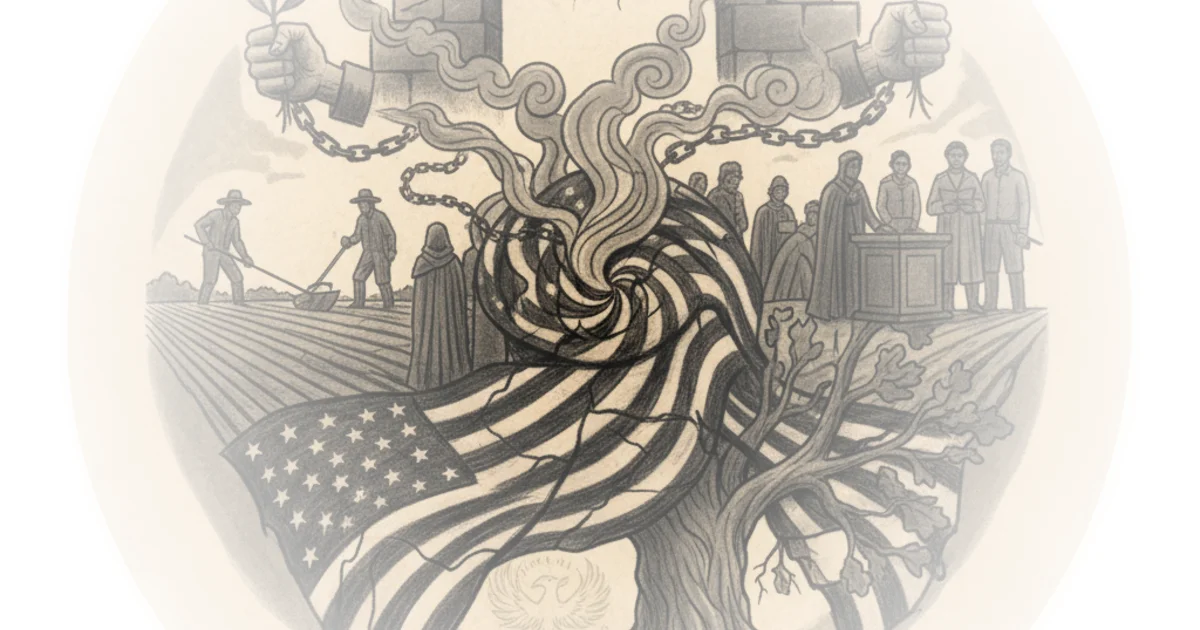
The coverage brilliantly dissects the constitutional crisis at the heart of the era. It wasn't just about rebuilding railroads; it was a power struggle between the executive branch and the legislature. Yale University explains that while President Lincoln favored a lenient approach, the Republican-led Congress demanded a fundamental restructuring of Southern society. "It's a true constitutional crisis and it will end up in the impeachment of Andrew Johnson because he contests in his mere three years everything the Republicans try to do," Blight observes. This analysis strips away the personality cults often surrounding these figures and focuses on the institutional friction that nearly tore the government apart.
"Reconstruction is in part a prolonged referendum on the meaning of the war. It's a profound and long referendum on the verdict of Appomattox."
Critics might argue that focusing so heavily on Washington D.C. obscures the grassroots reality, but Yale University counters this by grounding the policy debates in the lived experience of the Sea Islands. They describe the "Port Royal Experiment" as a rehearsal for the entire nation, where formerly enslaved people built institutions and reclaimed land. This ground-level view reveals that the failure of Reconstruction wasn't just a political decision; it was a systemic economic trap.
The Economic Trap of Freedom
The most striking insight from Yale University is how quickly the promise of land ownership was replaced by the debt of sharecropping. The podcast details how the federal government, through the Freedmen's Bureau, attempted to negotiate labor contracts in a cash-poor economy. "The system of sharecropping, tenant farming, working on shares... eventually it became a system largely of working on halves," Blight explains. This economic arrangement, while offering a semblance of autonomy, ultimately became a "dead end for the freed people who want to achieve above all land ownership and education."
Yale University draws a powerful parallel between the missed opportunities of the 1860s and the arguments of later progressives. They highlight the radical vision of Thaddeus Stevens, who argued that political freedom was meaningless without economic security. "The whole fabric of southern society must be changed and never can it be done if this opportunity is lost," Stevens is quoted as saying. This connection is vital; it suggests that the struggle for economic citizenship is not a modern invention but a foundational American debate that remains unresolved.
The coverage effectively argues that the failure to redistribute land was the single greatest factor in the collapse of Reconstruction. "Without this this government can never be as it has never been a true republic," Stevens warned. Yale University uses this to illustrate a broader historical truth: revolutions that fail to alter property relations often revert to the status quo. The administration's inability to enforce land reform allowed the old Southern elite to regain political power, effectively nullifying the military victory.
The Unfinished Revolution
As the podcast moves toward the end of the era, Yale University emphasizes the tragic irony of the outcome. The federal government, which had the power to redefine the South, chose instead to retreat. "You cannot be a fully realized political citizen without having a certain kind of economic security," Blight asserts, linking the 19th-century failure directly to 20th-century political discourse. This continuity is the piece's most compelling argument: the questions asked in 1865 are the same ones haunting American politics today.
The narrative concludes by noting that the relationship between political and economic citizenship is a process that is still unfolding. "We're still in that process, aren't we?" Blight asks, leaving the listener with the uncomfortable realization that the Reconstruction era never truly ended; it merely went underground. This perspective transforms the history lesson into a urgent call to understand the structural roots of modern inequality.
"You cannot be a fully realized political citizen without having a certain kind of economic security."
Bottom Line
Yale University delivers a masterful analysis that shifts the focus from the battlefield to the ballot box and the bank, proving that the Civil War's true legacy is the unfinished work of economic and political integration. While the piece leans heavily on the radical Republican perspective, its strongest asset is the unflinching link it draws between the failure of land redistribution and the persistence of racial inequality. The reader is left with a clear verdict: the era's greatest failure was not a lack of will, but a lack of economic courage, a lesson that remains painfully relevant.