Tim Mak delivers a sobering counter-narrative to the usual war coverage, arguing that the most profound shift in Ukraine isn't just on the battlefield, but in the quiet, grease-stained garages where women are permanently rewriting the rules of labor. While headlines focus on missile strikes or diplomatic gridlock, Mak reveals a demographic and economic earthquake: a forced entry of women into hazardous, male-dominated trades that may outlast the conflict itself. This is not a story of empowerment through choice, but of survival through necessity, and it forces a re-evaluation of what post-war reconstruction will actually look like.
The Mechanics of Survival
Mak opens with the visceral reality of Natalia Pavliy, a mechanic in Kharkiv who faces daily prejudice despite her expertise. "Is there a male mechanic?" a customer asks, a question Mak notes she has "replayed hundreds of times over the past year." This anecdote is not merely illustrative; it is the thesis of the piece. The war has stripped away the luxury of gendered career paths, leaving a vacuum that women must fill to keep the economy functioning. Mak writes, "Full-scale war forced hundreds of thousands of Ukrainian men to leave civilian life and serve on the front lines... This labor void had to be filled, causing 64 percent of Ukrainian companies to hire women for traditionally 'male' positions."
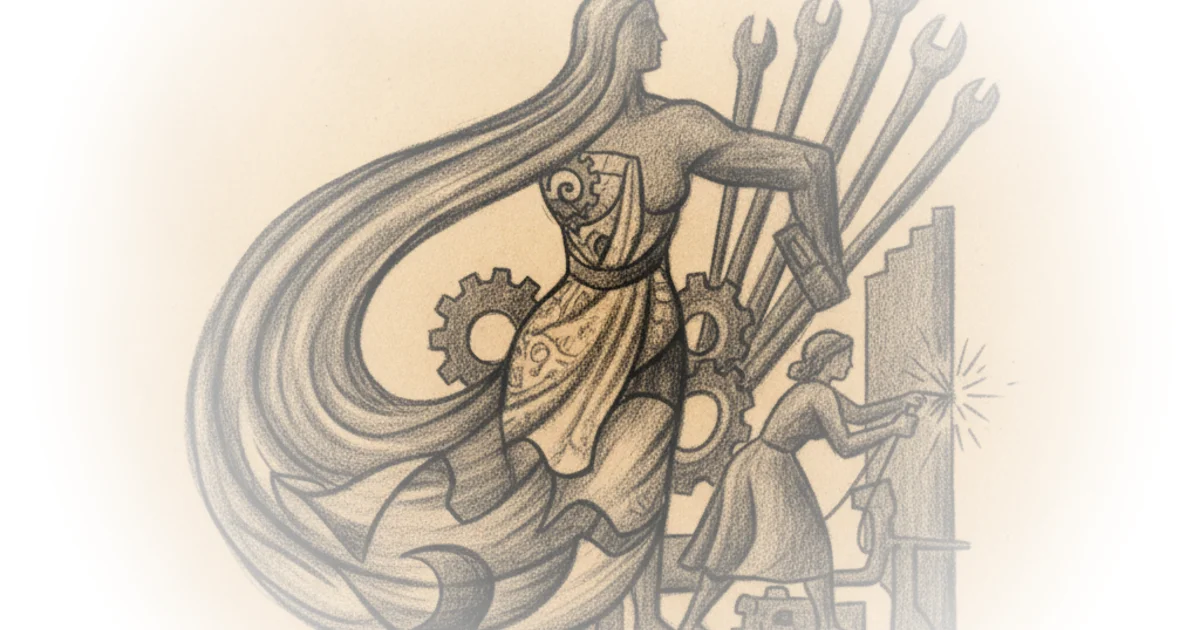
The author effectively contrasts this sudden shift with the bureaucratic inertia of the past. He reminds us that until 2017, the Ministry of Health officially banned women from 450 hazardous occupations, a legacy that lingered even after the ban was lifted. Now, the government is scrambling to catch up, offering retraining programs and subsidies. Yet, Mak points out that for many like Natalia, formal infrastructure is irrelevant; they learned the trade the hard way. "It's not that I didn't want to play with dolls, dress up as a princess, or have tea parties. It's just that I had no other choice," Natalia tells him. This framing is crucial: it strips away the romanticism of "breaking barriers" and replaces it with the stark reality of economic desperation.
The Economic Reality and the Pay Gap
Mak does not shy away from the uncomfortable economic truths accompanying this shift. While women are flooding into roles as truck drivers, foundry workers, and mechanics, the structural inequalities of the pre-war era persist. The article notes that despite the high demand for labor, women continue to earn significantly less than the men who previously held these jobs. This widening pay gap is a critical vulnerability in the narrative of progress. As Mak observes, the percentage of women among the registered unemployed has skyrocketed from 55 to 81 percent, driven partly by men avoiding official employment to evade mobilization.
"Women aren't considered good mechanics. I have to work much harder to convince people that I'm qualified, even though I don't have children yet. I really don't know how I'd manage if I had kids."
The author juxtaposes this struggle with the statistical surge in female entrepreneurship. From January to October 2025 alone, women registered over 153,000 new sole proprietorships. Mak draws a historical parallel to World War II in the United States, where women entered the aircraft industry in droves, only to be pushed back out once the war ended. However, he offers a chilling divergence from that history. "Unfortunately, many men have died and many women have left Ukraine and are unlikely to return. I don't think women will lose their jobs in the future," Natalia argues. The demographic math is unforgiving; with a projected ratio of 90 men for every 100 women, the economy cannot simply revert to its pre-war state.
Critics might argue that Mak overstates the permanence of this shift, suggesting that once security stabilizes, social pressure could force women back into traditional roles regardless of the demographic deficit. However, the sheer scale of the labor shortage and the entrenched nature of female-led businesses suggest that the economic reality will likely override social norms. The burden of unpaid household labor remains a heavy counterweight, as women now manage both the paid workforce and the care of wounded spouses or children alone.
The Human Cost Behind the Headlines
While the lead story focuses on labor, Mak's piece is bookended by a broader context of instability that underscores the fragility of these gains. The text briefly touches on the third day of protests in Kyiv, where citizens are demanding the resignation of military leadership, and the diplomatic friction as Hungary blocks Ukraine's EU accession. These political tremors threaten the very stability needed for women to secure their new positions. Furthermore, the article notes that Ukraine's strikes on Russian oil have hit U.S. consumers, raising global energy prices, while Polish public opinion has turned sharply against accepting refugees. This geopolitical fatigue adds a layer of urgency to Mak's argument: the window for structural change is open, but the external support system is fraying.
Mak's reporting on Natalia's emotional journey—the tears on the drive home, the reassurance from her husband on the front lines—grounds the macroeconomic data in human suffering. "It's okay if things don't work out. After all, it's just a job. You can always find another one. But don't doubt yourself, because you've spent your whole life at the auto repair shop," her husband tells her. This exchange highlights the psychological toll of the transition. The author makes it clear that while the economy is adapting, the individuals driving that adaptation are doing so under immense personal strain.
"Actually, if I ever have a daughter, she'll be able to look to me as an example, and it won't seem strange to her anymore."
This final sentiment from Natalia offers a glimmer of hope, but Mak ensures it is not mistaken for a victory lap. The normalization of women in these roles is a byproduct of tragedy, not a triumph of ideology. The piece ends by acknowledging that while the profession may no longer seem strange, the path to get there was paved with loss and displacement.
Bottom Line
Tim Mak's most compelling argument is that the war has created a demographic and economic lock-in that will likely prevent Ukraine from returning to its pre-2022 gender norms, regardless of social resistance. The piece's greatest vulnerability is its reliance on the assumption that the demographic deficit will be the primary driver of long-term change, potentially underestimating the power of cultural backlash in a post-conflict society. Readers should watch whether the economic necessity of women in these roles translates into legal and social protections, or if they remain a temporary fix for a broken system.