This piece from Wayfare performs a quiet but radical inversion: it suggests that the solution to toxic tribalism isn't the erasure of group identity, but rather its thoughtful expansion. In an era where political discourse demands we dismantle our "us" and "them" categories entirely, the editors argue that human psychology actually requires these boundaries to function, provided we learn to let the "other" save us just as often as we try to save them.
The Psychology of Belonging
Wayfare begins not with a theological treatise, but with a personal collision between Sunday school dogma and lived reality. The piece recounts a jarring moment where a community member labeled Los Angeles as "the literal Sodom and Gomorrah," a sentiment that clashed violently with the author's childhood memories of the city's vibrancy and their uncle's deep love for its people. This disconnect drives the central inquiry: why do we so readily categorize neighbors as enemies? The editors note that this impulse isn't just cultural; it is biological. "Labels … divide and restrict the way we think about ourselves and each other," President Russell M. Nelson warned in 2022, a quote the piece uses to acknowledge the danger of prejudice while pivoting to a more nuanced sociological truth.
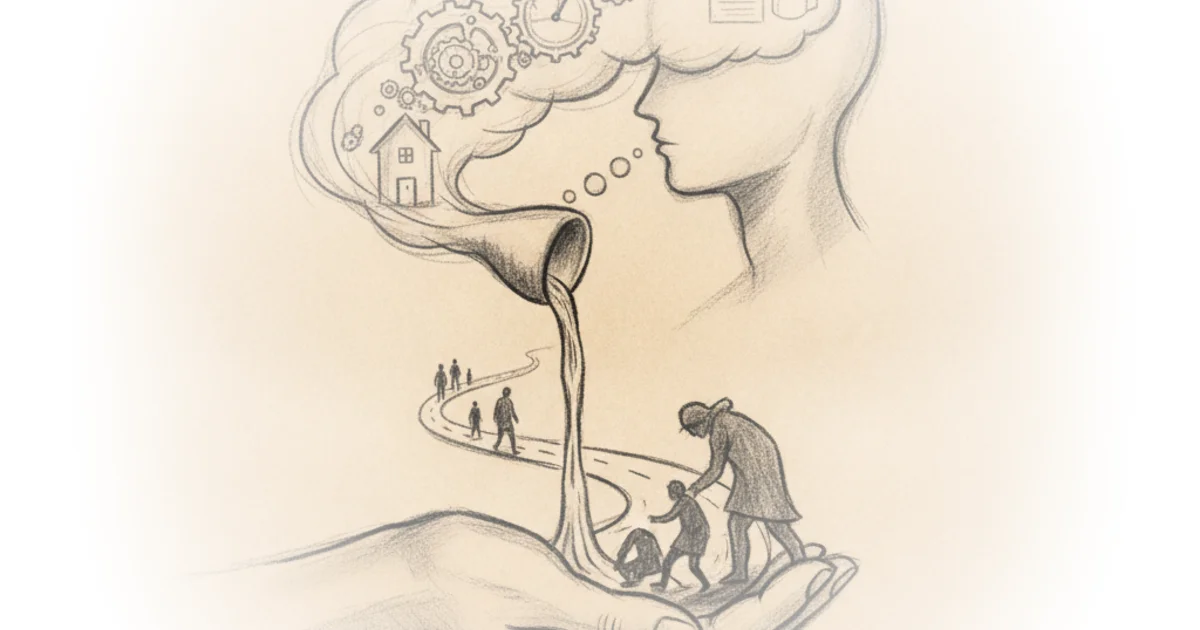
The argument here is that our brains are wired for classification from infancy. Wayfare points out that "babies as young as six months old recognized when they were looking at a picture of an adult who had a different skin color," and by thirty-six months, children actively group people based on likeness. This isn't presented as a moral failing, but as a developmental milestone. The piece effectively reframes the Good Samaritan parable not as a lesson in abandoning tribalism, but as a lesson in understanding its mechanics. "The power of a social identity comes from what it excludes—which helps people clarify who they are and who they are not," cite psychologists Dominic Packer and Jay Van Bavel. This is a crucial distinction: we need the "them" to define the "us."
The true lesson of the Good Samaritan story is that They exist not to just be tolerated until They change into Us. They exist separate from Us, and we need them, just as they are.
However, this reliance on group identity creates a paradoxical danger. When the priest and the Levite in the parable walk past the injured man, it wasn't necessarily out of malice, but out of a fear of losing their own standing within their exclusive groups. The piece argues that "the labels that Christ uses in the story hint at their possible motivation," specifically the Mosaic Law's restrictions on ritual purity regarding dead bodies. To touch the man was to risk becoming "unclean" and thus excluded from their community. This insight is powerful because it humanizes the bystanders; they weren't monsters, but prisoners of their own tribal codes. Critics might note that this psychological explanation risks excusing negligence, yet Wayfare carefully balances this by noting that the Law actually provided exceptions for such care, suggesting the men chose fear over duty.
The Outsider's Perspective
The article shifts its focus to the Samaritan, a figure who historically represented a group in heated opposition to the Jews. Here, Wayfare challenges the common LDS (Latter-day Saint) self-perception of being "peculiar people" set apart from a dark world. "Sometimes in the Church we like to think of ourselves as special or different," the editors observe, noting that this mindset often casts the rest of humanity as a project to be fixed rather than a source of wisdom. The parable flips this script: the outsider is the one who offers salvation.
The piece suggests that the Samaritan stopped because he saw a connection that transcended tribal lines—perhaps a shared profession, a shared vulnerability, or simply a "softness in his gaze." This aligns with science journalist David Berreby's observation on the human need for belonging: "It's that absence of self-consciousness, that ease and fellowship and sense of common values which make for intimacy and sanity." The editors argue that while tribalism creates the "us," it is equally vital because it creates the "them" who can offer us something we lack. This perspective resonates deeply when considering historical contexts like the Los Angeles California Temple, a place built to serve a diverse population in a city often misunderstood by outsiders, or the complex history of Samaritanism itself, where a group long marginalized became the moral compass in Christ's narrative.
The personal anecdote about Uncle Steve serves as the emotional anchor for this theoretical framework. Steve didn't just tolerate diversity; he sought it out, learning languages and attending different religious services to build genuine connections. "He loved people where they stood, for their similarities and for their differences," Wayfare writes, contrasting his approach with the fear that drives exclusionary tribalism. The piece notes that when we focus on fear, "tribalism becomes a tool of abuse and prejudice," damaging both individuals and society. But when we recognize that divisions are often "all in our heads," we can repurpose tribalism as a tool for good.
The fear of being one of Them pushes against your frequent perception of sameness. Difference is all you may permit yourself to see.
This section is particularly strong because it moves beyond abstract theory into the realm of actionable empathy. It acknowledges that finding connections requires effort, especially when differences feel like an affront. Yet, the editors insist that "if we instead focus our efforts on finding connections, we can turn tribalism into a tool for good." The narrative arc from the Sunday school comment about Los Angeles to the burial at Hollywood Forever cemetery provides a poignant closure, illustrating how one man's life was enriched by embracing the very city others condemned.
Bottom Line
Wayfare's most compelling contribution is its refusal to demonize the human need for group identity, arguing instead that we must expand our definition of "our tribe" rather than dissolve it entirely. The piece's greatest vulnerability lies in its optimism; while the psychological mechanism of finding connection is sound, the article offers little on how to practically dismantle the systemic power structures that weaponize tribalism against marginalized groups. Ultimately, this is a necessary correction to the simplistic "us vs. them" narrative: we don't need less belonging; we just need better neighbors.