Sara Ahmed dismantles the popular narrative of "cancel culture" by revealing it as a rhetorical shield used to protect power, silence dissent, and obscure institutional violence. This piece is notable not for cataloging cancellations, but for exposing how the very act of complaining is rebranded as a weapon of destruction, turning victims of harassment into the alleged aggressors. In an era where institutions are increasingly defensive, Ahmed offers a crucial lens for understanding why accountability feels so impossible to achieve.
The Myth of the Killjoy
Ahmed begins by deconstructing the origin story of the "cancel culture" panic, tracing it back to a mundane logistical decision rather than a moral crusade. She points to the cancellation of the Cooper's Hill Cheese-Rolling race, an event that has been running for centuries. The headline screamed that "Health and Safety Killjoys" had axed the tradition, yet the reality was far more prosaic: attendance had tripled the previous year, creating a safety hazard. "The story becomes about cancel culture by changing the object from event to tradition," Ahmed writes. This shift is the core mechanism of the panic: transforming a practical safety measure into a cultural war.
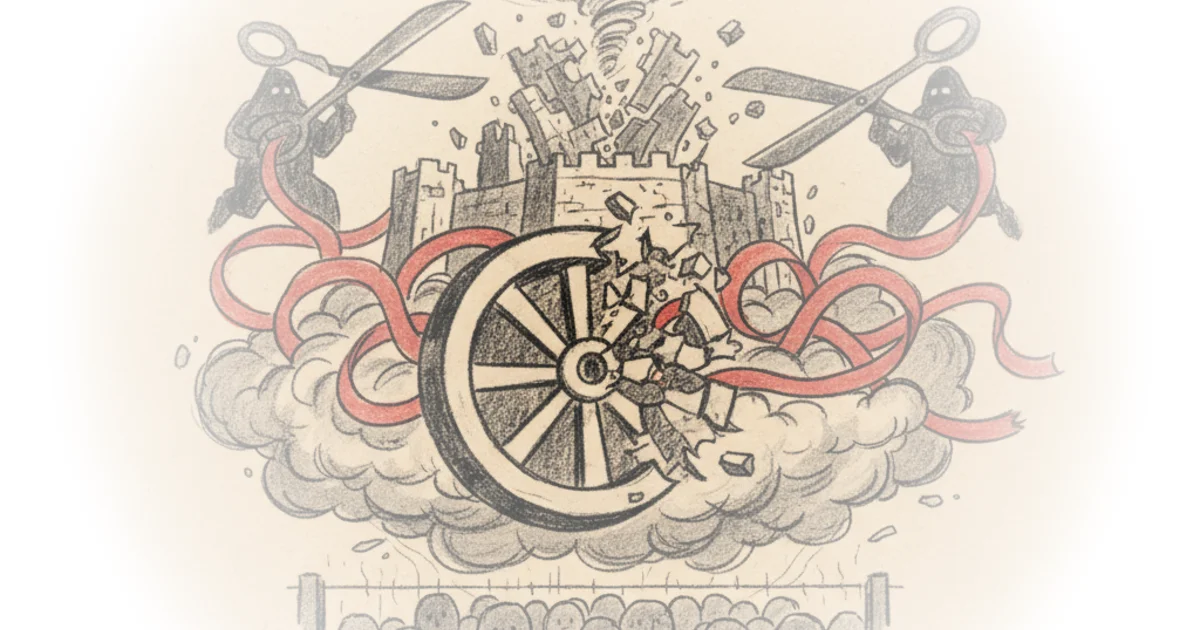
By reframing the cancellation as an attack on heritage, the narrative creates a villain. Ahmed notes that the "cancellers" are often painted as shadowy figures who simply want to ruin fun. "The figure of the killjoy often functions as a character diagnosis: as if they are trying to stop us from enjoying ourselves, because they are miserable." This framing is effective because it pathologizes the critic rather than engaging with their argument. It suggests that the problem isn't the danger of the event or the harm of a policy, but the personality of the person raising the alarm.
"Cancel culture is not just a story told from a certain point of view, it is how we don't hear about other stories."
This observation lands with particular force when considering the historical context of moral panics. Much like the hysteria surrounding the John Searle case, where the philosopher's potential future harassment claims were treated as an inevitable, catastrophic erasure of his legacy, the current discourse treats any critique as an existential threat. Ahmed argues that this narrative expands to swallow everything: a job loss after a misconduct inquiry, a postponed event due to security, or even a history lesson that challenges imperial glory. "Once 'cancel culture' has acquired its form so much that happens is folded into it," she writes. The term becomes a catch-all bucket for any discomfort with the status quo.
The Weaponization of Complaints
The piece moves beyond abstract theory to examine how this rhetoric functions within the workplace, specifically regarding gender and trans rights. Ahmed highlights the case of Rishi Sunak, who framed the inclusion of gender-inclusive language as an attempt to "cancel our history, our values, our women." Ahmed dissects this language, noting that the possessive "our women" reveals a deeper anxiety about ownership and property. "What is cancelled (or what is claimed to have been cancelled) is given the status of property," she argues. When language evolves to be more inclusive, it is interpreted not as an expansion of rights, but as a theft of identity.
This dynamic creates a perverse inversion where the accusers are silenced while the accused are amplified. Ahmed contrasts the media frenzy over "gender critical" academics being "hounded out" with the reality of those who are actually silenced. She cites a lecturer who, after facing a grievance process backed by a network of critics, stopped speaking out entirely. "In many ways, they have silenced me," the lecturer explains. "The stress placed on me during the grievance process and the fears I felt for my job security have meant that I have since kept quiet." The narrative of the "hounded academic" erases the very real fear and career damage suffered by those who try to enforce basic standards of conduct.
"A vice can be turned into virtue by mere description, being physically violent treated as blunt speech, a rather efficient form of communication."
Ahmed's analysis of how institutions reframe abuse is particularly sharp. She recounts a case where a head of department physically assaulted a senior lecturer, yet the subsequent report described the abuser as having a "direct style of management." The victim, Mia, was labeled "uncollegial" and pushed out. This is not just a failure of policy; it is a systematic rewriting of reality. By treating harassment as a "style" or a "quirk," institutions protect their power structures. As Ahmed puts it, "Sexual harassment can even be turned into a kind of social rebellion, a refusal to comply with policies and mandates." This reframing allows abusers to position themselves as martyrs fighting against a "woke" mob, a tactic that has successfully convinced even feminist colleagues to defend serial offenders.
Obscuring Power and Complicity
The final section of Ahmed's argument addresses the most dangerous function of the "cancel culture" myth: its ability to hide who actually holds power. When complaints are framed as weaponized attacks, the focus shifts from the abuser to the accuser. Ahmed describes this as "the weaponisation of the weaponisation of complaints." It creates a fog where institutional complicity becomes invisible. "Power works by making it unclear who has it," she writes, a truth that explains why so many people are afraid to speak up.
This dynamic is evident in the way institutions handle dissent regarding state violence or systemic oppression. Ahmed notes that complaints about genocide or the enforcement of the sex binary are often dismissed as attempts to "cancel" free speech. "Those called cancellers by that or some other name are stopped from speaking mostly because of who or what their speech implicates," she observes. The result is a chilling effect where the most critical voices are silenced, not by an external force, but by the internalized fear of being labeled a troublemaker.
Critics might argue that Ahmed underestimates the genuine impact of online mobs on individuals' lives, suggesting that some forms of public shaming do cross the line into harassment. While valid, this counterargument often ignores the scale of harm caused by the powerful, which is rarely subject to the same level of public scrutiny. Ahmed's point is that the "cancel culture" panic is disproportionately applied to the marginalized while the powerful operate with impunity.
"That complaints are weaponised can be used to mask institutional complicity with violence."
Bottom Line
Sara Ahmed's argument is a masterclass in exposing the mechanics of institutional defense, revealing that "cancel culture" is often a smokescreen for protecting abusers and maintaining the status quo. Its greatest strength lies in shifting the focus from the fear of cancellation to the reality of silencing, forcing readers to ask who is actually being stopped from speaking. The piece's vulnerability is its reliance on specific institutional case studies that may feel distant to those whose primary experience of "cancel culture" is online, yet the underlying mechanism of power protection remains universal. Readers should watch for how this rhetoric continues to be deployed to block accountability in the coming months, particularly in academic and corporate settings where the stakes for speaking out are highest.