A woman tells her employer she's pregnant. Days later, she's told her position is eliminated due to restructuring. This is not an isolated incident—it's a pattern repeated across Canadian workplaces, and The Walrus has documented it with unsettling precision.
The Google Case That Started It
In the summer of 2024, Sarah Lilleyman sued Google Canada for wrongful dismissal and breach of the Ontario Human Rights Code. She had worked there for roughly two and a half years. She was fired just days after informing her bosses she was expecting. Google's defense was blunt: pregnancy is not a protected ground under the Code.
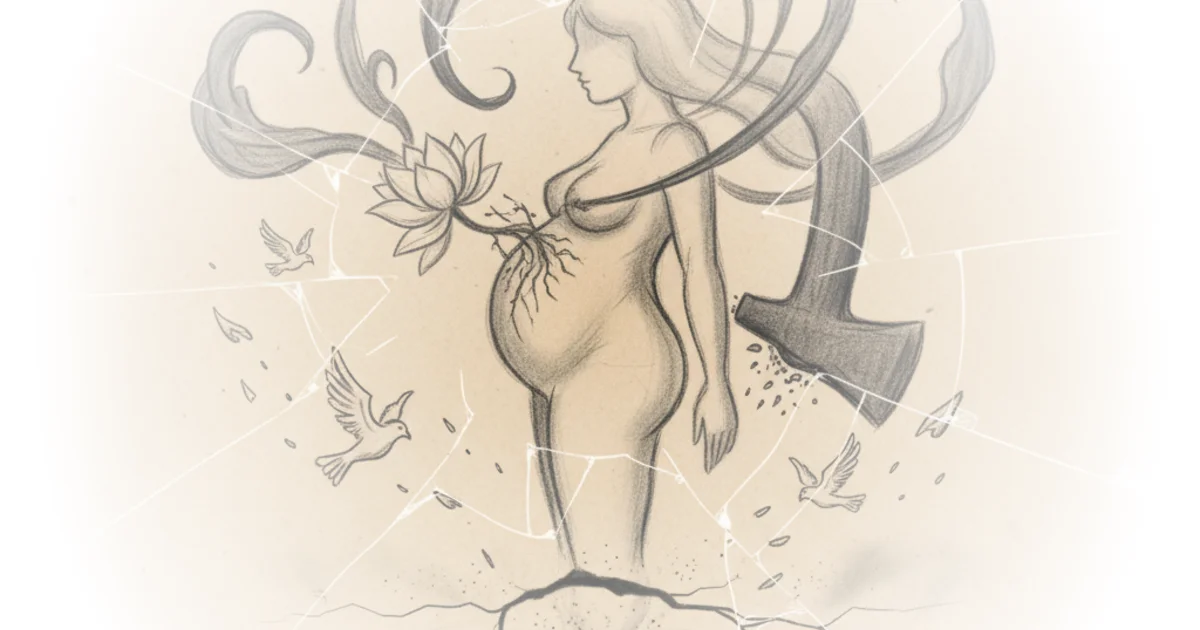
The Walrus notes the obvious contradiction: pregnancy is explicitly protected under Ontario's human rights legislation. It is illegal to refuse to hire, to fire, to demote, or to lay off a person because they are or may become pregnant. Yet the tech giant's legal team argued otherwise.
"It is a scary thing to put yourself out there to take on this gigantic company that does have so much power," Lilleyman's lawyer Kathryn Marshall told the National Post. "But she knows that there's so many other women who are experiencing pregnancy discrimination at work who don't have the ability to put themselves out there."
The Numbers Behind the Stories
Allison Venditti, founder of Moms at Work, had heard these stories for years. She worked in disability management before launching the organization. Her own traumatic brain injury left her unable to read, with a seizure disorder, and partial loss of function on her left side. When she returned to consulting, her clients were mostly women and mothers needing community, not just legal advice.
"I just got sick of people telling me that it wasn't a problem," Venditti says.
Nobody had data. Statistics Canada didn't. The Canadian Human Rights Commission didn't. So Venditti conducted research herself, surveying 1,300 Canadian women who had taken maternity leave. The headline: 15 percent were dismissed, laid off, or had contracts not renewed during pregnancy, leave, or shortly after return. That's three times the dismissal rate of the general population.
"I saw it because I was in it," Venditti says. "But no one had the numbers. How else was I going to get people to believe me?"
"Why did I get laid off? There were so many questions that didn't get answered that rattled around in my head all night as I got up to feed my baby and cry."
The Motherhood Penalty
The Vanier Institute's 2024 report tracked thirty years of family economics in Canada. Women's labor force participation has surged. More women support half the family income, the majority, or become sole breadwinners. Between 2000 and 2022, couples where women earned 100 percent of household income rose from 7.8 percent to 10.7 percent.
But couples with children tell a different story. Women without children are twice as likely to be breadwinners as women with children. Having kids cuts your breadwinner odds in half.
"The motherhood penalty is real," Venditti says. "People have very strong opinions about what women should be doing with their time—and that is taking care of babies. People come to us and say, 'I got laid off today, and my boss told me that it would be great because I could spend time with my baby.'"
Sociologists Michelle J. Budig and Paula England coined this term in 2001. Wages and employment drop for women after children—more than for men. Many new fathers experience earnings bumps. Mothers face slower promotion, inadequate leave support, poor flexible work arrangements. Employers perceive them as less competent or committed. Perception becomes reality.
The Legal Reality
Pregnancy discrimination is prohibited under the Canadian Human Rights Act and all provincial legislation, including Ontario's Human Rights Code. The Canadian Human Rights Commission states plainly: pregnancy-related discrimination is sex discrimination, because only women can become pregnant. Termination, refusal to hire, harassment—all illegal.
Yet employees can be terminated on a without-cause basis under common law and statute. Aaron Zaltzman, associate lawyer at Whitten & Lublin, explains the gap: "When it comes to employees on maternity leave, there is a misconception that an employee who is on a protected leave cannot be terminated and that's not, strictly speaking, true."
Termination is legal if unrelated to pregnancy or leave. But no employer admits the connection. Courts use a three-step test: is the person under protected grounds? Has there been an adverse event? Is there a nexus between them?
"It can be as simple as that," Zaltzman says. Once a prima facie case exists, the burden shifts to the employer to prove an innocent explanation.
Employer Excuses
Deborah Hudson, managing partner at Hudson Sinclair LLP, identifies two categories of offending employers. "Some employers are simply poorly advised," she says. They lack HR expertise and prioritize short-term operations over legal compliance. They want to retain a high-performing maternity leave replacement and avoid reintegrating the original employee.
"Other employers are willfully negligent," Hudson says. "They're aware of the risks but assume that most employees won't pursue legal action due to the time, cost, or complexity involved."
Restructuring becomes the catch-all justification. Closer scrutiny reveals the restructure disproportionately impacts those on leave.
Critics might note that businesses face genuine operational pressures—restructuring isn't always pretextual, and small employers may lack resources for sophisticated HR compliance. The law's burden-shifting framework assumes employers will admit nothing, yet also assumes courts can distinguish innocent from discriminatory motives with limited evidence.
The Human Cost
Most women interviewed spoke anonymously. Fear of repercussions silenced them. One woman was told midway through leave that her job no longer existed. She was breastfeeding around the clock, consumed by new parenthood. The idea of returning to work had kept her going. Then that possibility vanished.
"I think any new parent, but maybe moms especially, lose themselves a little in parenthood," she reflects. "Our bodies change, our priorities change, we lose sleep, we lose sanity. Of course, we gain a lot, too, but it is certainly a period of adjustment."
Another was promised a senior position upon return, with a direct report to free her time. Months after the baby arrived, her boss suggested she apply for a different role—if she ended leave early. She refused. The senior role vanished. The department changed.
A third was laid off when her baby was ten months old. She loved her job. She was devastated. The worst time to apply for new work became the moment of crisis.
Bottom Line
The law protects pregnant workers and those on maternity leave. The data shows 15 percent are fired anyway. The gap between legal protection and workplace reality is where discrimination lives—unprovable, unadmitted, and multiplied across thousands of Canadian households. The Walrus has documented a system where employers paper over firings as restructuring, courts struggle to find nexus, and women absorb the cost in lost income, stalled careers, and sleepless nights.