In a landscape often dominated by technical specifications and market forecasts, a new encyclical from the Vatican offers a startlingly different lens on artificial intelligence: not as a tool to be mastered, but as a mirror reflecting our own spiritual fragility. The Pillar's live coverage of Magnifica humanitas reveals a document that is less a set of rigid rules and more an invitation to a shared, humble discernment about what it means to be human in the age of algorithms. What makes this analysis essential right now is its refusal to treat AI as merely a technical problem, instead framing it as a profound theological and ethical crisis of identity.
The Tension of Knowing and Being
The piece immediately zeroes in on a fascinating internal contradiction within the encyclical's treatment of technology. The editors and theologians note that the document walks a tightrope between admitting ignorance and asserting dogma. In paragraph 98, the text concedes that "fundamental scientific aspects" of how AI works remain unknown, describing systems as "cultivated" rather than "built." This is a rare moment of epistemic humility from an institution often criticized for speaking with absolute certainty.
However, the coverage highlights a jarring pivot in the very next paragraph. "In #99, it proceeds to make a series of confident and definitive claims about AI," the piece observes, stating that the technology's power "remains entirely tied to data processing." The Pillar's contributors argue this creates a logical friction: "Even the best experts don't really know how these systems work, but here are some confident claims about how these systems work." This tension is not a minor oversight; it is the central drama of the document. It suggests an institution trying to apply ancient moral categories to a black box it admits it cannot fully see. Critics might note that such definitive claims about the ontological nature of AI could be quickly outdated by rapid technical shifts, potentially undermining the document's long-term relevance.
"The encyclical in these two paragraphs essentially says something like: Even the best experts don't really know how these systems work, but here are some confident claims about how these systems work."
Beyond the Babel Syndrome
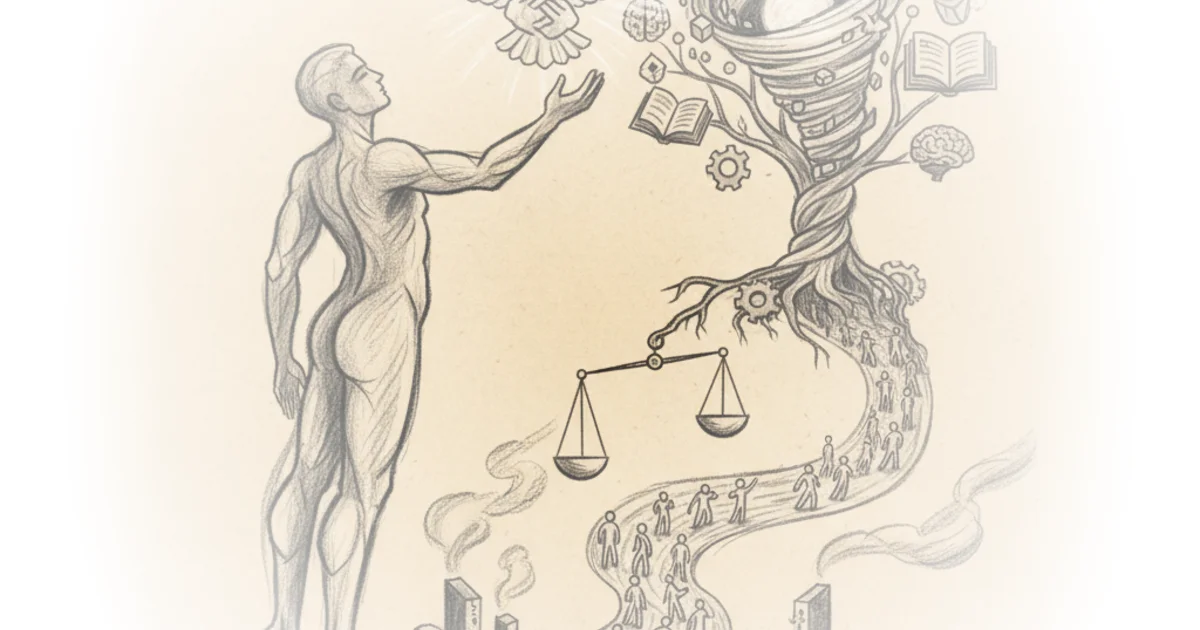
Moving past the technical debate, the commentary shifts to the encyclical's powerful use of biblical imagery to reframe the narrative of technological progress. The piece notes that while the Tower of Babel is a common metaphor for hubris, the document's inclusion of Nehemiah's rebuilding of Jerusalem offers a more constructive counter-narrative. The editors highlight the encyclical's warning against the "Babel syndrome," defined as "the idolatry of profit that sacrifices the weak, a uniformity that neutralizes differences, and the pretense that a single language — even a digital one — can translate everything, including the mystery of the person, into data and performance."
This framing is particularly striking because it challenges the prevailing tech-industry ethos of optimization and efficiency. The piece argues that the encyclical positions "building for the common good" not as a project of elimination, but of acceptance. As the text states, it "means accepting the limits and weakness of humanity without considering them an error to be corrected." This stands in stark contrast to the transhumanist drive to overcome human frailty. By anchoring the discussion in the tradition of Rerum novarum—the 1891 encyclical that launched modern Catholic social teaching on labor and industry—the document insists that we must interpret the "new things" of our era through the lens of human dignity, not just economic utility.
The Pillar's analysis suggests that this approach reframes the "culture of power" that often drives AI development. Instead of viewing weakness as a bug to be patched, the encyclical posits that "true fulfilment is not achieved by eliminating weakness but through harmonious growth." This is a radical departure from the Silicon Valley playbook, which often views human limitation as the primary obstacle to be solved by technology.
The Human as the Cornerstone
Ultimately, the coverage underscores the encyclical's insistence that the human person cannot be replaced or fully modeled by a machine. The piece quotes the document's assertion that we must "lovingly safeguard the grandeur of humanity bestowed upon us and revealed in its fullness in Christ, the splendor of which no machine can ever replace." This is not merely a spiritual platitude; it is a direct challenge to the trajectory of autonomous systems that seek to automate decision-making in areas ranging from healthcare to justice.
The editors point out that the document concludes with a vision of the "rejected stones"—the poor, the sick, and the migrants—becoming the "cornerstone" of a new society. This imagery, drawn from the Hebrew Bible and the New Testament, serves as a potent critique of any technological future that prioritizes efficiency over the marginalized. The piece argues that this is the encyclical's most significant contribution: it refuses to let the conversation about AI remain within the boardroom, forcing it instead into the realm of social justice and the common good.
Bottom Line
The strongest part of this coverage is its ability to expose the delicate balance the Vatican is striking between theological certainty and scientific humility, revealing a document that is as much about the limits of human knowledge as it is about the nature of God. Its biggest vulnerability lies in the risk that its definitive claims about AI's ontological status may be challenged by future breakthroughs that the document itself admits are currently unknown. Readers should watch for how secular policymakers and tech leaders respond to this call for "shared discernment," as it represents a significant attempt to inject a moral vocabulary into a field often dominated by pure pragmatism.