In an era where digital privacy is sold as a simple subscription, this piece delivers a jarring reality check: the very tools marketed as your shield against surveillance are often the weakest link in your security chain. The Hated One dismantles the industry's core promise, arguing that hiding your IP address does nothing to stop the thousands of other data points that uniquely identify you. For busy professionals relying on these services to protect sensitive data, the distinction between "privacy by policy" and "privacy by design" is not just technical—it is existential.
The Illusion of Anonymity
The Hated One opens by exposing a fundamental flaw in how virtual private networks are sold to the public. The author notes that while these services encrypt traffic between a user and a server, they rely entirely on the provider's integrity rather than technological guarantees. "Virtual private networks offer privacy by policy not privacy by design," The Hated One writes, "that is nothing technologically prevents your VPN from monitoring your traffic and do with that whatever they want sell it throttle it or censor it."
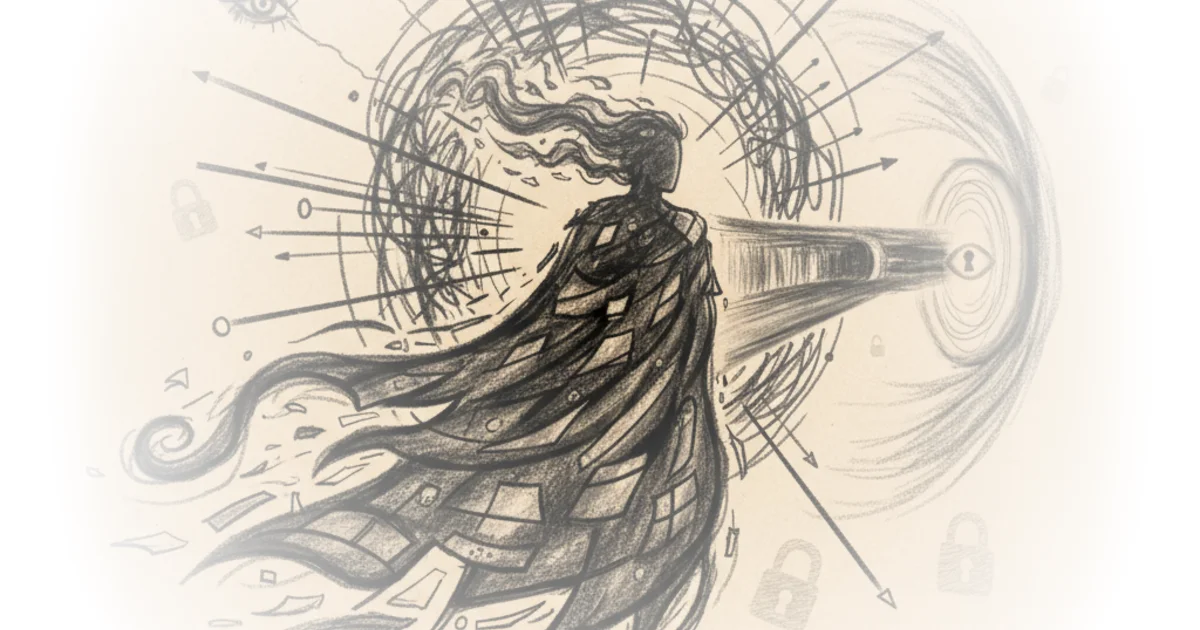
This reframing is crucial because it shifts the burden of trust from a technical solution to a corporate promise. The author argues that even reputable providers cannot stop the ecosystem of trackers that operate independently of your IP address. Modern tracking relies on browser fingerprints, device configurations, and advertising IDs tied to real-world identities like phone numbers or banking details. "Hiding your IP address doesn't do anything to block these trackers," the text asserts, noting that on mobile devices, the utility of a VPN for anonymity becomes "completely useless" due to GPS and cellular network triangulation.
Critics might argue that for the average user, the encryption against local snooping on public Wi-Fi is a sufficient win, even if global anonymity isn't achieved. However, the author contends that marketing the service as a comprehensive anonymity tool creates a false sense of security that leaves users more exposed than if they had taken no action at all.
"Saying nobody can see your traffic under any circumstances is like saying if you are wearing a bulletproof vest you can't die."
The Marketing Trap and Legal Vulnerabilities
The commentary then pivots to the aggressive marketing tactics employed by the industry, which The Hated One describes as a source of widespread misinformation. The author points out that providers frequently use phrases like "be totally invisible" or "ensures safe anonymous surfing," creating expectations that the technology simply cannot fulfill. The Hated One observes, "I find it troubling how quickly they go from become anonymous to sign up here and many people will pay for their services expecting they are no longer being tracked only to have their entire online presence tracked anyway."
Beyond the marketing hype, the piece highlights a severe legal vulnerability. The author explains that because a VPN provider acts as a single point of failure, they are the primary target for government surveillance. "VPNs are the easiest thing for the government to monitor," The Hated One writes, explaining that agencies can simply force providers to reveal data or hack them if they refuse. "Most VPN providers won't have means and resources to battle place in court so they are incentivized to just fulfill the request."
This section effectively dismantles the idea that a VPN is a shield against state-level adversaries. The author clarifies that while the traffic is encrypted from the user to the server, it is decrypted at the server to reach the destination. "As soon as the trafficker leaves the server of your VPN provider it is decrypted it has to be otherwise the request couldn't be fulfilled," the text explains. This distinction separates VPNs from true anonymity networks like Tor, where no single provider knows the full path of the traffic.
A Nuanced Utility
Despite the harsh critique, The Hated One does not dismiss the technology entirely. Instead, the author advocates for a more realistic understanding of what a VPN can actually do. The piece acknowledges legitimate use cases, such as bypassing censorship, accessing geo-blocked content, or preventing internet service providers from throttling specific types of traffic. The author even cites a practical financial benefit: "did you know that a VPN can be used to potentially save thousands of dollars on your next airplane ticket?"
However, the author insists that these benefits must be weighed against the privacy limitations. "As a rule of thumb don't use a VPN service with expectations of strong privacy and anonymity because that's not what the VPN technology was developed for," The Hated One concludes. The argument suggests that true privacy requires a comprehensive strategy involving browser hardening, tracker blockers, and careful account management, rather than a single subscription service.
Bottom Line
The strongest part of this argument is its rigorous separation of encryption from anonymity, forcing readers to confront the reality that a VPN is a tool for obfuscation, not invisibility. Its biggest vulnerability lies in potentially discouraging average users from using a service that, while imperfect, still offers significant protection against local network threats and ISP throttling. The takeaway is clear: if you value your privacy, do not outsource it to a marketing slogan; understand the technology's limits and build a defense-in-depth strategy.