Fred Mills doesn't just describe a building; he dissects a miracle that defies gravity, revealing that the true marvel of Marina Bay Sands isn't its infinity pool, but the sheer audacity of keeping three leaning towers from collapsing under their own weight. While most coverage fixates on the glitz of the casino or the views from the sky park, Mills forces a reckoning with the terrifying engineering reality: this structure is an "insane" balancing act that should have fallen over decades ago.
The Architecture of Impossible
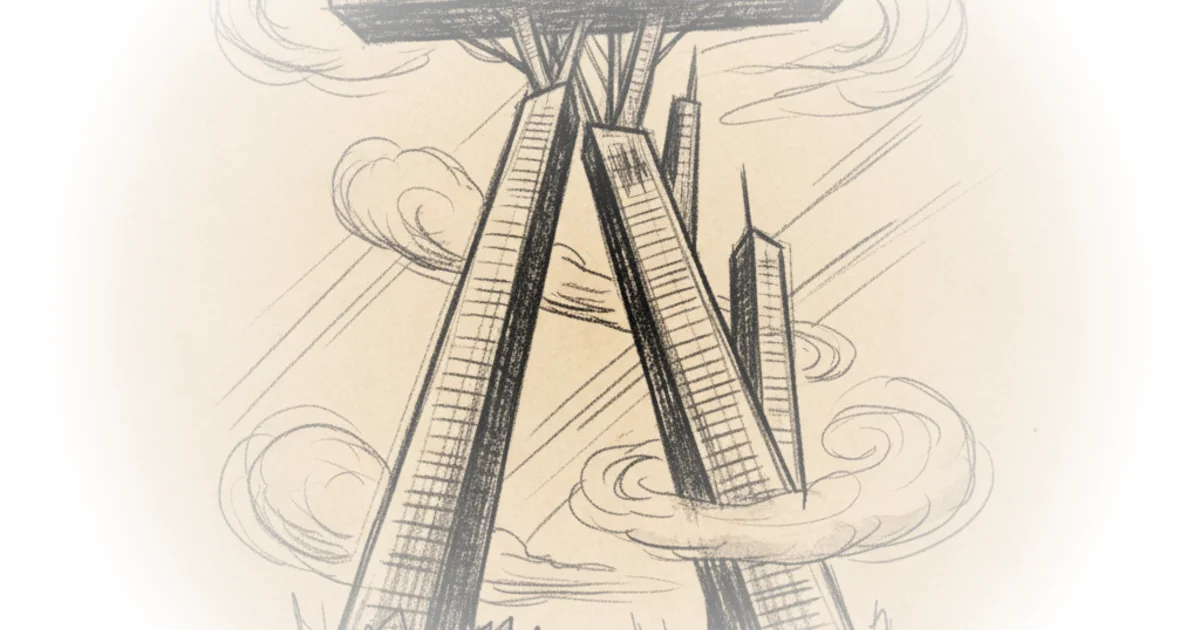
Mills frames the project not as a vanity exercise, but as a calculated geopolitical gamble. He writes, "In the early 2000s, Singapore was already a thriving financial hub. But the country knew that to compete with cities like Hong Kong, Dubai, and Las Vegas, it needed more than just banks and office towers." The author correctly identifies that the resort was a strategic necessity to transform Singapore's global image, a move that required a design so bold it bordered on the cartoonish. The choice of architect Moshe Safdie was deliberate; his reputation for "impossible buildings" like Habitat 67 made him the only candidate willing to attempt a design where three towers lean inward, creating a non-uniform curved form that looks like a deck of cards being shuffled.
"The fact this building remains upright is nothing short of an engineering miracle."
This claim holds up under scrutiny. The design flipped standard skyscraper logic on its head. As Mills notes, "Because of the flared design, the primary forces acting on the towers were gravitational loads rather than wind or seismic forces." This is a crucial distinction often missed in architectural pop-science. Most towers fight the wind; these towers fight themselves. The flared legs meant the weight of the structure was constantly trying to pull the towers inward, creating a risk of self-collapse that required 5,000 piles driven 50 meters deep into unstable reclaimed land. Critics might argue that such a complex design was an unnecessary risk, but the economic payoff—turning a financial hub into a global tourism destination—suggests the gamble was worth the engineering nightmare.
The Sky Park: A Bridge in the Clouds
The narrative shifts from the foundations to the crown, where the engineering challenge reaches its zenith. The Sky Park is not merely a rooftop garden; it is a 340-meter-long structural bridge that spans three moving towers. Mills explains the sheer scale of the operation: "These were pre-fabricated off site, then floated in by barge and hoisted into place by strand jacks, powerful lifting machines that could slowly pull the sections into position." The precision required was absolute. If the towers had shifted even slightly during construction, the segments would not have aligned, and the entire cantilevered structure would have failed.
The author highlights a terrifying detail: the towers move. "The sky park can move up to 20 mm every day" due to thermal expansion and wind loads. To accommodate this, the design includes 500 hydraulic jacks and expansion joints, ensuring the rigid concrete shell doesn't crack. This level of dynamic adaptation is rare in static architecture. Mills captures the tension perfectly: "Every single aspect of this operation had to be incredibly precise down to the millimeter." The use of bridge-building techniques to construct a hotel rooftop is a brilliant example of cross-disciplinary engineering, proving that the solution to a skyscraper problem often lies in civil engineering.
"It's one of the most complex lifting operations ever attempted."
While the article celebrates the technical triumph, it briefly touches on the financial peril. The global financial crisis of 2008 hit mid-construction, raising doubts about completion. Mills notes that Singapore and Las Vegas Sands "pushed ahead, convinced of the project's long-term value." This persistence is as impressive as the engineering. Had they stopped, the unfinished skeleton would have become a monument to hubris rather than a symbol of resilience. The fact that it became one of the world's most profitable casinos validates the decision, though one must wonder if the cost of $5.5 billion was sustainable for any other city.
The Next Chapter: A Fourth Tower
The piece concludes by looking forward, noting that the story isn't over. "Today Marina Bay Sands is adding a fourth tower," Mills writes, describing a new structure that will lean at a 45-degree angle with its own sky park and a massive entertainment arena. The cost has ballooned to around $8 billion, a figure that underscores the escalating ambition of the project. This expansion suggests that the original success was not a fluke but a blueprint for future urban development in the region. However, the sheer scale of this new addition raises questions about market saturation and whether the engineering challenges of the first iteration can be replicated or improved upon.
Bottom Line
Fred Mills delivers a compelling case that Marina Bay Sands is less a hotel and more a feat of structural physics that defies conventional logic. The strongest part of his argument is the focus on the dynamic movement of the towers and the necessity of the hydraulic jacks, which transforms the building from a static image into a living, breathing machine. The biggest vulnerability lies in the financial context; while the project succeeded, the $8 billion price tag of the expansion hints at a future where such architectural marvels may become too expensive to replicate. Readers should watch how this fourth tower impacts the structural integrity of the original complex, as the balance of forces becomes even more precarious.