This weekly roundup from The Pillar does something rare in religious journalism: it treats canon law not as dry procedure, but as the high-stakes drama of a community trying to define its own boundaries. While other outlets chase the spectacle of a bishop's consecration, this piece argues that the real story lies in the precise legal distinction between a priest and a layperson, a nuance that could determine the future of traditional Catholicism in the West.
The Line in the Sand
The piece opens by grounding the reader in the tangible reality of faith before pivoting to the abstract. It describes a parish procession where families walked the literal borders of their community, noting that "a great, soft, stifling barrier to evangelization is the cabining of Catholics within the literal and metaphorical walls of the parish church." This observation sets the stage for the central conflict: the tension between internal cohesion and external engagement. The editors argue that visible presence in the wider community "seeds the impression that we are around, animating the wider community, already part of the fabric of daily life."
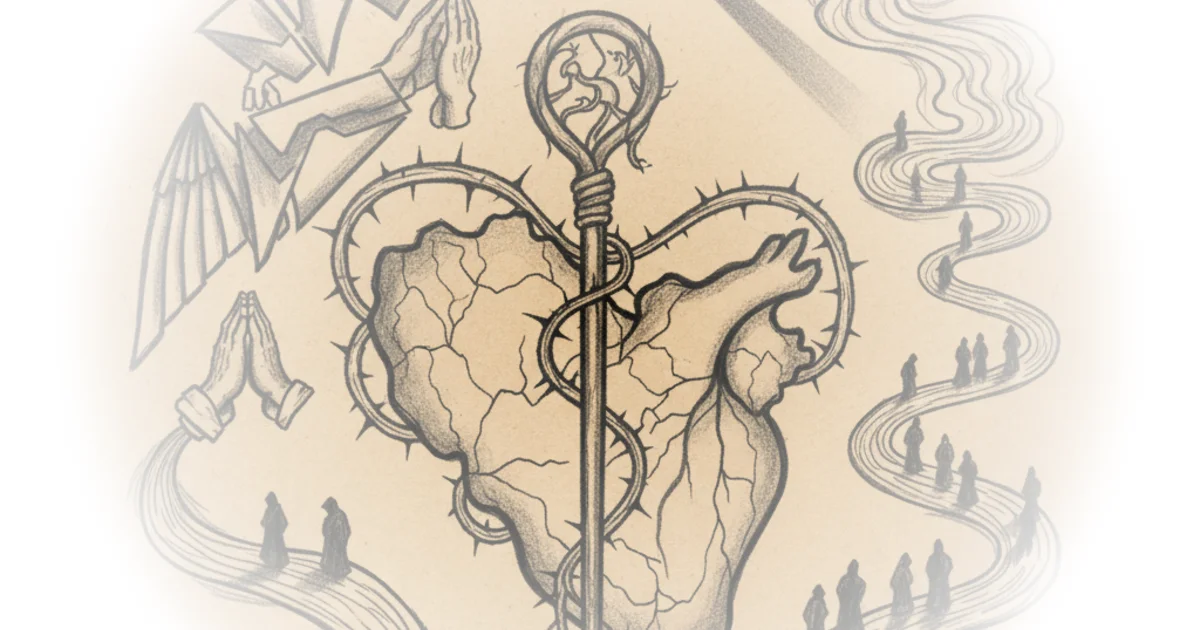
However, the commentary quickly shifts to the legal front, where the stakes are far higher. The Pillar reports that the Dicastery for the Doctrine of the Faith has issued a stark warning regarding the Society of Saint Pius X (SSPX). If the society proceeds with plans to consecrate bishops without papal mandate, the Vatican declares that "formal adherence to the schism constitutes a grave offence against God and entails the excommunication established under Church law." This is not a new threat, but the piece highlights the specific legal mechanism that makes this moment unique.
The core of the argument rests on the interpretation of "formal adherence." The editors note that while there is a "sufficient enough grey area around the fringes" for laypeople who attend SSPX liturgies on a non-exclusive basis, the rule is absolute for clergy. The piece cites a 1996 legal brief stating that for priests, "their ministerial activity within the schismatic movement is a more than evident sign that there is therefore a formal adherence." This distinction is the article's most critical insight: the Vatican is drawing a hard line where the clergy are automatically cut off, while leaving a narrow, case-by-case path open for the laity.
"If these consecrations go ahead, as far as the Vatican is concerned all SSPX bishops, priests, and deacons are adhering to a schismatic act by continuing to function in the society and are excommunicated."
This framing is refreshingly clear, cutting through years of "canonical limbo" that followed Pope Benedict XVI's attempt to reconcile the group. The editors suggest that the current administration is moving away from the previous strategy of "patient dialogue" and "liturgical latitude" toward a more definitive resolution. They argue that the current approach avoids the "abusive" pastoral dynamic of the past, where traditionalists were effectively pushed into the SSPX only to be later labeled as schismatics. Instead, the piece posits that the current leadership is "gearing up for a completely different kind of showdown and an opposite result," one that seeks "generous inclusion" of traditionalists within the diocesan fold rather than their expulsion.
Critics might note that this optimism assumes the SSPX leadership will accept a resolution that requires them to abandon their current trajectory, a move that seems unlikely given their historical resistance to papal authority. The piece acknowledges the "dire punitive action" the SSPX has been warning its followers about, suggesting the society may be preparing for a final break rather than a reconciliation.
Beyond the Schism
The roundup also touches on the human cost of geopolitical friction within the Church. The editors report on the Israeli government's decision to decline renewing the visa of Fr. Louis Salman, a priest known for his youth ministry in the West Bank. "Hundreds gathered at his parish in Beit Sahour... for a farewell Mass," the piece notes, highlighting the disruption to a community already struggling under the weight of conflict. The editors emphasize that no official reason was given, leaving the faithful to navigate the uncertainty of a priest's forced departure.
In a starkly different context, the article highlights the resilience of the Church in Myanmar. Despite a country "engulfed by civil war for five years," Cardinal Charles Bo describes the local Church as "incredibly flourishing." The piece points to the growth of the Missionaries of St. Paul, founded in 1990, which now includes 140 sisters and a seminary with over 200 students. This serves as a powerful counter-narrative to the assumption that persecution always leads to decline, illustrating how faith can take root even in the harshest soil.
The editors also address the diplomatic nuances of the Vatican's relationship with Iran, clarifying that an award given to the Iranian ambassador was a "customary award routinely given to ambassadors after two years of service," rather than a political endorsement. This clarification is crucial in an era where every papal gesture is scrutinized for hidden political meaning. The piece argues that understanding the "customary" nature of such honors is essential to avoiding the "social media criticism" that often misinterprets diplomatic protocol.
The Bottom Line
The strongest element of this coverage is its refusal to treat the SSPX crisis as a mere personality clash, instead focusing on the precise legal definitions that will determine the fate of thousands of priests and laypeople. The piece's greatest vulnerability lies in its hopeful reading of the current administration's intent, which may underestimate the deep-seated theological and political barriers that have kept the two sides apart for decades. Readers should watch closely to see if the promised "generous inclusion" translates into concrete policy changes or remains a rhetorical gesture in the face of an inevitable schism.