This piece from Wayfare offers a startling reframing of one of scripture's most tragic figures: Saul is not merely a failed king, but a man whose transformation was so profound that he literally became "another man." While traditional readings often rush past the theological awkwardness of an "evil spirit from the Lord," the editors argue we must stop trying to fix the text and instead let its unfamiliar worldview challenge our modern assumptions about cause and effect. For a busy reader seeking depth without the fluff, this analysis connects 17th-century art with ancient political theory to reveal why the burden of righteousness can never be outsourced to an earthly leader.
The Architecture of Kingship
Wayfare begins by dismantling the popular notion that the monarchy was an inevitable or purely positive step for Israel. Instead, the piece situates the rise of kings within a "Deuteronomistic History," a complex literary project likely compiled during the Babylonian Exile to make sense of national collapse. The editors note that this history is built on a tense debate: "The claim of the scriptures from Deuteronomy onwards is that righteous kingship works as a political system, as exemplified in David and Josiah." Yet, immediately after establishing this ideal, the text problematizes it.
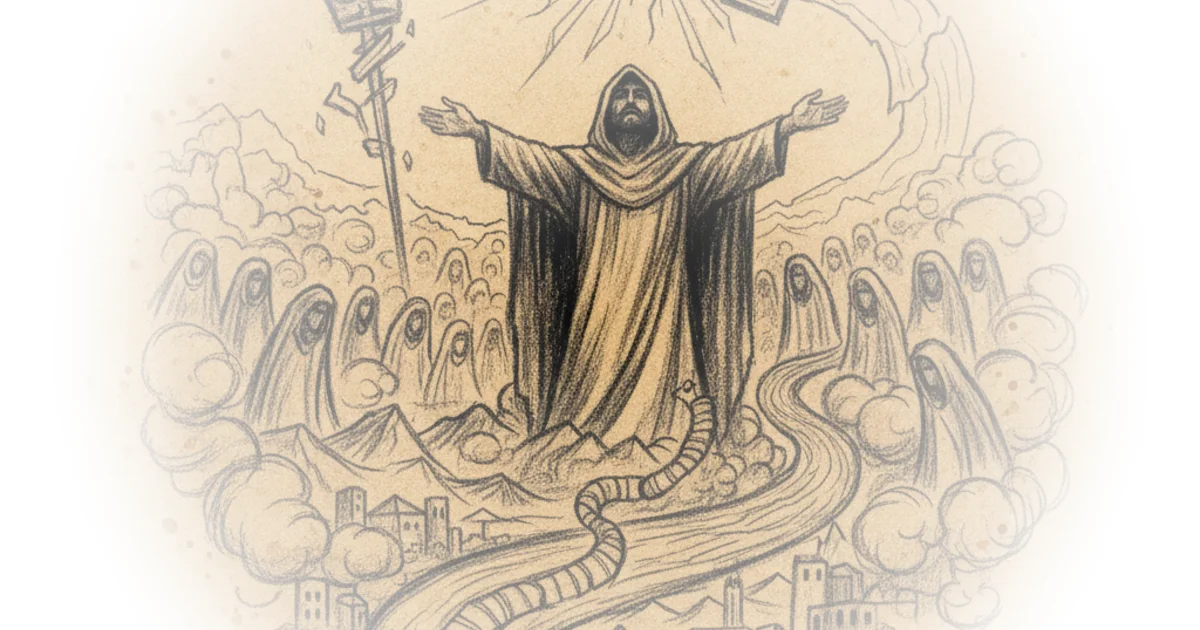
The article highlights a critical tension found in 1 Samuel, where the narrative oscillates between pro-monarchic and anti-monarchic sources. "In those days there was no king in Israel; every man did as he pleased," the piece quotes from Judges, framing the monarchy not as a savior but as a rejection of divine sovereignty. The editors argue that the people's desire for a king was essentially an abdication of moral duty: "Instead of being loyal to God, the people sought a political system in which the burden of righteousness was placed upon the king."
The embrace of kingship was not only a rejection of God as king but a rejection of a covenant relationship with God that relied on the righteousness of the people.
This is a powerful insight for modern readers accustomed to looking for saviors in politics. The piece suggests that when we demand an earthly leader to carry our moral weight, we are repeating an ancient error. However, critics might argue that this theological reading overlooks the very real geopolitical necessity Israel faced; without a centralized military command, they were vulnerable to immediate annihilation by surrounding empires. The text acknowledges this political reality but insists the spiritual cost was catastrophic.
The Transformative and Terrifying Spirit
The commentary then pivots to Saul's specific experience, contrasting him with the "judges" of earlier eras like Gideon or Samson. In those stories, the "spirit of the Lord" was a temporary empowerment for battle. With Saul, however, the transformation is internal and permanent. Wayfare reports that when Saul meets the prophets, "God gave him another heart," and he becomes "another man." This isn't just a change in strategy; it's a fundamental rewiring of his identity.
Yet, this gift comes with a terrifying double edge. The piece points out that while the spirit enabled Saul to rally troops against the Ammonites, it also ignited a rage: "his anger blazed." The editors trace this volatility through the text, noting that the same divine force that empowered him eventually turned into an agent of his destruction. When David is anointed, the narrative takes a dark turn: "Now the spirit of the Lord had departed from Saul, and an evil spirit from the Lord began to terrify him."
This phrasing has long troubled readers who prefer a tidy theology where God only sends good things. Wayfare refuses to smooth over this roughness. Citing scholar Walter Brueggemann, the article argues that we must accept a worldview "without secondary cause," where all events, even tragic ones, are ultimately traced back to divine sovereignty. The editors suggest a compelling parallel: just as God hardened Pharaoh's heart in Exodus to drive the narrative of liberation forward, the troubling spirit sent to Saul serves to propel the story toward David.
We must remember that the world of the biblical perspective is a world without secondary cause. All causes are finally traced back to God, who causes all... This narrative simply assumes that the world is ordered by the direct sovereign rule of God.
This approach demands intellectual bravery from the reader. It asks us to sit with the discomfort of a God who uses "injurious" spirits to shape history. While some might find this deterministic view theologically difficult, the piece argues it is essential for understanding the text's dramatic power. The tragedy of Saul isn't that he was abandoned by God; it's that he was so thoroughly consumed by the divine will that his own humanity could not survive the intensity.
Bottom Line
Wayfare succeeds in elevating a familiar biblical story into a profound meditation on the limits of political power and the terrifying nature of divine intimacy. Its strongest move is refusing to apologize for the text's theological roughness, instead inviting readers to wrestle with a God who acts in ways that defy our desire for safety. The argument's vulnerability lies in its heavy reliance on ancient Near Eastern literary theories, which may feel abstract to those seeking immediate practical application, but the core insight remains vital: we cannot outsource our moral responsibility to any earthly throne.