In an era where professional sports often feel like a secular cathedral built on spectacle and wealth, this piece from The Pillar reveals a quiet, counter-cultural infrastructure operating in the shadows of 30 major league stadiums. It is not merely a story about priests visiting locker rooms; it is a report on how an organized network is attempting to sustain spiritual life for men whose careers are fleeting and whose public personas are often weaponized against them. The coverage offers a rare, unvarnished look at the logistics of faith in the high-velocity world of modern baseball, arguing that the most profound ministry happens not during the game, but in the 30 minutes before it begins.
The Logistics of Grace
The Pillar reports that "every MLB team has at least one, if not two chaplains who provide the sacraments and minister to the players, coaches, and support staff," a detail that immediately reframes the baseball season as a mobile diocese rather than just a series of athletic competitions. The article argues that this is no accidental arrangement but a coordinated effort led by Catholic Athletes for Christ (CAC), an organization founded in 2006 to navigate the complex bureaucracy of professional sports. Ray McKenna, the attorney leading CAC, explains the sheer operational difficulty: "We help chaplains navigate the sometimes very difficult logistics of getting permission from the team, getting a room, getting access, finding a place to park at the stadium, being connected with clubhouse personnel, getting credentials."
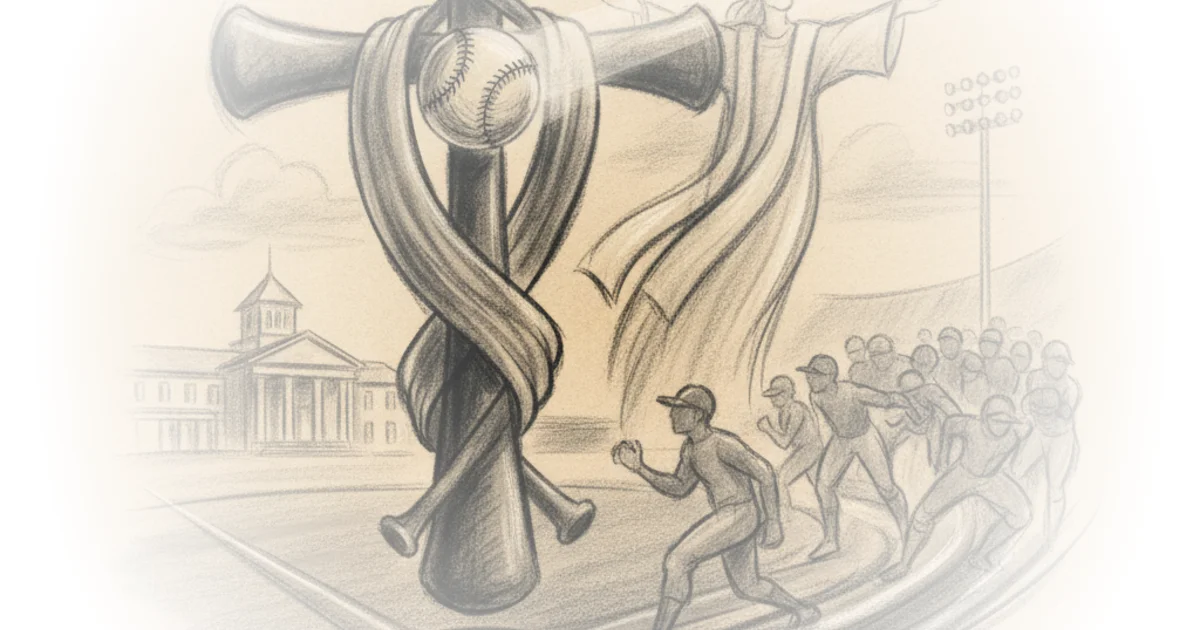
This focus on logistics is the piece's most grounded and surprising element. It strips away the romantic notion of the wandering priest to reveal a ministry that requires the same strategic planning as a general manager building a roster. The argument holds up because it highlights a gap in institutional support: without CAC, many Catholic players would be unable to fulfill their Sunday obligation due to the grueling 162-game schedule and constant travel. As McKenna notes, "If it wasn't for the chaplains many people wouldn't be able to fulfill their Sunday obligation of attending the Eucharist." This is a pragmatic defense of faith in a secular industry, suggesting that spiritual survival requires administrative muscle.
Critics might argue that this level of organization risks turning faith into another team perk or corporate sponsorship, yet the piece suggests the opposite: it creates a space where athletes are treated as ordinary men rather than assets. The historical parallel to military chaplains is apt here; just as the U.S. military developed a robust chaplaincy corps to support soldiers away from home, MLB has inadvertently created a similar ecosystem for players who spend more time on buses and planes than in their own homes.
"Their baseball career is going to end; their love for God and their faith will continue on until they take their last breath." — Father Richard Rocha
The Platform and the Pressure
The coverage shifts from logistics to theology, exploring how the unique pressures of fame intersect with spiritual formation. Father Burke Masters, a former college player turned chaplain for the Chicago Cubs, observes a cultural shift: "All along, there have been really faithful people. But there was that fear of the 'cancel culture'. Now that more and more people are talking about the faith, it has given the guys courage to say, okay, this isn't something that's going to lead to retribution against me." This observation is significant; it suggests that the "culture war" narrative often dominates by assuming silence or fear, whereas in the clubhouse, there is a growing willingness to be vocal.
However, the piece does not shy away from the dangers of this visibility. Masters warns that fame can erode faith, noting that "most of these guys are in their 20s, early 30s, when a lot of people in the Church tend to step away from their faith." The article effectively uses the contrast between the public pedestal and private struggle to make its point. When Father Masters says, "These are regular guys who have the same kind of dreams and fears and struggles that we all have," he is dismantling the celebrity mythos that often isolates athletes from genuine human connection.
The Pillar draws a subtle but powerful comparison to the legacy of Vin Scully, whose voice was known for its humanity and lack of pretense; similarly, these chaplains strive to be "just regular guys" in the clubhouse, refusing to ask for autographs or tickets. This approach counters the transactional nature of modern celebrity culture. Yet, a counterargument worth considering is whether this "regular guy" dynamic can truly sustain itself when the stakes are millions of dollars and national headlines. The piece implies that the chaplain's role is to be an anchor against the storm, but it leaves open the question of how effective that anchor is when the ship itself is designed for speed and profit, not reflection.
"I am just there to help these guys in their human desire to worship God and to be the best man, the best husband that they can be." — Father Burke Masters
The Future of the Ministry
The article concludes by addressing the sustainability of this model. It notes a shortage of full-time chaplains, with many priests like Masters balancing parish duties alongside team ministry. The piece highlights a potential solution: "We've talked about trying to find missionaries like FOCUS' varsity missionaries where they could be there on a daily basis and then the priests could come in and do the sacramental ministry." This proposal signals an evolution in the model, moving from occasional visits to embedded presence.
The Pillar argues that the ultimate goal is not just to keep players religious but to equip them as evangelists. "We try to catechize our athletes to a degree where they can be the ones who are the primary evangelizers," McKenna says. This reframes the athlete from a passive recipient of care to an active agent in the culture. The argument is compelling because it leverages the very platform that often distracts them, turning their "soapbox" into a pulpit.
"Athletes have an amazing ability to evangelize with a soapbox that most people don't have... So they can do a lot of good and they can do a lot of bad with that platform." — Ray McKenna
Bottom Line
The strongest part of this coverage is its refusal to treat the spiritual lives of athletes as a sidebar to their on-field performance; instead, it presents faith as the critical infrastructure that supports them through the inevitable end of their careers. The piece's biggest vulnerability is its reliance on the goodwill of team management, which can be fickle in an industry driven by winning above all else. Readers should watch for how this ministry adapts if the "cancel culture" fears resurface or if the financial pressures of the sport force teams to cut non-essential support staff.