Sam Denby and his team at Wendover Productions have executed a rare feat: turning a simple game of Connect Four into a masterclass on American logistics, regional geography, and the chaotic reality of travel infrastructure. Rather than relying on abstract strategy, the piece grounds its narrative in the visceral friction of flight schedules, rental car nightmares, and the sheer unpredictability of the American landscape. This is not merely a travel vlog; it is a data-driven exploration of how physical distance and bureaucratic hurdles dictate success in a hyper-connected world.
The Geography of Advantage
Denby immediately reframes the game board from a static grid to a dynamic problem of accessibility. The core thesis emerges early: "all states are definitely not created equal." While the rules allow for any of the 22 western states, the author argues that the true value lies in connectivity. The team identifies California and Nevada as the "most valuable combination," noting that securing them unlocks a cascade of options: "If you get Nevada, everyone's got to go to Nevada. You have California and Nevada. You can go up and claim Oregon and Washington... or Idaho and Montana."
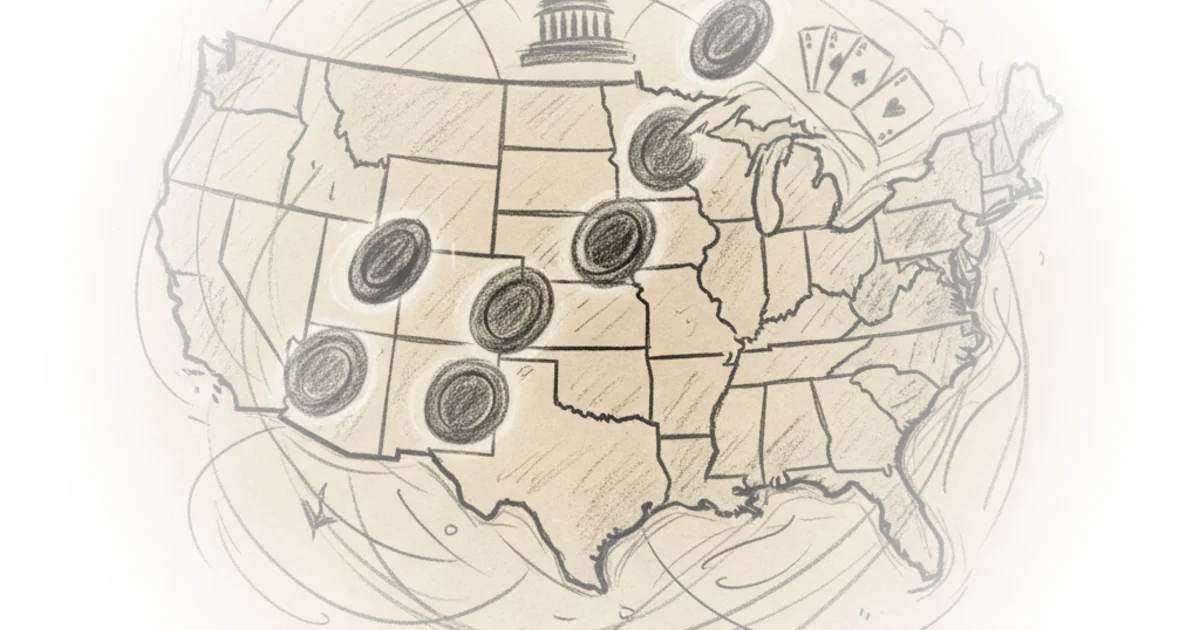
This strategic framing is compelling because it treats the map not as a collection of borders, but as a network of nodes and edges. Denby's analysis highlights a critical insight often missed in casual travel discussions: the value of a location is determined by its access to other locations. The team's decision to bypass the obvious high-value targets initially is a direct result of this logic. They realize that "there aren't any good flights there" and that direct flights only leave late in the day. Instead, they pivot to Denver, reasoning that a 6:00 a.m. flight allows them to "land in Denver and they would still be in the air," effectively using time zones and flight schedules as weapons.
The problem is Ben and Adam probably also know that, right? But that's like half the reason we want to go there as well is like just not getting it is not an option.
Critics might argue that this level of strategic calculation is over-engineered for a game, yet the piece proves that in the real world, logistics often trump pure geography. The team's ability to anticipate the opponent's moves based on flight availability demonstrates a sophisticated understanding of the underlying infrastructure that supports the American West.
The Friction of Reality
The narrative quickly shifts from theoretical strategy to the messy reality of execution. Denby does not shy away from the absurdity of the situation. The team's first major hurdle is a rental car booking error that costs "a million dollars" because of a date mix-up, a moment that underscores how easily plans can unravel. As the team drives toward Cheyenne, Wyoming, the tension mounts. The opponent's decision to drive to the capital instead of claiming the state they just flew into is a psychological tactic: "they're messing with me right now. Now, I have no idea where they are."
This uncertainty becomes a central theme. The rules dictate that a state is only claimed upon completing a challenge at the capital building, creating a blind spot in the game. Denby captures the anxiety of this mechanic perfectly: "I'm going to like throw up. Oh god, there are so many cards that I don't want to pull." The challenges themselves are a microcosm of the unpredictability of travel. One team faces the task to "catch three different local bugs," a seemingly simple request that devolves into a desperate search through a landscape that is "not seeing a lot of bugs."
The commentary here is sharp: the game forces the players to engage with the environment in a way that standard tourism never does. They aren't just passing through; they are hunting for specific, often elusive, elements of the local ecosystem. When they finally succeed, the relief is palpable. "We got three bugs. Three bugs in Wyoming. Three bucks."
The Human Element of Strategy
As the game progresses, the human element takes center stage. The challenge to "get one team member intoxicated" in Colorado serves as a stark reminder of the physical toll of this high-stakes travel. Denby describes the scene with a mix of humor and concern: "Ben's about to get absolutely smashed... This will be by far the most I've ever seen him drink." The team's struggle to navigate the airport while one member is visibly impaired highlights the fragility of their plan.
The juxtaposition of high-level strategy with the immediate, often ridiculous, demands of the game creates a unique narrative texture. The team must balance the need to secure a state with the reality of a hungover teammate and a looming flight deadline. "Is it not allowed to go to the airport drunk?" Denby asks, capturing the absurdity of the situation. The answer, of course, is that the game doesn't care about the rules of the road, only the rules of the game.
I am now officially drunk in Colorado. So that means it's time to call Sam and Brian.
This moment of triumph is immediately undercut by the realization that the opponent has already claimed their state. The game is a race against time and information, where the first to complete the challenge wins the territory. The team's failure to anticipate the opponent's speed and efficiency is a humbling reminder that in a game of Connect Four, as in life, the best-laid plans often go awry.
Bottom Line
Denby's piece succeeds because it treats a silly game with the seriousness of a geopolitical strategy session, revealing the hidden complexities of the American West. The strongest argument is that geography is not just about where you are, but how you get there and what you have to do to stay. The piece's biggest vulnerability is its reliance on the specific, chaotic energy of the participants; without their chemistry, the logistical details might feel dry. However, the blend of data, humor, and genuine tension makes this a standout exploration of travel, strategy, and the unpredictable nature of the open road.