In a media landscape obsessed with false equivalence, legal commentator Devin Stone makes a startlingly simple claim: true objectivity sometimes looks like bias. Stone argues that when the rule of law is unevenly applied, pretending both sides are equally guilty isn't neutrality—it's a lie. This piece cuts through the noise of partisan bickering to ask a question most commentators are too afraid to answer: what happens when one side of the political spectrum actively dismantles the very system it claims to defend?
The Definition of Bias
Stone begins by dismantling the traditional definition of bias. He asserts that his channel is not neutral on policy preferences like tax rates or immigration levels, but is fiercely partisan on legal principles. "Legal Eagle doesn't pick sides based on party affiliation," Stone writes. "We pick sides based on legal principles and reality." This distinction is crucial. It reframes the conversation from "who is attacking whom" to "who is following the rules."
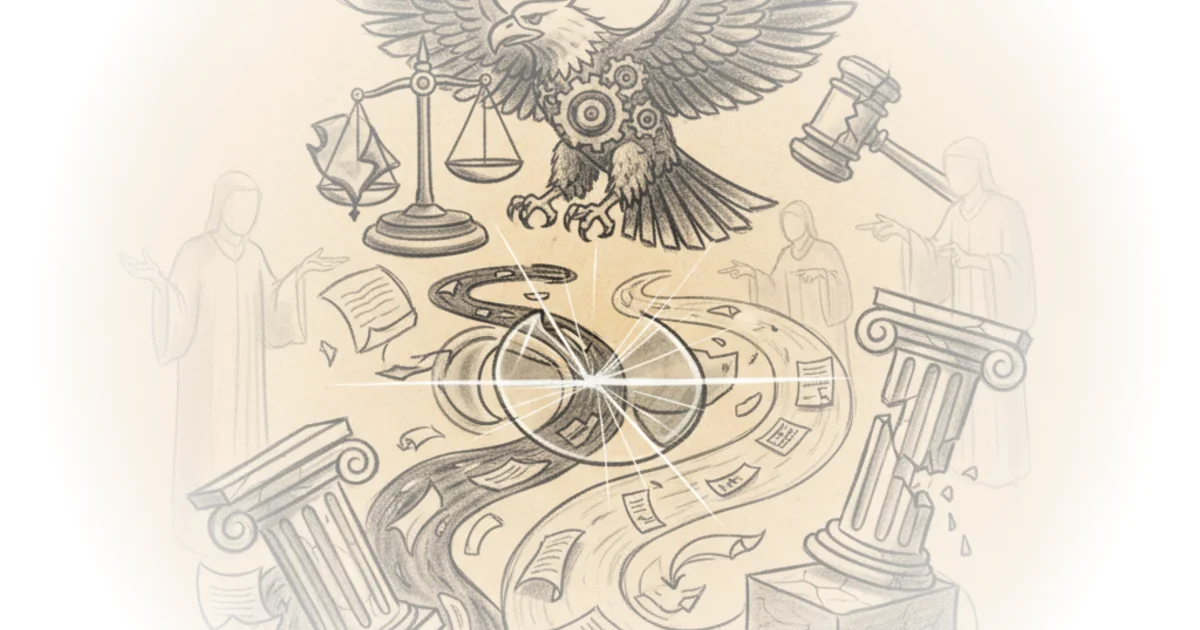
The author posits that the law is the ultimate arbiter, regardless of who sits in the Oval Office. "When someone breaks the law or tries to twist it into an unrecognizable mess, we'll call it out," Stone states. This approach forces the audience to confront a difficult reality: if the criticism feels one-sided, it may be because the behavior being criticized is one-sided. Stone admits that this stance will offend partisan sensibilities, bluntly noting, "If that offends your partisan sensibilities, well, that's a you problem." This is a bold rhetorical move that shifts the burden of discomfort from the critic to the criticizer.
The law applies to everyone equally. Whether you're the average Joe or the president of the United States, the law doesn't, or at least shouldn't, care if you're a Democrat or Republican.
The Record of Conduct
The core of Stone's argument rests on a forensic accounting of legal violations. He does not rely on political rhetoric but on a litany of adjudicated facts. Stone lists a staggering array of legal entanglements, from civil liability for defamation to criminal charges for election interference. "Donald Trump has been indicted four separate times on 91 felony charges," Stone notes, adding that this is a record, "and not the good kind."
Stone's analysis goes beyond the headlines to examine the nature of the alleged crimes. He highlights actions such as illegally impounding congressional funds, weaponizing the justice system, and punishing First Amendment-protected speech. "Second term, same as the first," he observes, drawing a direct line between past behavior and current executive actions. The argument here is that these are not isolated incidents but a pattern of conduct that threatens the constitutional order.
Critics might argue that Stone's focus on one individual ignores the broader spectrum of political misconduct. However, Stone anticipates this by pointing to other figures like Eric Adams and Bob Menendez, noting that his channel covers illegal acts regardless of party. "If a Democrat or a Libertarian or a Communist or a Green Party member engages in manifest illegality or norm-breaking, we cover that, too," he writes. The counter-argument, which Stone addresses directly, is that the volume of illegal acts is simply not equal. "We can't do a story about a Democrat doing something illegal every time Trump does something illegal because there just aren't enough Democrats," Stone admits. "The lawbreaking isn't evenly distributed."
The Cassandra Complex
Stone reflects on the legal community's role in predicting these outcomes. He describes lawyers as "Cassandra," figures who saw the signs of authoritarianism but were ignored. "We saw it in his first term. We saw it before he ran for president," Stone recalls. This framing suggests that the current crisis was not a surprise to those trained to read the legal landscape, but rather the inevitable result of ignoring established norms.
The author draws a sharp parallel to historical precedents, stating, "If any other president had done any single one of these things, they would be a legal footnote next to Richard Nixon." This comparison elevates the stakes from political disagreement to historical significance. Stone argues that the current administration's actions are not just bad politics but "banana Republic tinpot dictator nonsense." This hyperbolic language serves to underscore the severity of the situation, stripping away the veneer of normalcy that often surrounds political discourse.
Being objective doesn't mean both-siding things. We can't do a story about a Democrat doing something illegal every time Trump does something illegal because there just aren't enough Democrats.
The Cost of Silence
Stone concludes by addressing the fatigue many feel regarding the constant coverage of these legal battles. He acknowledges the desire to move on but argues that the legal system demands vigilance. "I wish I didn't have to think about him at all," Stone confesses, "but unfortunately, when it comes to understanding the law... media literacy... is abysmal." The argument is that ignoring the legal implications of these actions is a luxury the public cannot afford.
Stone issues a challenge to the audience: "Maybe it's time to start demanding better from your politicians. Maybe you should be biased, too." This call to action reframes the viewer's role from passive consumer to active guardian of the rule of law. It suggests that the only way to restore balance is to hold the powerful accountable, regardless of their political affiliation.
Bottom Line
Stone's most compelling argument is that true neutrality requires acknowledging when one side is breaking the rules more than the other; pretending otherwise is a failure of duty. The piece's greatest vulnerability lies in its reliance on the assumption that the legal record is clear and uncontested, which may alienate readers who view the underlying prosecutions as politically motivated. Ultimately, this is a powerful reminder that the rule of law is not a spectator sport, and its defenders must be willing to be unpopular in the pursuit of truth.