In a rare crossover of medical ethics and criminal law, Devin Stone of LegalEagle dissects a fictional courtroom drama to expose a glaring gap in real-world accountability: the lack of specific statutes criminalizing the act of practicing medicine while intoxicated. Stone argues that while drunk driving is a settled legal matter, the legal system struggles to pin criminal negligence on a physician who harms a patient while under the influence, often forcing prosecutors to rely on broader, harder-to-prove charges like reckless homicide.
The Legal Loophole in Medical Malpractice
Stone begins by breaking down the mental states required for criminal charges in the episode, noting how the show accurately distinguishes between "failing to perceive a substantial and unjustified risk" for criminally negligent homicide versus "consciously disregarding that substantial and unjustified risk" for manslaughter. He praises the show's legal accuracy here, stating, "failing to apprehend a substantial unjustifiable risk knowing that there is a substantial risk and consciously disregarding it dang Ben Stone absolutely nailed it."
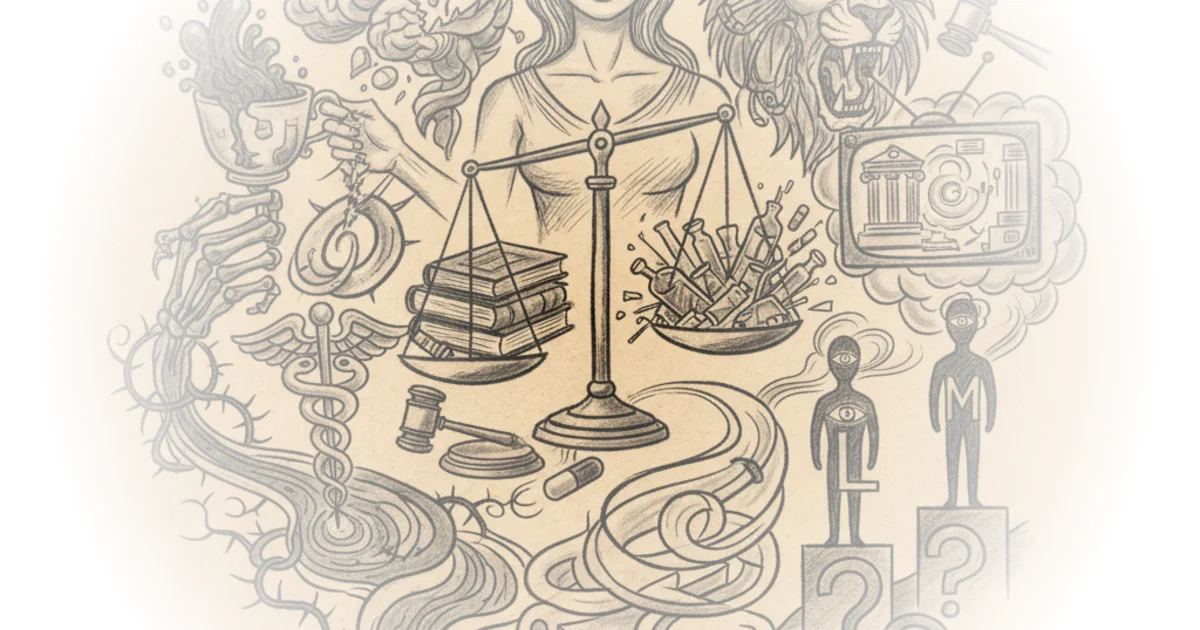
However, Stone quickly pivots to the core legal problem: the absence of a specific law against practicing medicine while drunk. He observes, "there is no law that says you can't practice while drunk probably not it would be a more generalized rule like Reckless homicide." This distinction is crucial because it shifts the burden of proof from a simple act (driving drunk) to a complex assessment of professional judgment. Stone suggests that the defense's strategy in the episode—arguing the doctor is a genius who simply made a mistake—backfires logically. He writes, "this is a huge problem with the defense that they're creating they're saying like this is the greatest doctor that's ever lived well then he should really know it's bad to practice well intoxicated."
This framing highlights a critical vulnerability in the prosecution's case in real life: proving that the intoxication directly caused the specific medical error is notoriously difficult. Stone notes that if a resident warned the doctor about a drug interaction and the doctor ignored it, "that really goes to criminal Reckless knowing and seeing the unjustifiable risk ignoring it and moving forward anyway." Yet, without a specific statute, the jury must infer that the alcohol caused the negligence, a leap that defense attorneys can easily exploit.
If you're educated on the risks of drinking under the influence and then you do it again after that you're knowledgeable and they can prove it now.
Procedural Missteps and the Art of Cross-Examination
Stone's commentary shifts to the courtroom tactics, where he identifies several glaring procedural errors that would be disastrous in a real trial. He criticizes the district attorney for interviewing a witness alone, noting that "if they ever want to contradict what this witness is saying they would have to call themselves to the stand." This procedural misstep creates a massive evidentiary hole, allowing the defense to argue that the witness's testimony was coerced or misremembered without a police officer present to verify the account.
The analysis of the cross-examination is particularly sharp. Stone dismantles a defense attorney's attempt to discredit a witness by asking irrelevant questions about the doctor's credentials, calling it "one of the least effective cross-examinations." He explains that the attorney should have focused on the lie, not the resume. Furthermore, Stone mocks the defense's attempt to use a hypothetical about a "55-year-old man" to prove sobriety, noting that "you'd have to be that 55-year-old man to know." He argues that the defense's reliance on the doctor's ability to "metabolize" alcohol well is a weak shield against the reality of impaired judgment.
Stone also points out the absurdity of the defense's objection to a sobriety test in the courtroom, laughing at the character's use of "I strenuously object." He clarifies, "is strenuous the yeah that's not a thing," using the moment to illustrate how fictional dramas often prioritize drama over legal realism. However, he acknowledges the strategic brilliance of the prosecution's final move: establishing that the doctor had been drinking heavily during lunch. Stone writes, "any answer that he gives is bad he could lie and say the incorrect number in which case it's like oh wow he can't even remember how many he had."
Critics might argue that Stone is too harsh on the fictional district attorney, given that the show is designed to create tension rather than mirror a perfect trial. Yet, his point stands: in a real case involving a high-profile medical death, such procedural sloppiness could easily lead to an acquittal, leaving the family without justice and the medical community without a deterrent.
The Psychology of Concealment
The most damning evidence in the episode, according to Stone, is not the medical error itself but the cover-up. He highlights the doctor's admission to a rehabilitation clinic and his subsequent departure against medical advice as a clear indicator of "consciousness of guilt." Stone explains, "he knows he has a drinking problem and he doesn't want anyone else to know he has a drinking problem that is consciousness of guilt and consciousness of a substantial risk."
He further dissects the doctor's denial of his own addiction, noting the irony that "the first step is admitting you're an alcoholic because alcoholics don't like to admit that they're alcoholics." This psychological insight adds a layer of depth to the legal analysis, suggesting that the doctor's behavior was not just a medical error but a calculated attempt to evade accountability. Stone concludes that the defense's strategy of portraying the doctor as a savior who saved other lives by donating organs is a desperate distraction. He asks, "how good of a doctor he is no he's testifying that because this girl died other patients got organs what the hell does that have to do with anything."
Bottom Line
Devin Stone's analysis effectively exposes the legal system's struggle to hold medical professionals accountable for intoxication, revealing that the lack of specific statutes forces prosecutors to rely on complex theories of recklessness that are easy to dismantle. While the episode dramatizes the cover-up well, Stone's critique of the procedural errors serves as a stark reminder that in the real world, such mistakes could let a dangerous practitioner walk free. The strongest part of his argument is the logical trap he identifies: a doctor who claims to be a genius must also be held to the highest standard of knowledge regarding their own impairment. The biggest vulnerability remains the difficulty of proving that alcohol was the direct cause of the medical error, a hurdle that the current legal framework does little to lower.