Lenny Rachitsky identifies a distribution shift that rivals the App Store launch, arguing that the next decade of software growth won't happen in search bars or app stores, but inside the chat window itself. The piece moves beyond the hype of AI chatbots to reveal a concrete architectural change: the ability for third-party applications to render interactive widgets directly within a conversation, turning a text-based query into a transactional interface. This is not merely a feature update; it is a fundamental reimagining of how users discover and utilize software, and Rachitsky provides a rare, step-by-step blueprint for capitalizing on it before the window closes.
The End of the "Open Another Tab" Era
Rachitsky frames the current state of AI interaction as a transitional phase that is rapidly ending. He contrasts the early days of AI, where a user would ask for flight details and then be forced to leave the chat to book the ticket, with the emerging reality of embedded interactivity. "Now you can say, 'Help me find a good flight to Paris from Toronto,' and an interactive widget appears directly inside your conversation," Rachitsky writes. This shift eliminates the friction of context switching, a critical barrier that has historically killed conversion rates for digital products.
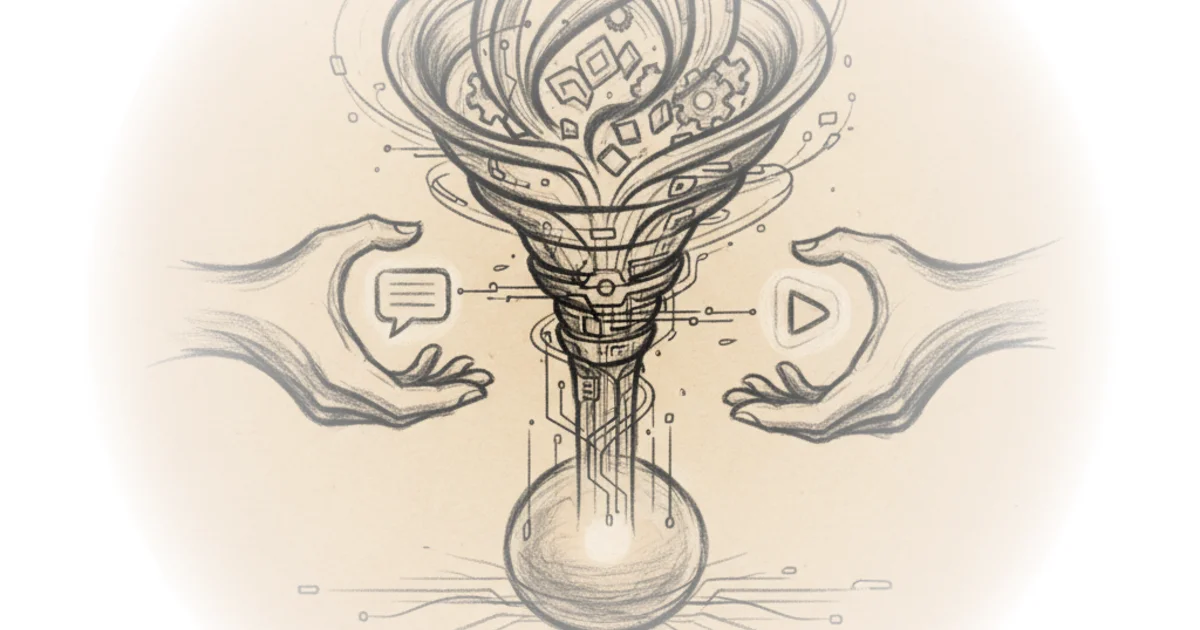
The author argues that this creates a "contextual surfacing" model where the AI acts as the gatekeeper, matching user intent to the right tool without the user needing to know the tool exists. "Ask about travel plans, and Expedia appears. Mention that you need a design, and Canva surfaces," he explains. This is the core of the new growth engine: the model, not the user, initiates the connection. For product leaders, this means the traditional funnel of marketing to acquisition is being upended by a system where relevance is determined by real-time conversation rather than search engine optimization.
ChatGPT apps represent a rare distribution opportunity, the kind that comes around once or twice a decade.
This comparison to the 2008 App Store launch is potent, but it requires scrutiny. While the scale of potential reach is undeniable, the dependency on a single platform's algorithm introduces a new form of risk. If the model's interpretation of intent shifts, or if the platform changes its revenue-sharing model, an entire business built on this channel could evaporate overnight. However, Rachitsky's point about the "barrier to entry" being low while the "reach is enormous" remains a compelling call to action for both enterprises and solopreneurs.
The Architecture of the Widget
To understand how this works, Rachitsky breaks down the technical triad that powers these interactions: the conversation, the backend tools, and the user-facing widget. He demystifies the process by explaining that the AI model acts as an orchestrator, deciding when to call specific functions based on the user's input. "The key insight is that ChatGPT orchestrates the whole thing. It decides when to call tools, what parameters to pass, and how to respond to user actions," he notes. This distinction is vital; developers are no longer building autonomous agents that run their own logic, but rather exposing capabilities for the AI to leverage.
The piece details three specific modes of interaction, each serving a different user need. Inline mode embeds cards and lists directly in the flow, ideal for search results. Fullscreen mode takes over the interface for complex workflows like map navigation or design editing. Picture-in-picture mode allows for background tasks, such as playing a video while the user continues to chat. Rachitsky highlights a critical constraint that developers must navigate: "one widget per message." This limitation forces a sequential workflow, meaning users cannot execute parallel tasks like booking a restaurant and ordering a ride simultaneously without navigating through the AI's mediation.
The infrastructure enabling this is the Model Context Protocol (MCP), a standardized way to connect apps to AI assistants. Rachitsky points out that this protocol, originally created by Anthropic and adopted by OpenAI, is essentially "rebuilt for AI agents," providing a universal language for tools and models to communicate. This standardization is the missing link that allows for the rapid scaling of these apps, moving away from proprietary integrations to a more open ecosystem.
Having accurate tool descriptions that uniquely identify your app will help ChatGPT users find and use your app in the correct contexts.
This observation reframes Search Engine Optimization (SEO) into "Answer Engine Optimization" (AEO). The metadata that describes a tool's function is now the primary marketing asset. If a developer's tool description is vague, the AI will never surface it, regardless of the app's quality. Critics might argue that this centralizes too much power in the hands of the AI provider, who effectively becomes the sole arbiter of visibility. Yet, the argument holds that for early movers, the cost of building this capability is low enough to warrant the gamble.
A Blueprint for Immediate Action
Rachitsky does not stop at theory; he provides two distinct pathways for builders to create their first app in under an hour. The first involves using Replit to import and modify existing examples, a method that requires some technical familiarity with ports and static asset servers. The second, and perhaps more accessible route, is using "Chippy," an AI agent Rachitsky built specifically to prototype ChatGPT apps. He describes Chippy as a tool that can "generate a spec directly from your prototype," allowing users to test functionality without worrying about deployment complexities.
The guide walks through the specific steps of enabling Developer Mode, connecting the Model Context Protocol URL, and testing the app by mentioning it by name in a chat. Rachitsky emphasizes that the process is designed to be iterative: "Once you have a functional app, you can continue to iterate and begin to build a golden set of prompts to trigger your app." This suggests that the initial build is just the beginning, and the real value lies in refining the prompts that drive the AI to select the tool.
The barrier to entry is low (a few weeks to build a simple app), but the reach is enormous.
This assertion is the piece's most provocative claim. While the technical barrier is indeed lowering, the competitive barrier may be rising as major players like Adobe, DoorDash, and Spotify rush to secure their positions. Rachitsky acknowledges this by noting that "some of the biggest companies in the world are betting that chat will become a primary interface for their products." The implication is clear: if you are not building now, you risk being relegated to a secondary interface in a world where the chat window is the primary one.
Bottom Line
Rachitsky's strongest argument is the identification of "contextual surfacing" as the new growth engine, effectively rendering traditional app discovery obsolete for many use cases. The piece's greatest vulnerability lies in its optimism regarding the longevity of this specific distribution channel; if the AI model's reliability wavers or the platform shifts its economic incentives, the entire ecosystem could face a reckoning. For the busy professional, the takeaway is clear: the window to define your product's presence in this new interface is open, but it will not remain so for long.