Chris Chappell argues that a convergence of diplomatic blunders, cyber espionage, and military posturing has created a precarious moment where the United States is forced to choose between its traditional alliances and its strategic imperatives in the Indian Ocean. The piece stands out not merely for its catalog of Chinese aggression, but for its assertion that the United Kingdom's attempt to settle the Chagos Archipelago dispute may have inadvertently compromised a critical US military asset, turning a legal victory for Mauritius into a strategic vulnerability for the West.
The Chagos Strategic Paradox
Chappell centers his analysis on the friction between the British government's desire to resolve the sovereignty dispute over the Chagos Islands and the United States' need to maintain operational secrecy at the Diego Garcia naval base. He highlights a specific legal contradiction that threatens the deal: the requirement for the UK to inform Mauritius of any armed attacks launched from the base. "Since Mauritius is a friend of China, which is also a friend to Iran, well, you can see how this could be problematic," Chappell writes. This observation cuts to the heart of the geopolitical dilemma; a legal settlement in the Indian Ocean could force the disclosure of sensitive military movements to a nation with close ties to US adversaries.
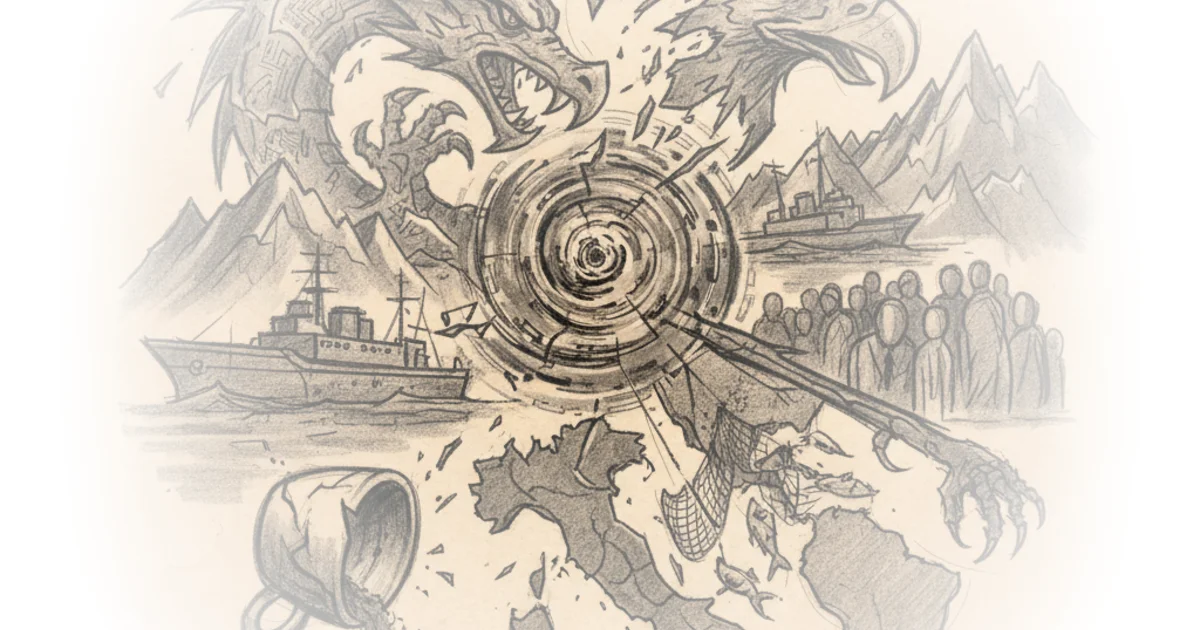
The author points to the growing resistance within the British establishment, noting that former Prime Ministers Liz Truss and Boris Johnson are reportedly lobbying the White House to halt the transfer. "It appears that his defense secretary, John Healey, misled Parliament over the Chagos deal to begin with," Chappell notes, suggesting that the legal justification for the handover is crumbling under scrutiny. The argument gains weight when he reveals that the UK government has admitted to an exemption in UN maritime laws regarding military bases, undermining the threat of legal action from the International Tribunal for the Law of the Sea.
"This looks really bad. And it seems the only beneficiary is China."
Chappell's framing of the situation as a "farce" driven by UK weakness rather than strategic calculation is compelling, though it may overlook the long-term diplomatic necessity of resolving the colonial-era dispute to stabilize relations with the Global South. However, the immediate security implications he raises are stark. The narrative is bolstered by the actions of Chagossian protesters, who have explicitly invited the US to use the base for strikes against Iran, stating, "We the people of the Chagos Islands give our blessing for the United States to use the base at Diego Garcia for strikes against the Iranian regime." This creates a complex scenario where the indigenous population's stance aligns with US military interests, directly contradicting the Mauritian government's position.
The Digital and Physical Fronts
Beyond the Indian Ocean, Chappell weaves together a broader tapestry of Chinese influence operations that threaten Western security infrastructure. He details a massive cyber breach involving Italian counterterrorism forces, where hackers linked to the Chinese Communist Party exposed the identities and postings of 5,000 officers. "I can't believe that the fox caused chaos when led into the hen house," Chappell quips, using the breach to illustrate the dangers of deepening security cooperation with Beijing. The exposure of officers monitoring Chinese dissidents suggests a targeted effort to dismantle Western intelligence capabilities from within.
The commentary shifts to the economic sphere, highlighting legal actions against the Chinese retailer Temu in Texas and other states. Chappell argues that the app's business model is inherently predatory regarding data privacy. "Basically, the issue is that the shopper becomes the product," he explains, summarizing the core of the lawsuits filed by multiple state attorneys general. This section effectively connects consumer technology to national security, suggesting that the sheer volume of data harvested by such apps provides a strategic advantage to the Chinese state.
"The United States Air Force trained Major Brown to be an elite fighter pilot and entrusted him with the defense of our nation. He now stands charged with training Chinese military pilots."
The arrest of a former US Air Force pilot for allegedly providing defense services to the Chinese military serves as a grim capstone to the theme of infiltration. Chappell uses this case to underscore the severity of the threat, noting that the individual possessed decades of experience and knowledge of advanced aircraft like the F-35. While the article focuses on the individual's betrayal, the broader implication is a systemic vulnerability in how defense expertise is managed and monitored.
Shifting Alliances and Sanctions Evasion
The piece concludes by examining how China is adapting its strategy to bypass Western sanctions and expand its influence in new regions. Chappell points to a new route for drone exports to Russia through Thailand, noting that "88% of Thailand's total UAV exports last year were to Russia." This statistic illustrates the effectiveness of intermediary nations in circumventing international restrictions, allowing the flow of dual-use technology to continue despite official denials.
Simultaneously, the author highlights a positive shift in US trade dynamics, noting that for the first time in 34 years, the US imports more goods directly from Taiwan than from China. "If the US is finally cutting trade with China and hurting the CCP's pocketbook, well, maybe I have more viewers than I realized and someone high up is listening to me," Chappell jokes, but the underlying data supports a significant decoupling. Furthermore, he details Japan's initiative to provide drones to South American nations to combat illegal Chinese fishing, framing it as a necessary defense of sovereignty in the face of economic coercion.
Critics might note that Chappell's tone occasionally veers into hyperbole, potentially oversimplifying the complex diplomatic calculations of nations like the UK or Thailand. The assertion that the UK's actions are purely "stupid" ignores the immense pressure to resolve historical injustices regarding the Chagossian people. However, the core argument—that these diplomatic moves carry unforeseen strategic costs for the West—remains a vital consideration for policymakers.
Bottom Line
Chappell's strongest contribution is his synthesis of disparate events—from the Chagos legal battle to the Italian data breach—into a coherent narrative of strategic encirclement and Western vulnerability. The piece's greatest weakness lies in its occasional reliance on sarcasm, which may obscure the nuanced legal and diplomatic realities at play. Readers should watch closely for how the US administration balances the pressure to support the Chagossian right of return with the absolute necessity of maintaining the secrecy of the Diego Garcia base.