In a political climate defined by despair and executive overreach, Eric Blanc delivers a crucial counter-narrative: workplace power does not vanish when the White House changes hands. This piece is notable not for its optimism, but for its forensic dissection of how a multiracial crew of young workers in Philadelphia dismantled a "scorched earth" campaign by Amazon's Jeff Bezos to secure a union victory. While headlines fixate on chaotic power grabs, Blanc forces the reader to confront a quieter, more potent reality where collective action is already rewriting the rules of the game.
The Anatomy of a Surprise Victory
Blanc frames the Philadelphia Whole Foods election as a direct rebuttal to the prevailing narrative of labor weakness under the current administration. He notes that despite management's aggressive tactics and the "chaotic power grabs" dominating the news cycle, workers voted 130-100 to unionize. This result is framed as a historic anomaly, marking only the second time American workers have successfully defeated Amazon in a union election. The author argues that the significance of this win extends far beyond a single store; it serves as a "much needed shot in the arm" for a movement that many feared was stalled.
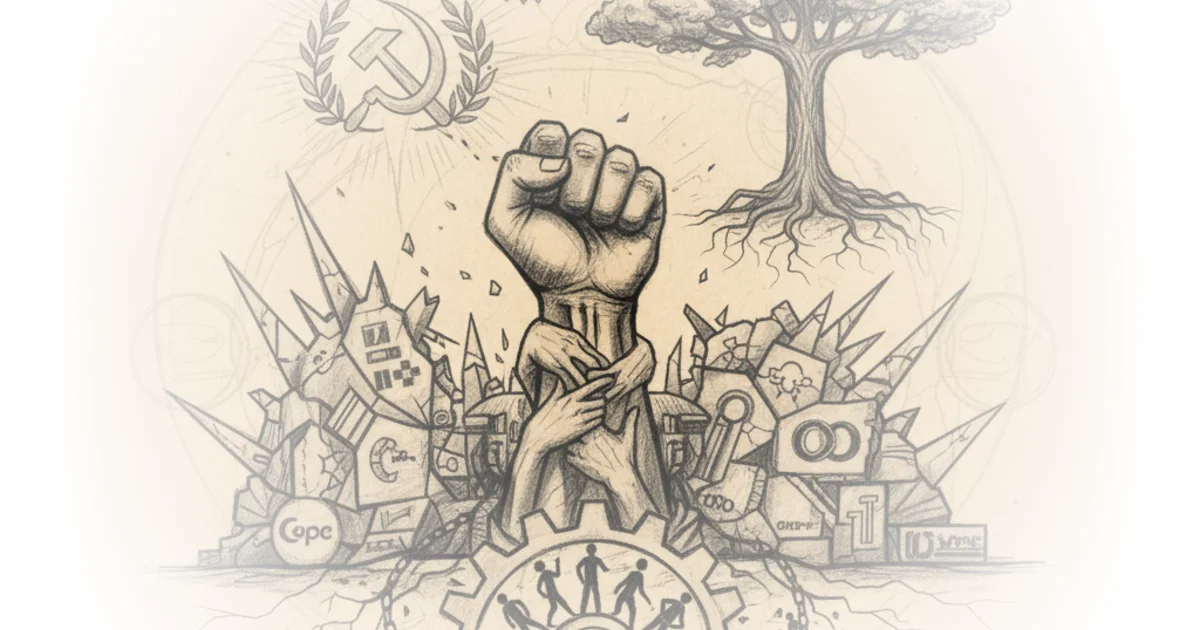
The coverage shines a light on the human element of the victory, moving beyond dry statistics to the emotional weight of the moment. Blanc quotes organizer Ed Dupree, who describes the scene as the votes were counted: "Watching them get increasingly nervous as more votes came in was an incredible feeling." This detail is effective because it shifts the power dynamic from the abstract corporate machine to the palpable anxiety of the executives. The narrative arc here is compelling: it transforms a standard labor dispute into a story of psychological resilience against intimidation.
"Winning felt like a thread of positivity in the face of so much negativity in the company and in the country."
Blanc's reporting on the organizing strategy is equally rigorous. He details how the drive began not with a top-down union mandate, but with a "self-organized" effort led by workers like Dupree and a new hire named Ben. The author highlights the grassroots nature of the campaign, noting that they utilized tools from political campaigns, such as tracking support levels and canvassing. This approach challenges the notion that modern workers are too disengaged to organize. Blanc writes, "We started talking to coworkers, many of whom already knew me because I'd been around for a long time." This emphasizes the critical role of pre-existing relationships in overcoming the high turnover typical of retail environments.
Critics might argue that relying on self-organization without immediate union backing is a risky strategy that often leads to failure. However, Blanc counters this by showing how the workers eventually partnered with the United Food and Commercial Workers (UFCW) once they had built a solid base, demonstrating a hybrid model of independence and institutional support that proved highly effective.
Confronting the Union-Busting Playbook
The piece does not shy away from the brutality of the corporate response. Blanc documents a shift in management tactics from a "velvet glove" approach to overt hostility. The author describes how the corporation brought in external union-busters, fired model employees on "bogus pretext," and even installed a television near the time clock to broadcast propaganda. These details are not just anecdotal; they serve as evidence of a systemic playbook designed to break worker morale.
Blanc quotes Dupree on the surreal nature of these tactics: "They held [captive audience] team 'chats,' where they'd tell us the most insane anti-union bullshit you could ever imagine. Just flagrant lies." The author's choice to include this quote underscores the absurdity of the corporate response, framing it as a desperate attempt to maintain control through deception rather than merit. The coverage also touches on the racial dynamics of the intimidation, with Dupree noting that while he was targeted less due to his seniority and presence, his colleague Ben faced intense character assassination. Blanc observes, "I also do low-key think it was a bit of a racist thing — I'm a big black dude, and they didn't seem to want to confront me directly."
This section is particularly strong because it refuses to treat the union-busting as a neutral business strategy. Instead, Blanc frames it as a moral failure of the corporation, highlighting the human cost of trying to suppress worker rights. The narrative makes it clear that the victory was hard-won against an adversary that pulled no punches.
Power in the Workplace, Regardless of Politics
Perhaps the most vital argument Blanc makes is the decoupling of labor success from the political administration in Washington. In an era where many progressives feel paralyzed by the executive branch's actions, Blanc argues that "real power comes from working-class people organizing — starting in their own workplaces." He writes, "Even with a piss-poor NLRB [National Labor Relations Board] coming into office, history has shown that workers have organized under far worse conditions."
The author uses historical context to bolster this point, reminding readers that the Amazon Labor Union's victory occurred during the previous administration and that the Starbucks movement emerged during the pandemic. This framing is a direct challenge to the sense of despair that often accompanies political shifts. Blanc asserts, "Unionization is the best way we can empower ourselves and our coworkers: even when things seem bleak, we can reclaim our influence over our lives and make a real impact." This is a powerful rhetorical move, shifting the locus of control from the ballot box to the breakroom.
"Workplace organizing continues no matter who's in office and no matter how chaotic things get."
A counterargument worth considering is whether this model of organizing is scalable across the entire retail sector, which faces different economic pressures than the specific context of Whole Foods. Blanc acknowledges this by noting that the Philadelphia team is now mentoring other stores, suggesting a network effect that could overcome these structural hurdles. The piece suggests that the specific tactics of relationship-building and self-organization are transferable, even if the economic conditions vary.
Bottom Line
Eric Blanc's most compelling contribution is the evidence that institutional power is not a prerequisite for worker success; rather, it is the product of sustained, self-organized collective action. The piece's greatest vulnerability lies in its reliance on the specific morale of a single store, leaving open the question of whether this momentum can survive the inevitable fatigue of long-term contract negotiations. Readers should watch for how the Philadelphia team leverages this victory to secure a first contract, as that will be the true test of whether this momentum can be sustained against the full weight of the corporation.