This piece cuts through the diplomatic fog surrounding Pope Leo's upcoming visit to Spain by exposing a stark contradiction: the public denial of a deal versus the private acceptance of one. The Pillar doesn't just report on the controversy; it weaponizes leaked correspondence to show how the Spanish bishops' conference is trying to have it both ways, claiming non-involvement while their cardinal signed off on the transformation of a sacred basilica. For a reader navigating the intersection of faith, state power, and historical memory, this is essential context before the Pope even touches Spanish soil.
The Architecture of Denial
The core tension the article identifies is not merely about a monument, but about who has the authority to speak for the Church in Spain. The Pillar reports that while the Spanish bishops' conference publicly stated, "the Catholic Church has never been the promoter or driving force behind the re-signification activities," leaked letters tell a different story. These documents reveal Cardinal José Cobo of Madrid negotiating directly with the Spanish Minister of Justice, Félix Bolaños, to redefine the basilica's status.
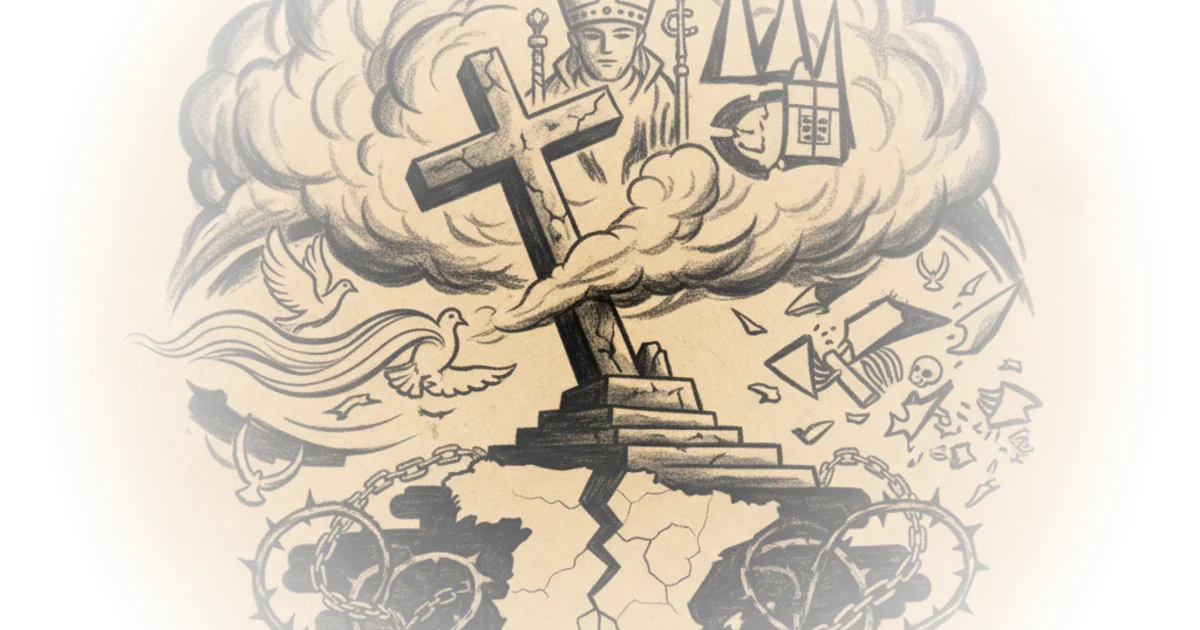
The piece argues that this discrepancy is more than a communication error; it is a strategic retreat. The correspondence shows Cobo agreeing to reduce the space reserved for worship to just the altar and seating, leaving the nave, atrium, and dome open to government intervention. The editors note that Cobo accepted this transformation provided that "sacred spaces and the presented artistic expressions are harmonized in such a way that they respect the religious and cultural end of these spaces." This is a significant concession, effectively allowing the state to curate the interior of a consecrated church, provided the liturgy can still technically occur in a corner.
"The government is taking the initiative by launching a tender for proposals without consulting the Church about the details or questions that should be clarified beforehand, in case the spaces and religious sensibilities are not respected."
The irony here is palpable. The bishops' conference claims the government acted without consultation, yet the leaked letters prove high-level coordination occurred months before the public announcement. This suggests a deliberate effort by the hierarchy to distance itself from a politically toxic decision while still securing a deal that preserves the Benedictine presence. The article highlights that Minister Bolaños claimed there was an agreement with the Vatican, stating, "the Vatican is absolutely committed to the Valley being a place of memory and democracy and not a mausoleum of the dictatorship." However, the bishops' conference has repeatedly denied the Holy See signed any such pact, creating a confusing landscape where the government claims Vatican backing that the Vatican's local representatives seem to be disavowing.
The Legal and Canonical Quagmire
The commentary takes a sharp turn into the technical legalities that make this situation uniquely volatile. The Pillar brings in a crucial detail from a 2020 report by the Spanish bishops' own council of legal affairs, which suggests the government's entire plan might be legally void. The report cites the 1979 Agreement on Legal Affairs between the Holy See and the Spanish state, which declares the basilica a "sacred place of the Catholic Church and, therefore, inviolable."
The article emphasizes a critical canonical fact: the abbey is sui iuris, meaning it is directly subject to the Holy See and not under the jurisdiction of the local bishop or the archdiocese. The piece notes that a 1958 Apostolic Letter established the abbacy "in perpetuity," and that "having been established by a pope, only another pope could abolish it." This is not just bureaucratic hair-splitting; it strikes at the heart of the negotiations. If the abbey is autonomous, then Cardinal Cobo had no legal standing to sign an agreement that alters the basilica's use.
The Pillar reports that the monks themselves have filed a civil complaint, arguing that "any other ecclesiastical body or authority, such as an archbishop, is not authorized to sign an agreement that directly affects the abbey, and consequently that legal act is null and void." This legal maneuver has already forced a temporary halt to the government's contest for redesign proposals. The article suggests that the government's response to this legal blockage was aggressive: Minister Bolaños reportedly asked Cardinal Parolin to expel the Benedictine community and replace them with a different order to bypass the legal hurdle.
"Any other aspect related to the resignification is of the exclusive competence of the Holy See and the government, which are the parties that have taken part in the negotiations."
This statement from the Archdiocese of Madrid, cited in the piece, attempts to sidestep the monks' legal standing by claiming the agreement was between the Holy See and the state. Yet, the leaked letters show Cobo signing off on specific architectural changes, not just a broad principle. The article effectively uses the sui iuris status to highlight a fracture within the Church's own structure: the local hierarchy trying to manage a political crisis versus the autonomous religious order that actually holds the keys to the property.
Critics might note that the government's push for "resignification" is a necessary step to address the site's history as a monument to a dictatorship, built with forced labor and serving as a pilgrimage site for the far right. The article acknowledges that the site was meant to be a symbol of reconciliation but has become a "frequent source of controversy between the political left and right in Spain." However, the piece implies that the method of achieving this—potentially violating international treaties and canonical law—undermines the moral authority of the state's intervention.
The Human and Historical Stakes
Beyond the legal and political maneuvering, the article reminds the reader of the human weight of the site. The Valley of the Fallen contains the remains of more than 30,000 people, including one-third who fought for the Republicans against Franco's forces. The piece notes the stark contrast in the monument's history: "The principal architects of the monument were Francoist supporters, while the sculptor in charge of the statues in the monument was a socialist." This irony underscores the complexity of the site, which supporters call a campus for reconciliation and critics view as a "tribute to fascism."
The Pillar reports that the government's chosen redesign project, costing 31 million euros, proposes to "break the axiality that had so characterized this monument to create a large shadow—a great fissure—that facilitates encounters." While this sounds poetic, the article frames it as a direct challenge to the site's original intent. The tension is not just about aesthetics; it is about whether a place built to honor a dictator can be successfully repurposed as a "place of memory and democracy" without erasing the religious sanctity that the Benedictines have maintained for decades.
The article also touches on the exhumation of Franco's remains in 2019, a move that set the stage for the current conflict. The government argued the site had become a "pilgrimage destination for the far right," necessitating the removal of the dictator's body. Now, the fight is over the building itself. The Pillar suggests that the current negotiations are a continuation of this struggle, where the state seeks to assert control over the narrative of the Civil War, while the Church struggles to maintain the sanctity of a space that has become a political battleground.
"The government is taking the initiative by launching a tender for proposals without consulting the Church about the details or questions that should be clarified beforehand, in case the spaces and religious sensibilities are not respected."
This quote, attributed to the bishops' conference, serves as a stark indictment of the government's approach, yet the leaked letters reveal the bishops' own complicity. The article leaves the reader with the unsettling realization that the "resignification" of the Valley of the Fallen is not a clean break from the past, but a messy, legally dubious, and politically charged negotiation where the lines between sacred and secular are being redrawn in real-time.
Bottom Line
The Pillar's strongest argument is its exposure of the gap between public denials and private agreements, revealing a Church hierarchy willing to compromise on canonical law to avoid a political showdown. Its biggest vulnerability is the lack of clarity on whether the monks' legal complaint will ultimately succeed in halting the government's plans, leaving the future of the basilica in a state of limbo. Readers should watch closely for the outcome of the civil complaint, as it could determine whether the "resignification" proceeds as a state-led project or collapses under the weight of its own legal contradictions.