Perun reframes the North African security dilemma not as a simple clash of armies, but as a stark economic mismatch where a resource-poor kingdom attempts to outmaneuver a gas-rich rival through diplomatic agility and strategic patience. The author's most striking claim is that Morocco, despite having a fraction of Algeria's defense budget, is leveraging a 250-year-old friendship with the United States and a monopoly on global phosphate to survive a potential arms race that would otherwise incinerate its economy.
The Asymmetric Dilemma
Perun immediately establishes the stakes by contrasting the two neighbors' financial realities. He notes that while Algeria is shoveling a "greater percentage of its GDP into the defense spending furnace during peace time than Russia officially is during wartime," Morocco faces a different constraint. "Morocco with a smaller population, a smaller economy, and less GDP dedicated to defense just isn't in a position to match Algeria's dollar for dollar." This sets the stage for a story not about brute force, but about "hard procurement choices, difficult decisions, and a need to prioritize." The author effectively argues that for a lower-middle-income economy, defense policy is less about buying the most expensive toys and more about survival economics.
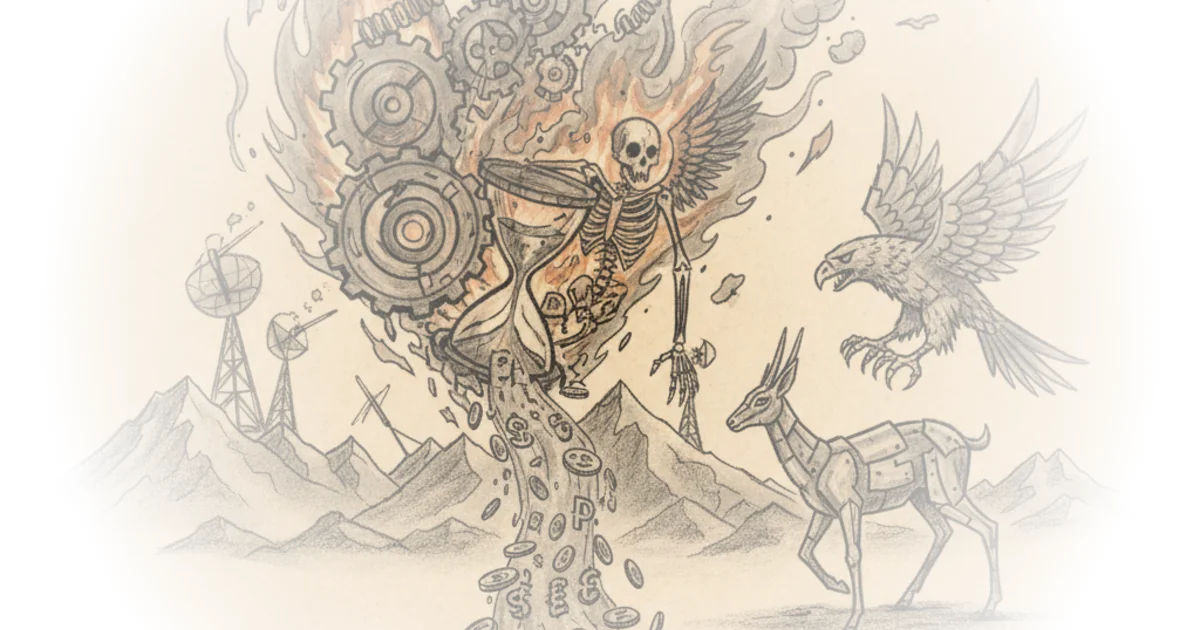
Critics might note that this economic framing underestimates the sheer destructive power of modern conventional warfare, where a single missed capability gap can be catastrophic regardless of fiscal prudence. However, Perun's focus on the sustainability of the arms race provides a necessary corrective to the usual hype surrounding military hardware.
"Most of them tend to be relatively wealthy industrialized countries with a lot of resources available to spend on defense with the main challenge being spending it efficiently. But Morocco... just isn't in a position to match Algeria's dollar for dollar."
The Phosphate Hedge and the Western Sahara Pivot
The commentary then pivots to Morocco's unique economic leverage. Perun writes, "you might be hearing me say that they have a lot of phosphate, but what I'm actually saying is they have an absolute ton of the stuff." He explains that with over two-thirds of global reserves, Morocco holds a "national free money hack" that, while not as volatile as oil, guarantees its relevance in global food security and battery production. This resource acts as a shield, allowing Rabat to maintain a diversified economy reliant on tourism and manufacturing rather than the boom-and-bust cycles of hydrocarbons that drive Algeria's defense spending.
The author also highlights the geopolitical friction caused by the Western Sahara dispute, noting how the 2021 closure of the energy pipeline by Algeria was a direct consequence of Madrid aligning with Rabat. This historical context is crucial; it shows that Morocco's strategic advantage is not just geological, but diplomatic. By maintaining a "very close trade relationship with Europe" and serving as a logistics link, Morocco has insulated itself from the isolation that often plagues nations with aggressive neighbors.
The American Lifeline: A History of Unlikely Friendship
Perhaps the most distinctive section of the piece is the deep dive into the 1777 diplomatic overture by Sultan Muhammad III. Perun details how the Sultan, "chasing the benefits of international trade," made a bold bet to befriend the American colonists while they were still fighting for independence. The narrative of the Sultan sending letter after letter, only to be ignored, and finally seizing the American ship Betsy to force a negotiation, is a masterclass in historical storytelling.
"The Moroccans seized an American merchant ship... with the implication being the Americans could have them back as soon as they hurried up with the diplomacy already." Perun uses this anecdote to illustrate a long-standing pattern: Morocco has always been willing to take unconventional risks to secure its alliances. The resulting Treaty of Friendship, active since 1786, remains the oldest unbroken treaty in US history. This historical depth explains why Morocco today leans heavily toward Washington, contrasting sharply with Algeria's traditional ties to Moscow.
"In an act of absolute unparalleled military genius, the Spanish general decided to launch an offensive... and plunge a casual 130 odd km into riffian controlled territory."
The Riff War: A Cautionary Tale of Overextension
Perun shifts to the 1920s Riff War to illustrate the dangers of military overreach. He describes how the Rifian tribes, though "hilariously, hopelessly outgunned," managed to "absolutely wreck" the Spanish forces by exploiting a poorly organized withdrawal. The author points out that the Spanish general's decision to advance 130 kilometers with vulnerable supply lines led to the annihilation of a 20,000-strong force, with 13,000 dead compared to only 800 Rifian casualties.
This historical parallel serves as a subtle warning for modern strategists: numerical superiority and superior technology do not guarantee victory if the strategy ignores the terrain and the will of the local population. While the French eventually turned the tide with a joint amphibious operation, the initial Spanish failure remains a stark reminder of the limits of imperial power.
Bottom Line
Perun's strongest contribution is his reframing of the North African arms race as a test of economic endurance rather than a simple comparison of tank counts. His analysis of Morocco's phosphate monopoly and historical diplomatic agility offers a compelling counter-narrative to the assumption that wealth equals security. The argument's biggest vulnerability lies in its reliance on historical continuity; it assumes that the diplomatic and economic levers of the 18th and 20th centuries will remain equally effective in a future defined by drone warfare and cyber conflict. Readers should watch to see if Morocco's "hard procurement choices" can truly close the capability gap before the next crisis hits.