Most advice on reading treats books as passive entertainment or a checklist of titles to conquer. Henrik Karlsson flips this script entirely, arguing that to truly be transformed by a text, one must treat reading not as a leisure activity, but as a ruthless, high-stakes recruitment process for one's own mind. This is not about consuming content faster; it is about engaging in a deliberate, often painful, intellectual wrestling match that reshapes how you see the world.
The Art of the Chase
Karlsson distinguishes between two modes of engagement: searching and chasing. While searching is passive, looking for something to read without a clear aim, chasing is active and driven by a specific question. He writes, "Chasing makes you more active and critical of what you read. This helps you learn more." This distinction is crucial because it reframes the reader's role from a consumer to an investigator. The goal isn't to finish a book; the goal is to solve a problem.
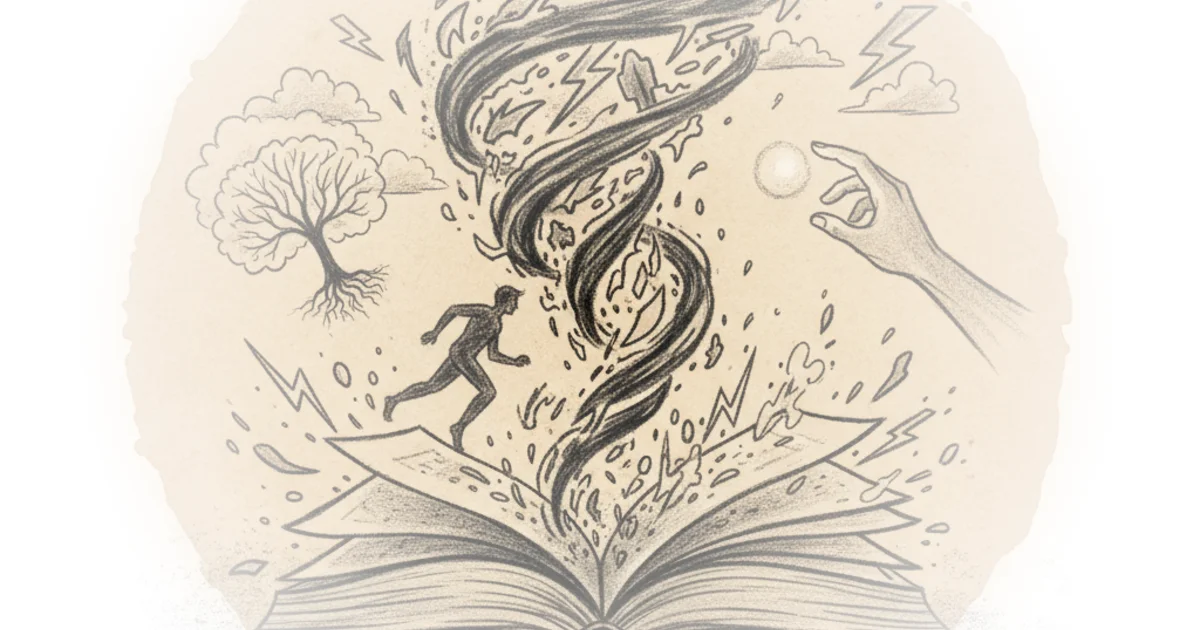
This approach demands a level of selectivity that most readers find uncomfortable. Karlsson admits that of the roughly 300 books he starts annually, he finishes only about 50. He is unapologetic about this attrition rate, noting, "I have to be ruthless in saying no to most of them... so I can spend an appropriate amount of time on the books that really do challenge me." The argument here is compelling: time is the scarcest resource, and protecting it requires a willingness to abandon books that fail to advance a specific intellectual quest. Critics might argue that this utilitarian approach risks missing the serendipitous joy of stumbling upon a masterpiece while browsing aimlessly, but Karlsson counters that true transformation requires the friction of a focused pursuit.
Books are not sacred. I have to be ruthless in saying no to most of them so I can spend an appropriate amount of time on the books that really do challenge me.
The Value of Confusion
Perhaps the most counterintuitive part of Karlsson's methodology is his embrace of confusion. He argues that reading a single book on a topic creates a "false sense of clarity." To achieve genuine understanding, one must read multiple, uncorrelated books that contradict each other. He describes the resulting mental state vividly: "The confusion hurts my head and forces me to wrestle with the material. I have to do such things as reconstruct the arguments and evaluate them." This friction is not a bug; it is the feature. It is the mechanism by which the brain builds new neural pathways.
To facilitate this, Karlsson suggests clustering reading by discipline and era. He might pair an economist, a philosopher, and an anthropologist to examine the same historical event, or compare a 19th-century text with a modern analysis. He notes that while modern authors have more data, "older authors surprise me and therefore expand my worldview more." This strategy forces the reader to translate between different frameworks, a process that Karlsson claims is where true learning happens. The evidence suggests that comfort is the enemy of growth; if you aren't confused, you aren't learning anything new.
Building Stamina and Using Tools
Karlsson treats reading as an endurance sport that requires gradual ramping up. He warns against the common mistake of picking up dense, complex works like Kafka's The Trial without building the necessary stamina first. "You have to gradually ramp up your capacity to handle complex ideas," he writes, suggesting that readers should start within their comfort zone to build the habit of sustained attention. Over time, difficult prose becomes transparent, turning a chore into a conversation with a "smart friend."
In a nod to modern realities, Karlsson integrates large language models into this rigorous process. He uses AI not to summarize or replace reading, but to unblock confusion when tackling difficult vocabulary or concepts. "If I'm confused, I ask the LLMs to explain what a paragraph says," he explains, noting that this has removed much of the emotional resistance to hard books. However, he remains cautious, acknowledging that AI tends to "tame the ideas and make them less interesting and radical." The tool is a sparring partner, not an oracle. This balanced view of technology is refreshing; it leverages AI for efficiency without surrendering the critical thinking required for deep understanding.
By applying yourself slightly more, you can retain vastly more from those hours you already put in. Reading seriously changes your brain so that the world that comes at you grows more nuanced and interesting.
The Bottom Line
Karlsson's argument is strongest in its rejection of passive consumption; he convincingly demonstrates that the value of reading lies not in the number of pages turned, but in the depth of the cognitive struggle. The biggest vulnerability in his approach is the sheer time commitment required—10 to 30 hours a week is a luxury few busy professionals can easily carve out without significant lifestyle changes. However, the core insight remains vital: if you want to be transformed, you must stop reading to finish and start reading to fight.
Good books are compressed thoughts. They are like seeds: when you plant them in your mind, they explode from their casings and shoot up from the ground—growing much vaster than it feels reasonable a little seed like that could possibly grow.