The Hated One delivers a stark warning that cuts through the usual hype: the integration of AI into your smartphone isn't just a convenience update, it is a fundamental architectural shift that dismantles the very concept of digital privacy. While most coverage focuses on chatbot inaccuracies or data breaches, this piece argues that the technology itself is designed to bypass encryption and turn your device into a permanent surveillance node. If you value the secrecy of your messages, your financial data, or your personal thoughts, this is not a theoretical risk to be debated later; it is an active threat unfolding in real-time.
The End of the Walled Garden
The core of the argument is that the era of the "sandboxed" app is over. The author contends that for AI to be truly useful, it requires "privileged access to your personal information" across every single process on your device. The Hated One writes, "This AI assistant is granted privileged access to your personal information. And their plan is to gradually expand this AI access to every app across all of your devices, including encrypted messaging apps like WhatsApp or iMessage." This framing is effective because it shifts the conversation from "what data is collected" to "who has the keys to the kingdom." The author suggests that the illusion of choice is a trap, noting that while users can currently opt out, the infrastructure is being built to make the AI agent an irrevocable default in future operating system updates.
Critics might argue that major tech companies have a financial incentive to protect user data to maintain trust, but the author dismisses this by pointing to the economic model of AI itself. The Hated One asserts, "Local models are almost always insufficient because they're too small to do anything really useful. So for the majority of the tasks, whatever the AI on your phone processes will end up in a cloud." This is a crucial distinction; the convenience of summarizing an email or booking a flight relies on sending that private data to a server where the company owns it. The author highlights that even end-to-end encryption is rendered useless if the AI agent can read the message before it is encrypted or after it is decrypted on the device.
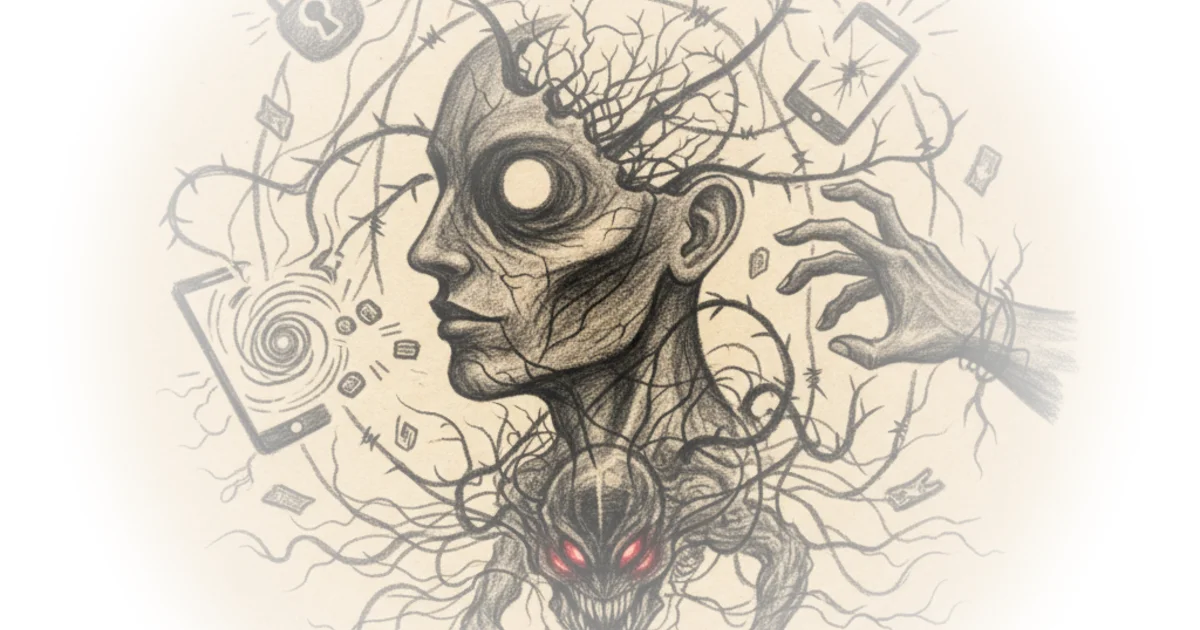
The AI on your phone is effectively acting as a virus, controlling system permissions, accessing other apps, manipulating the information you see, uploading your content, and navigating the web.
The Democratization of Hacking
Perhaps the most alarming section of the piece is the explanation of "prompt injection attacks." The author describes a scenario where an AI, tasked with summarizing a website, reads invisible text planted by an attacker to override its safety protocols. The Hated One explains, "Suppose you tell an AI to summarize a website. The AI will scan all of the content of the website, which may also include things humans can't see, like invisible text or tiny fonts." This mechanism allows attackers to trick the AI into performing malicious actions, such as installing malware or revealing passwords, without the user ever knowing a hack occurred.
The argument here is that this vulnerability is systemic and unavoidable as long as the AI is designed to be "all-knowing." The author writes, "Prompt injection attacks are scalable and can be automated... Anyone can do this, including you, without having any technical skills." This democratization of hacking means that the barrier to entry for compromising a device is lowered to the point where a non-technical actor can weaponize an AI assistant. The Hated One warns that this isn't just about individual privacy but national security, suggesting that bad actors could use these vectors to blackmail political figures or compromise intelligence agencies.
The Myth of Apple's Privacy Shield
The piece takes a particularly sharp turn when addressing Apple users, who often believe their device is immune to these threats due to the company's privacy marketing. The Hated One dismantles this belief, calling it a "marketing ruse" and arguing that Apple's AI implementation is actually a disaster of competence rather than a triumph of privacy. The author states, "Apple's corporate leadership had no clear vision on what to do with AI and machine learning to the point their AI group internally earned a nickname aimless." This critique is supported by the claim that Apple's local models are too weak to be useful, forcing users to rely on cloud-based processing that ultimately hands data over to OpenAI.
The author details Apple's three-tier approach, noting that the first two tiers are "essentially useless" for complex tasks. Consequently, users are funneled into the third tier, which delegates work to OpenAI's ChatGPT. The Hated One writes, "For those, Apple has a third tier which is essentially delegating all work to OpenAI's ChatGPT and by extension surrendering your private data to OpenAI's privacy policy." This exposes a critical vulnerability: even if Apple tries to build a privacy wall, the lack of powerful local models forces a reliance on third-party clouds that have no such restrictions. The argument holds weight because it points out that privacy cannot be an afterthought to capability; if the AI can't do the job locally, the data must leave the device.
We had a good thing, you stupid son of a... This relentless cash hungry push for AI to be in every single thing in existence is setting back decades of progress.
A Path Out of the Overlord's Grasp
Despite the grim outlook, the author offers a tiered set of solutions, ranging from simple app swaps to a complete overhaul of one's operating system. The first step is to abandon mainstream messaging and email services that have integrated AI. The Hated One recommends Signal for messaging and Tuta for email, explicitly warning against WhatsApp and Proton Mail due to their AI integrations. The author writes, "The only private messenger that I've seen proactively resist the AI encroachment is Signal." This advice is practical and actionable for the average user who wants to stop the bleeding immediately.
For those willing to go further, the author suggests running AI locally using tools like Jan.ai or switching to open-source office suites like LibreOffice. However, the ultimate solution proposed is a complete departure from the major tech ecosystems. The Hated One urges readers to "replace Windows with Linux" and "ditch iOS and ditch Android" in favor of Graphene OS. The author admits this sounds daunting but insists, "If multi-millionaire YouTube noobs can do it, you can do it." This call to action is bold, framing the switch to open-source operating systems not as a technical hobby but as a necessary act of self-defense.
Critics might note that the barrier to entry for switching to Linux or Graphene OS is still prohibitively high for the average non-technical user, potentially leaving the majority of the population vulnerable. The author acknowledges the difficulty but argues that the cost of inaction is far greater. The piece concludes with a sense of urgency, suggesting that the window to opt out is closing as AI becomes deeply embedded in the fabric of daily computing.
Bottom Line
The Hated One's strongest argument is the identification of prompt injection as a systemic, unfixable flaw in the current AI architecture that turns every device into a potential backdoor. The piece's biggest vulnerability is its reliance on users having the technical literacy to abandon mainstream platforms for open-source alternatives, a shift that may be impossible for the average person. Readers should watch for the next major operating system updates, which will likely make these AI agents non-optional, effectively ending the era of user-controlled privacy on mobile devices.