Devin Stone, a practicing attorney and legal commentator, dismantles the glossy fiction of courtroom drama by holding it up against the grueling, mundane reality of actual legal practice. While most media critiques focus on dramatic inaccuracies, Stone's analysis of legal comics reveals a deeper truth: the profession's greatest stressors aren't high-stakes showdowns, but the terrifying possibility of a missed deadline or a misunderstood contract clause. This perspective is vital for anyone trying to understand the modern legal ecosystem, as it shifts the focus from the myth of the heroic litigator to the systemic pressures of the industry.
The Myth of the Glamorous Office
Stone immediately challenges the romanticized image of the legal profession found in popular media. He notes that while comics often depict lawyers in sun-drenched, spacious offices, the reality for many young associates is starkly different. "Must be nice working in a big fancy office... to have a job with clear instructions," he mocks, highlighting the disconnect between public perception and the opaque nature of junior legal work. He explains that for the first several years of a career, associates often lack direction, forced to learn through trial and error rather than structured mentorship. This observation is particularly sharp because it identifies a structural flaw in legal training that persists regardless of the firm's prestige.
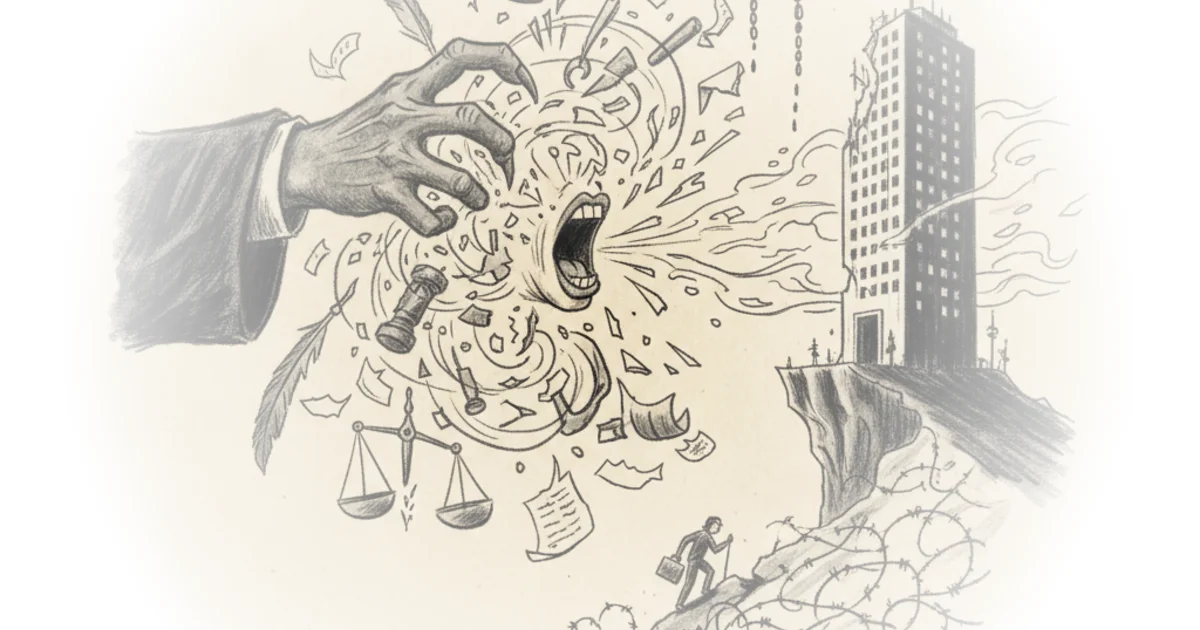
The commentary extends to the philosophical underpinnings of legal arguments, where Stone critiques the tendency to prioritize rhetorical flair over legal substance. He references a comic where a lawyer argues that justice is a "fallacious platonic ideal," noting that while such a stance might win a debate in a philosophy class, it is a losing strategy in court. "Sometimes you can win an argument and still lose the argument," Stone observes, pointing out that legal persuasion requires a different toolkit than abstract reasoning. This distinction is crucial; it underscores that the law is a pragmatic instrument, not a theoretical exercise, and that lawyers who fail to grasp this often find themselves on the wrong side of a verdict.
The Terror of the Unprepared
Perhaps the most relatable section of Stone's analysis concerns the paralyzing fear of procedural error. He argues that the true nightmare for a trial lawyer isn't facing a formidable opponent, but the possibility of being unprepared or missing a jurisdictional deadline. He illustrates this with a hypothetical scenario: waking up late for a hearing in a different county and having to frantically call a colleague to cover the appearance. "The most stressful part about being a practicing trial lawyer is not losing a case... it's really being unprepared," he asserts. This framing effectively humanizes the profession, replacing the image of the cold, calculating attorney with one who is perpetually anxious about the smallest details.
Critics might argue that Stone overstates the frequency of such catastrophic errors, suggesting that modern case management software and rigorous firm protocols have largely eliminated these risks. However, the psychological weight of that fear remains a defining characteristic of the profession, regardless of technological safeguards. The pressure to be perfect is absolute, and the margin for error is non-existent.
The law is written in such a way that it's supposed to have loopholes and technicalities, but also I have to take issue with this particular comic: you're not going to be arguing the law in front of the jury.
The Reality of Contracts and Client Relations
Stone also tackles the absurdity of how the public interacts with legal agreements, specifically the "terms and conditions" that no one reads. He contrasts the serious nature of professional contracts with the casual acceptance of digital agreements, noting that while the latter may seem trivial, they are legally binding. He references a South Park episode to illustrate the dangers of signing without reading, a satire that remains surprisingly accurate. "There are some issues with contracts of adhesion but for the most part these contracts tend to be enforceable," he explains, reminding readers that the law does not care if you didn't read the fine print.
Furthermore, Stone addresses the complex dynamic between lawyers and their clients, particularly regarding the advice to take action versus the advice to refrain. He shares a partner's insight that while any lawyer can say "no," a great lawyer can identify a path forward that is both legally sound and strategically viable. "It's just so easy to say no... but to really put your reputation on the line and say that yes you can do something, that's what lawyers really get paid for," Stone writes. This reframes the lawyer's role from a gatekeeper of restrictions to a facilitator of possibility, provided the legal foundation is solid.
The Boring Truth Behind the Drama
Ultimately, Stone's commentary serves as a corrective to the sensationalism of legal media. He points out that real legal work is "super boring," involving endless research, brief writing, and meticulous attention to detail rather than dramatic courtroom monologues. He notes that the public's perception of the legal system is often shaped by television shows where lawyers win cases in minutes without doing any research. "On TV they're never writing any kinds of briefs, they're never doing legal research, they're just chord with no preparation whatsoever," he quips. This disconnect creates unrealistic expectations for clients and the public alike, leading to frustration when the actual legal process unfolds slowly and methodically.
Stone also touches on the financial realities of litigation, noting that many clients enter disputes with the intention of fighting to the Supreme Court, only to abandon their cases once they see the true cost. The seven stages of grief he describes for clients facing legal battles—anger, denial, bargaining, and eventually acceptance of bankruptcy—highlight the economic barriers that often dictate legal outcomes more than the merits of the case.
Bottom Line
Devin Stone's analysis succeeds by stripping away the cinematic veneer of the legal profession to reveal a landscape defined by anxiety, precision, and mundane reality. His strongest argument is that the true test of a lawyer is not dramatic flair, but the ability to navigate complex procedural rules without error. The piece's vulnerability lies in its reliance on the assumption that the public can easily distinguish between legal satire and legal reality, a distinction that remains blurry for many. For the busy reader, the takeaway is clear: the law is less about justice as an abstract ideal and more about the rigorous, often tedious, management of risk and procedure.